Description
Crevecoeur Chickens
Important Availability Note
Cackle Hatchery® will not be offering Crevecoeur chicks for sale this year. Customers interested in this rare French crested breed may also want to review other crested chicken breeds or check Cackle Hatchery’s availability chart for future updates.
Breed Overview and Origin
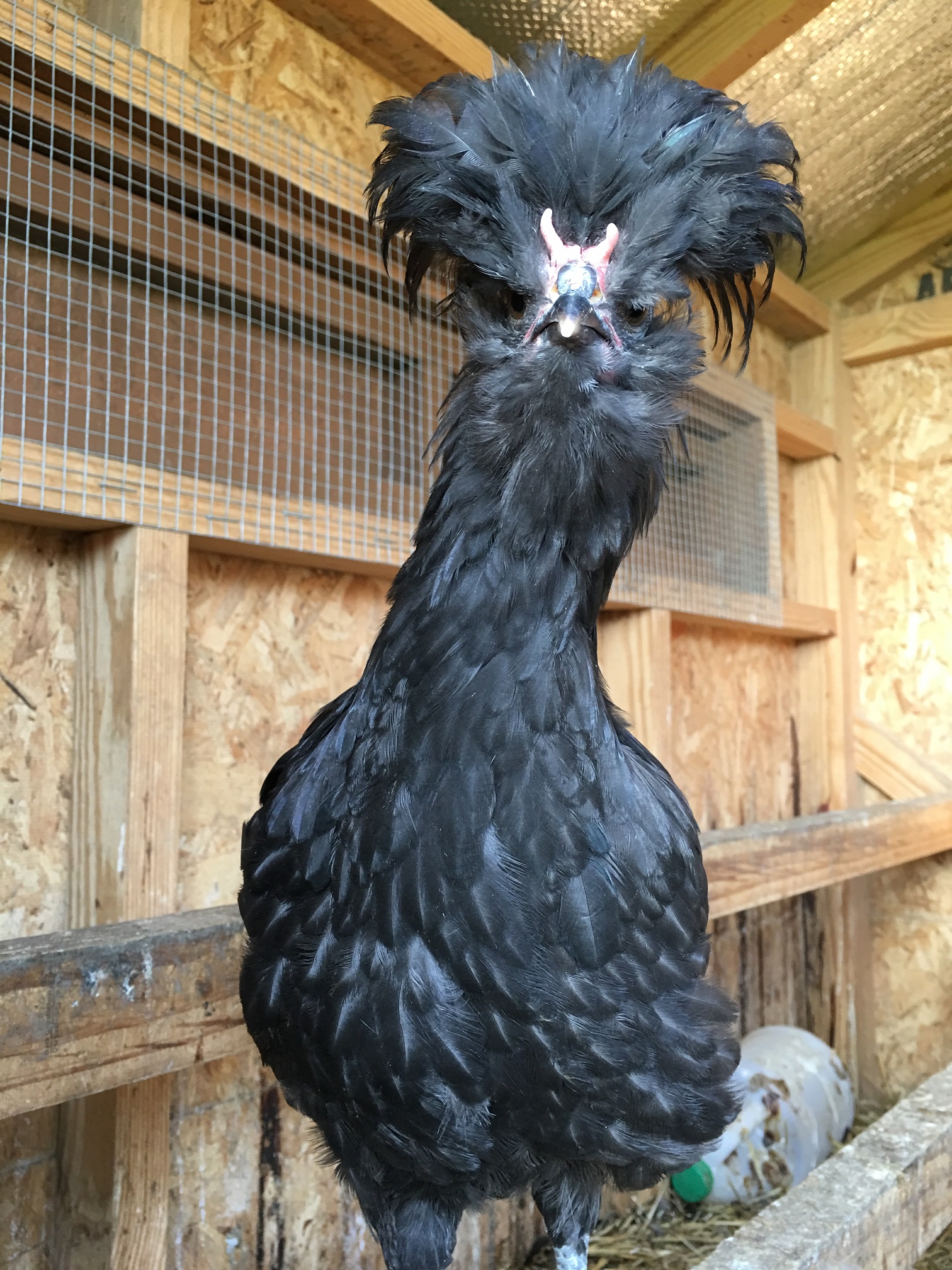
The Crevecoeur Chicken, also written Crèvecoeur, is one of the oldest chicken breeds from France. This rare heritage breed is known for solid black plumage, a full crest, V-shaped comb, slate-blue legs, docile temperament, white eggs, and exhibition value.
The breed takes its name from Crève-Coeur en Auge, a village in Normandy, France. The name translates as “broken heart.” The Livestock Conservancy describes the Crèvecoeur as one of France’s oldest standard-bred chicken breeds and notes that the breed has documentation reaching back to the 12th century.
Crevecoeurs came to the United States early in American poultry history and entered the American Standard of Perfection in 1874. Today, customers value them for rare breed preservation, ornamental beauty, and their calm, friendly nature.
Appearance and Characteristics
Crevecoeurs have a dramatic, elegant appearance. Their solid black plumage, full crest, V-shaped comb, and short slate-blue legs give them a classic French crested look.
Expected traits include:
- Solid black plumage
- Ample crest of head feathers
- V-shaped comb
- Well-proportioned body
- Short slate-blue legs
- Four toes
- White eggs
- Docile and friendly temperament
- Good confinement ability
- Exhibition and ornamental value
- Rare French heritage status
Crevecoeurs look similar in type to Houdans. However, Crevecoeurs have four toes, while Houdans have five toes.
Crest, V-Shaped Comb, and Vision Considerations
The Crevecoeur’s crest gives the breed much of its charm. However, the crest can limit vision, especially when the feathers grow heavily around the eyes.
Because of that, Crevecoeurs are not the best choice for open free-range areas where predators create a serious risk. Instead, they do better in protected runs, fenced yards, or secure confinement setups.
For backyard flocks, customers may need to:
- Keep birds in secure runs
- Provide calm flockmates
- Watch for feather picking
- Keep crest feathers clean and dry
- Make feeders and waterers easy to find
- Trim crest feathers slightly if visibility becomes poor
If customers plan to show Crevecoeurs, they should check current exhibition rules before trimming crest feathers.
Egg Production and White Eggs
Crevecoeur hens lay white eggs. The breed is not a modern high-production layer, but it can provide useful eggs while also offering rare breed value and ornamental appeal.
Historic breed information describes Crevecoeurs as moderate layers of large white eggs. The American Livestock Breeds Conservancy profile also notes their solid black color, crests, beards, compact bodies, short legs, and ability to handle confinement well.
Choose Crevecoeurs if you want a rare French crested breed with white eggs and exhibition appeal. Choose a production white egg layer if maximum egg output is the main goal.
Temperament and Backyard Suitability
Crevecoeurs have a docile, friendly temperament. They can make enjoyable backyard birds, especially for customers who appreciate calm ornamental breeds.
This breed can work well for:
- Protected backyard flocks
- Exhibition projects
- Rare breed collections
- White egg flocks
- Crested breed enthusiasts
- Customers who want a calm French heritage breed
- Confinement or protected-run setups
However, Crevecoeurs may get bullied by more assertive breeds in a mixed flock. Therefore, they do best with other calm chickens or in a dedicated ornamental flock.
Confinement and Free-Range Suitability
Crevecoeurs do well in confinement, which makes them easier to manage than many active free-range breeds. They adapt well to protected housing when they have enough room, clean bedding, fresh water, and good ventilation.
However, they are not ideal for free range where predators are a problem. Their topknot can reduce visibility, which may make it harder for them to spot danger quickly.
For best results, provide:
- A secure coop
- A predator-resistant run
- Calm flockmates
- Clean bedding
- Good ventilation
- Dry areas for crest cleanliness
- Feeders and waterers positioned where birds can easily find them
Climate Adaptability
Crevecoeurs can adapt to a range of climates when customers provide good housing. Their crest still needs care in wet or icy weather because damp head feathers can chill birds or reduce visibility.
In cold weather, provide dry bedding, draft protection, and good ventilation. In warm weather, provide shade, airflow, and cool fresh water.
Although they can adapt to different climates, their ornamental crest makes protected, well-managed housing especially important.
Exhibition and Ornamental Value
Crevecoeurs have strong exhibition and ornamental appeal. Their black plumage, crest, V-shaped comb, and French heritage create a refined look that stands out in a show pen.
The breed entered the American Standard of Perfection in 1874, making it one of the older recognized heritage breeds in American poultry history. Customers interested in showing should review current American Poultry Association standards and local show rules before entering birds.
Crevecoeur vs Mottled Houdan
Crevecoeurs and Mottled Houdans share French heritage and a similar crested type, but they have important differences.
A Crevecoeur has solid black plumage, a crest, V-shaped comb, short slate-blue legs, and four toes.
A Mottled Houdan chicken has black-and-white mottled plumage, a crest, beard, muffs, cavernous nostrils, and five toes.
Choose Crevecoeurs if you want a solid black French crested breed with four toes.
Choose Mottled Houdans if you want a five-toed French breed with mottled plumage.
Crevecoeur vs Polish Chickens
Crevecoeurs and Polish chickens both have crests, but they serve slightly different flock goals.
A Crevecoeur is a rare French heritage breed with solid black plumage, V-shaped comb, slate-blue legs, white eggs, and calm temperament.
A Polish chicken is a crested ornamental breed with many color varieties and a dramatic topknot.
Choose Crevecoeurs if you want a rare French breed with historic black plumage and a calmer heritage feel.
Choose Polish chickens if you want more color variety in a crested ornamental flock.
Crevecoeur vs Crested “Top Hat” Special
Choose Crevecoeur chickens if you specifically want this rare French breed with solid black plumage, a crest, V-shaped comb, slate-blue legs, and white eggs.
Choose the Crested “Top Hat” Special if you want a hatchery-choice assortment of crested breeds and are flexible about which varieties you receive.
The Crevecoeur is the better choice for customers who want a specific rare breed. The Top Hat Special works better for customers who enjoy variety and surprise.
Is the Crevecoeur Chicken Right for Your Flock?
Choose Crevecoeur chickens if you want:
- A rare French heritage breed
- One of France’s oldest chicken breeds
- Solid black plumage
- A full crest
- A V-shaped comb
- Short slate-blue legs
- White eggs
- A docile and friendly temperament
- A bird that does well in confinement
- Exhibition and ornamental value
- A breed admitted to the American Standard of Perfection in 1874
However, consider another breed if you need high egg production, strong predator awareness, rugged free-range ability, or a bird that can hold its own with dominant flockmates. In short, Crevecoeurs are best for customers who want rare French history, calm temperament, white eggs, and protected ornamental flock appeal.
Care and Housing Tips
Crevecoeurs need secure housing, calm flockmates, and extra attention to crest care. Because the topknot can limit vision, customers should prioritize protection from predators and aggressive birds.
For best results, provide:
- A dry, well-ventilated coop
- Predator-resistant fencing
- A secure run or protected yard
- Clean bedding
- Fresh water at all times
- Balanced chick starter and age-appropriate feed
- Calm flockmates
- Nest boxes for white eggs
- Feeders and waterers that are easy to find
- Shade and airflow during hot weather
- Protection from drafts and damp bedding in cold weather
- Regular checks for crest cleanliness and visibility
Because Crevecoeurs may face bullying in mixed flocks, introduce them carefully and avoid pairing them with highly aggressive breeds.
Recognition and Availability
Crevecoeurs entered the American Standard of Perfection in 1874. The breed remains rare today and carries important conservation value. Cackle Hatchery® lists Crevecoeur chickens as a breed page, but the user-provided product note states that Cackle Hatchery® will not offer Crevecoeur chicks for sale this year.
Since breed availability can change, customers should check Cackle Hatchery’s Chicken Availability Chart for future updates. Cackle notes that its availability chart lists chicks available for sale and shipping dates.
Related Breeds and Helpful Cackle Hatchery® Resources
Customers who like Crevecoeurs may also enjoy other crested, rare, French, and white-egg-laying breeds.
Helpful Cackle Hatchery® links for this product page include:
FAQ: Crevecoeur Chicken
What is a Crevecoeur Chicken?
A Crevecoeur Chicken is a rare French heritage breed known for solid black plumage, a crest, V-shaped comb, short slate-blue legs, white eggs, docile temperament, and exhibition appeal.
Where did Crevecoeur chickens originate?
Crevecoeur chickens originated in Normandy, France, near the village of Crève-Coeur en Auge.
What does Crevecoeur mean?
Crevecoeur translates as “broken heart.” The breed takes its name from its Normandy village of origin.
Are Crevecoeurs one of France’s oldest chicken breeds?
Yes. The Livestock Conservancy describes the Crèvecoeur as one of France’s oldest standard-bred chicken breeds.
When were Crevecoeurs admitted to the American Standard of Perfection?
Crevecoeurs were admitted to the American Standard of Perfection in 1874.
What do Crevecoeur chickens look like?
They have solid black plumage, an ample crest, a V-shaped comb, a well-proportioned body, and short slate-blue legs.
Do Crevecoeurs have four toes or five toes?
Crevecoeurs have four toes. Houdans, which look somewhat similar, have five toes.
What color eggs do Crevecoeurs lay?
Crevecoeur hens lay white eggs.
Are Crevecoeurs good egg layers?
They are moderate white egg layers, but customers usually choose them for rare breed value, temperament, and exhibition appeal.
Are Crevecoeurs friendly?
Yes. Crevecoeurs have a docile, friendly temperament.
Are Crevecoeurs good for mixed flocks?
They can work in mixed flocks with calm breeds. However, more assertive breeds may bully them.
Do Crevecoeurs do well in confinement?
Yes. Crevecoeurs adapt well to confinement when customers provide enough space, clean housing, and good care.
Are Crevecoeurs good for free range?
They are not ideal for free range where predators are a problem because their crest can limit vision.
Can a Crevecoeur’s topknot affect vision?
Yes. The topknot can limit vision, which may reduce predator awareness and make birds easier to startle.
Are Crevecoeurs good for exhibition?
Yes. Their solid black plumage, crest, V-shaped comb, and French heritage give them strong exhibition appeal.
What is the difference between Crevecoeur and Houdan chickens?
Crevecoeurs have solid black plumage, a crest, V-shaped comb, slate-blue legs, and four toes. Mottled Houdans have mottled plumage, a crest, beard, muffs, cavernous nostrils, and five toes.
What is the difference between Crevecoeur and Polish chickens?
Crevecoeurs are rare French heritage chickens with solid black plumage and V-shaped combs. Polish chickens are crested ornamental birds that come in many color varieties.
Is Cackle Hatchery® offering Crevecoeurs this year?
No. Cackle Hatchery® will not offer Crevecoeur chicks for sale this year.
Where can I check future Crevecoeur availability?
Customers can check Cackle Hatchery’s Chicken Availability Chart for future hatch and breed availability updates.



Reviews
There are no reviews yet