
Description
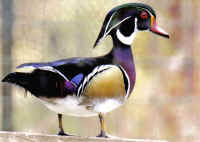
Wood ducks (Aix sponsa), also called Carolina ducks, originate in North America. They are among the most colorful duck species. The male Wood duck has an iridescent green head, a green purple crest, white stripes across the face and neck, a deep chestnut breast, and warm buff-colored flanks. A distinguishing feature is their red eyes.
The Wood duck is closely related to the Mandarin duck. Although the males are quite different, the females look similar. The female Wood duck has camouflage gray-brown feathers, a white-speckled breast, and a distinctive white teardrop-shaped eye ring.
Other similarities between the two species are their penchant for perching in trees and nesting in tree cavities. Both species have strong claws for perching and climbing in tall trees. And both are agile fliers.
Wood ducks don’t quack loudly like many other duck species. Instead, they emit a variety of high-pitch whistles and squeals. Otherwise they are fairly quiet.
Wood Duck Measurements
- Length — 19-21 inches
- Wingspan — 26-29 inches
- Weight — 1-2 pounds
Wood Duck Habitat
The natural habitat of wood ducks varies and includes forested wetlands, swamps, creeks, slow-moving rivers, and other freshwater sources overhung by trees. In captivity they need a fully enclosed aviary that prevents escape and provides protection from predators, such as foxes and hawks.
The aviary should, as much as possible, resemble a quiet woodland environment. It should include vertical space for short flights, tall grasses and shrubs for cover, tree branches for perching, and a small pond or large tub for bathing and foraging. Nest boxes, elevated at least 4 feet off the ground, encourage nesting.
Typical Diet
The Wood ducks’ natural diet includes of a variety seeds, nuts, acorns, berries and other plant matter, plus aquatic and land invertebrates such as insects and snails. In captivity, their diet should provide the same balance of plants and protein.
The basis should be game bird or waterfowl pellets. Additional protein might be provided by mealworms or black soldier fly larvae. Greens might include chopped lettuce and dandelion leaves. Grains and seeds provide occasional treats. Duckling should be fed crumbled game bird starter.
Breeding
In the wild, Wood duck females nest in tree cavities up to 60 feet high, where they lay 6 to 16 eggs before incubating them for 28 to 30 days. They are devoted mothers, and may hatch a second brood in the same year.
Within 24 hours of hatching, the duckling leap to ground or water’s surface, typically landing without injury. By the time they are 8 to 10 weeks old they can fly.
With proper care, they will live for 10 years or more. Awesome in appearance and fun to watch, Wood ducks are increasingly more popular for the backyard aviary..
Permit Needed
By federal law, capturing or keeping Wood ducks requires a permit acquired through the United States Fish & Wildlife Service. Some states may additionally require a permit from the relevant state’s wildlife agency.
Please note: We do not offer these Wood duck pairs pinioned. Also, we cannot ship grown fowl to Minnesota.



Reviews
There are no reviews yet