In cold weather chickens become vulnerable to frostbitten combs, wattles, feet, and toes. Frostbite is most likely to occur during the night, when the temperature drops fast. With the knowledge that frostbite happens when the temperature is low and coop humidity is high, you are better equipped to prevent frostbite in chickens.
What is frostbite in chickens?
Frostbite in chickens is the freezing of combs, wattles, feet, and/or toes — body parts with strong circulation and no insulating feathers. It usually occurs at night, while the flock is roosting, and the temperature drops to single digits or below.
Warm, humid air trapped in a coop with poor ventilation condenses on combs and wattles, and sometimes feet and toes. When it’s cold enough for the condensation to freeze, these body parts rapidly lose heat and, in turn, they freeze.
Damaged cells may appear pale or swollen. Depending on the degree of damage, the frozen parts may become red and irritated and/or develop blisters. Eventually the damaged cells may turn black or gray and die, never to grow back.
See: How to Recognize and Treat Frostbite in Chickens
How fast does frostbite happen?
How fast damage occurs depends on a combination of these factors:
- How cold it is
- For how long
- Coop humidity
- Coop draftiness
- Comb/wattle size
- Blood circulation
- The bird’s health
Are some chickens are more vulnerable to frostbite?
A chicken in weak condition or that’s suffering from some injury or illness is less able to handle cold temperatures than a healthy bird in good condition. Balanced winter nutrition can also help make a bird better able to withstand cold.
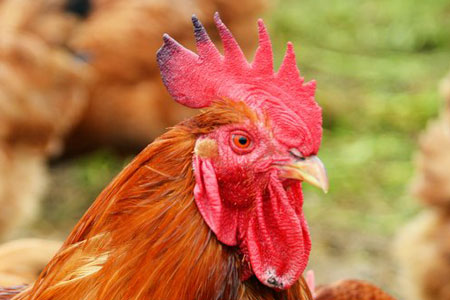
Breeds with large single combs and long wattles are more vulnerable to frostbite than breeds with compact combs and wattles. Bigger combs expose more surface to cold, damp air. Since roosters usually have larger combs, they are more vulnerable than hens. Some hens, though, have large combs and are therefore also susceptible.
So one way to prevent frostbitten combs and wattles is to opt for a breed with tight-fitting headgear, such as a cushion, pea, rose, strawberry, or walnut comb. The cushion-combed Chantecler, originating in Canada, was specifically developed to withstand bitter cold winters. The rose-combed Wyandotte is also well-suited to cold climates, as is the walnut-combed Yokohama.
See: 5 Outstanding Chicken Breeds for a Cold Climate
How can you prevent frostbite in chickens?
Besides choosing cold-hardy breeds, you can prevent frostbite in these multiple ways:
- Ample wide roosts
- Good ventilation
- No drafts
- Litter management
- Encourage outdoor exercise
- Available drinking water
- Balanced nutrition
How does roost construction affect frostbite in chickens?
Chickens that sleep on a flat wooden perch — not round or metal — can tuck their feet under their feathered breasts, keeping their toes warm. Adequate perching space for the flock size prevents crowding, which otherwise can result in some birds having too little room to cover their feet while roosting.
Drafts on a cold night increase the rate at which birds lose heat. Roosts therefore should be below ventilation opening and away from windows and doors that create drafts.
How does ventilation affect frostbite in chickens?
During cold weather ambient humidity is usually low. Inside a coop, however, humidity can be high thanks to respiration, fresh droppings, and damp litter — especially when cold weather encourages chickens to spend more time than usual indoors.
The goal of good ventilation is to keep the coop air dry. Humidity released by respiration can be controlled only through ventilation. So sealing the coop tight for winter weather is not doing your flock any favors. The moisture needs a way to escape.
Warm, moist air rises, because it is less dense than cold, damp air. Vents near the ceiling allow the warm, moist air to escape without causing a draft down where the chickens roost. Meanwhile, windows left slightly open pull in fresh, dry air.
So good ventilation means:
- Air vents above roost level
- Vents on north or south wall
- Enough vents to remove humidity
How do you know your coop is too humid? If the insides of your coop windows drip with moisture, you need to improve ventilation.
How do drafts affect frostbite in chickens?
Drafts inside the coop increase the speed of incoming air, which increases the effect of windchill. If you feel air moving at roost height on a windy day, block or redirect the airflow away from roosting birds.
See: Chicken Coop Draft or Good Ventilation?
How does dry litter affect frostbite in chickens?
Keeping litter dry helps control air humidity inside the coop. Dry litter also helps insulate the cold floor. Deep litter that’s stirred or topped off frequently more readily absorbs moisture from fresh droppings.
Remove and replace any litter that becomes moist from tracking, from spilled or leaky drinkers, or from a leaky roof. And for heavens sake, repair that roof!
Protect openings from blowing rain and snow. And keep doorways cleared of snow so it won’t get tracked inside.
How does encouraging chickens to go outside affect frostbite?
A coop will remain drier if the chickens are motivated to spend daylight hours outdoors. Encourage wintertime outdoor activities by providing a windbreak where your chickens can get out of icy winds and blowing snow.
Establish a covered outdoor area bedded with straw or shavings to give the chickens a place to loll away from snow or ice. But let the chickens decide for themselves if they’d rather be outdoors or in.
How does hydration help prevent frostbite in chickens?
Making sure chickens remain hydrated is another important frostbite prevention measure. Hydration allows a chicken’s body to maintain good blood flow to combs and wattles to keep these extremities warm.
During winter weather, keep water from freezing by using a water fount base heater or encourage drinking by providing warm water at least three times a day. Wattles that get repeatedly dipped into the drinking water are more susceptible to freezing, a problem that can be minimized by installing either a small cup watering system a nipple watering system.
How does balanced nutrition help prevent frostbite in chickens?
A balanced ration helps chickens maintain body condition so they are better able to withstand the cold. But chickens need extra energy to stay warm in winter, so increase carbohydrates to help them generate body heat.
Either switch to a lower protein ration (which provides proportionally more energy) or offer the flock a little scratch grain just before they go to roost. Digesting the grain during the night will help your chickens stay warm. But don’t feed so much scratch as to replace the regular ration.
Does Vaseline prevent frostbite in chickens?
The nighttime measure of coating combs and wattles with petroleum jelly (Vaseline) to prevent frostbite may work, depending on just how low the temperature goes and for how long. Such a coating works in three ways:
- Vaseline helps conserve heat that might otherwise dissipate from combs and wattles.
- It insulates the tissue from moisture and thus prevents freezing.
- It freezes at a slightly lower temperature than cell fluid in a comb or wattles and therefore protects these parts from freezing at temperatures hovering around the freezing point.
Note, however, that if the temperature dips much below the freezing point (32°F), especially for a prolonged period, petroleum jelly will freeze. When that happens, it becomes useless at preventing frostbite.
Does heating the coop prevent frostbite in chickens?
Where temperatures remain below freezing for two or more nights, and the above measures are insufficient, you might use a flat-panel radiant heater to provide gentle heat during the night. Position the panel where your chickens can choose to roost under it, or not, as they prefer.
Do not be tempted to heat the entire coop, however, which would be detrimental to flock health. Heating the entire coop can cause unnecessary stress to birds that have acclimated to cold weather.
What to know about heating the coop:
- A panel is not as hot as a heat lamp, which can cause flock discomfort and start a fire.
- Going from a too-hot coop to the cold outdoors is unhealthful.
- A thermostat will provide heat only when it is needed.
- Heat without ventilation traps moisture, increasing the risk of frostbite.
- Secure heater cords so birds can’t perch on them or disconnect them.
See: To Heat or Not to Heat the Chicken Coop?
FAQs
What is frostbite in chickens?
Frostbite is the freezing of a chicken’s body parts in cold weather. The most likely parts affected are combs, wattles, feet, and toes.
At what temperature does frostbite occur?
Frostbite does not occur at a specific temperature. It depends on the duration of freezing temperatures, the dryness of the air inside the coop, the presence of drafts, and other factors.
What’s the best way to prevent frostbite in chickens?
The best way to prevent frostbite in chickens during freezing weather is to make sure they have sufficient feed and water, and the air inside the coop is dry and not drafty. It’s that simple.
Helpful Links
Prepare Your Chicken Coop for Winter
How Chickens Keep Themselves Warm in Winter
How to Help Your Chickens Stay Warm in Winter
And that’s today’s news from the Cackle Coop.
Gail Damerow has raised chickens and various other poultry for more than 5 decades and has written numerous books about them, including The Chicken Health Handbook and others available from the Cackle Bookstore.