
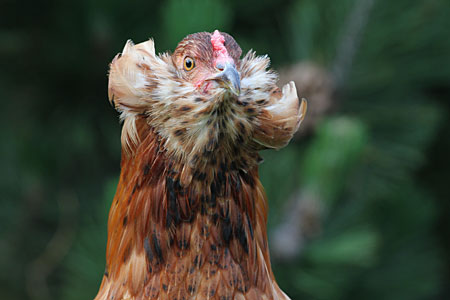
Lethal genes in poultry are mutations that can result in a reduced hatch rate. Developing embryos either die before hatching, or chicks die soon after hatching. Some lethal genes associate with characteristics that poultry breeders deem desirable. But if a mated pair both carry the lethal gene, 25% of their offspring will inherit two copies of the gene and therefore won’t live long.
What are lethal genes?
Lethal genes in poultry are genetic mutations, which luckily are relatively rare. Inheriting two copies of the mutated gene — one from each carrier parent — results in the chick embryo dying during incubation or soon after hatching.
In order for some breeds to conform to their standard descriptions, they must exhibit certain characteristics that associate with lethal genes. But if you breed two such birds to each other, 25% of their offspring will inherit two copies of the lethal gene and therefore will die. It works like this:
|
Parents |
Lethal |
Normal |
|
Lethal |
Lethal (25%) |
Carrier (25%) |
|
Normal |
Carrier (25%) |
Non Carrier (25%) |
In other words, 50% of the chicks will carry the desirable characteristic, 25% will not. And 25% will inherit two copies of the desirable trait along with the lethal gene.
What causes lethal genes in poultry?
Lethal genes typically result from either random genetic mutation or DNA damage due to exposure to some environmental factor, such as radiation. Mutations have many causes, but these are the main ones.
How to detect lethal genes in your breeder flock?
- Research what lethal genes, if any, are present in your breed.
- Note a consistently high death rate during incubation.
- Have breeder stock genetically tested for known lethal genes.
What are some common lethal genes in poultry?
Some lethal genes are well known, others are relatively obscure. Here are a few of the more common ones:
|
Breed |
Involves |
Gene |
Designation |
|
ear tufts |
tufted lethal |
Et |
|
|
crest |
crested duck lethal |
Cr |
|
|
short, thick legs |
Cornish lethal |
Cl |
|
|
short legs |
creeper gene |
Cp |
What to do about lethal genes in a breeding flock?
Reducing the presence of genetic defects in poultry results in healthier flocks. Here are a few strategies:
- Breed carriers to non carriers
- Introduce unrelated breeders
- Avoid breeding carriers
If you avoid breeding carriers of the lethal gene, you also don’t breed for the desirable characteristic (short legs, crest, tufted ears, etc.) But by introducing unrelated breeders you can dilute the concentration of lethal genes.
Most poultry breeders choose to breed carriers that exhibit the desirable trait to non carriers that do not inherit the desirable trait. In that case, 50% of the offspring will be carriers exhibiting the desirable trait, and 50% will be non carriers that do not inherit the desirable trait. It works like this:
|
Parents |
Normal |
Normal |
|
Lethal |
Carrier |
Carrier |
|
Normal |
Non Carrier |
Non Carrier |
Although your non carriers won’t be eligible for exhibition, they may certainly be used for future matings to carriers. Further, if your goal is to have healthy, self-sustaining poultry, you might find non carriers more appealing.
FAQs
What are carriers?
In this case, carriers are breeders carrying a desirable trait that associates with a lethal gene. Carriers exhibit the desirable trait, but carry the lethal gene. Non carriers do not carry a gene for that trait and therefore also do not carry the lethal gene.
How many lethal genes are there?
Researchers have discovered more than 100 lethal genes in chickens. Most of them are relatively rare.
Are lethal genes in poultry sex linked or autosomal?
Although some lethal genes in poultry are sex linked, most of them are autosomal, meaning they do not appear on sex chromosomes.
What is the cure for lethal genes?
Lethal genes have no cure, except to eliminate them from a breeder flock. However, that’s not always possible if you are breeding poultry for aesthetic appeal or to conform to the standard description.
Helpful Links
The Lethal Creeper Gene in Japanese Bantams
And that’s today’s news from the Cackle Coop.
Gail Damerow has raised chickens and various other poultry for more than 5 decades and has written numerous books about them, many of which are available from the Cackle Bookstore. Image by Melani Marfeld.