Description
Black English Orpington Chicken
Breed Overview and Origin
The Black English Orpington Chicken is a large, gentle, dual-purpose chicken known for glossy black plumage, a broad rounded body, loose feathering, winter hardiness, tinted eggs, and an unusually calm temperament. If you want a beautiful, friendly English Orpington with classic breed history and family-friendly backyard appeal, this variety is an excellent choice.
The Orpington breed was created by William Cook in Orpington, Kent, England, during the late 1800s. Cook wanted a hardy dual-purpose chicken that could provide both eggs and meat while also performing well through winter. The first Orpington variety was black, developed in 1886, and Cook entered these Black Orpingtons in local shows with favorable results.
Cackle Hatchery® offers 100% English stock Black English Orpingtons. These birds are selected for the rounder, fuller English appearance that many Orpington enthusiasts prefer. Cackle’s Black English Orpington listing describes the breed as docile, large, dual-purpose, and known for rich brown eggs.
Appearance and Characteristics
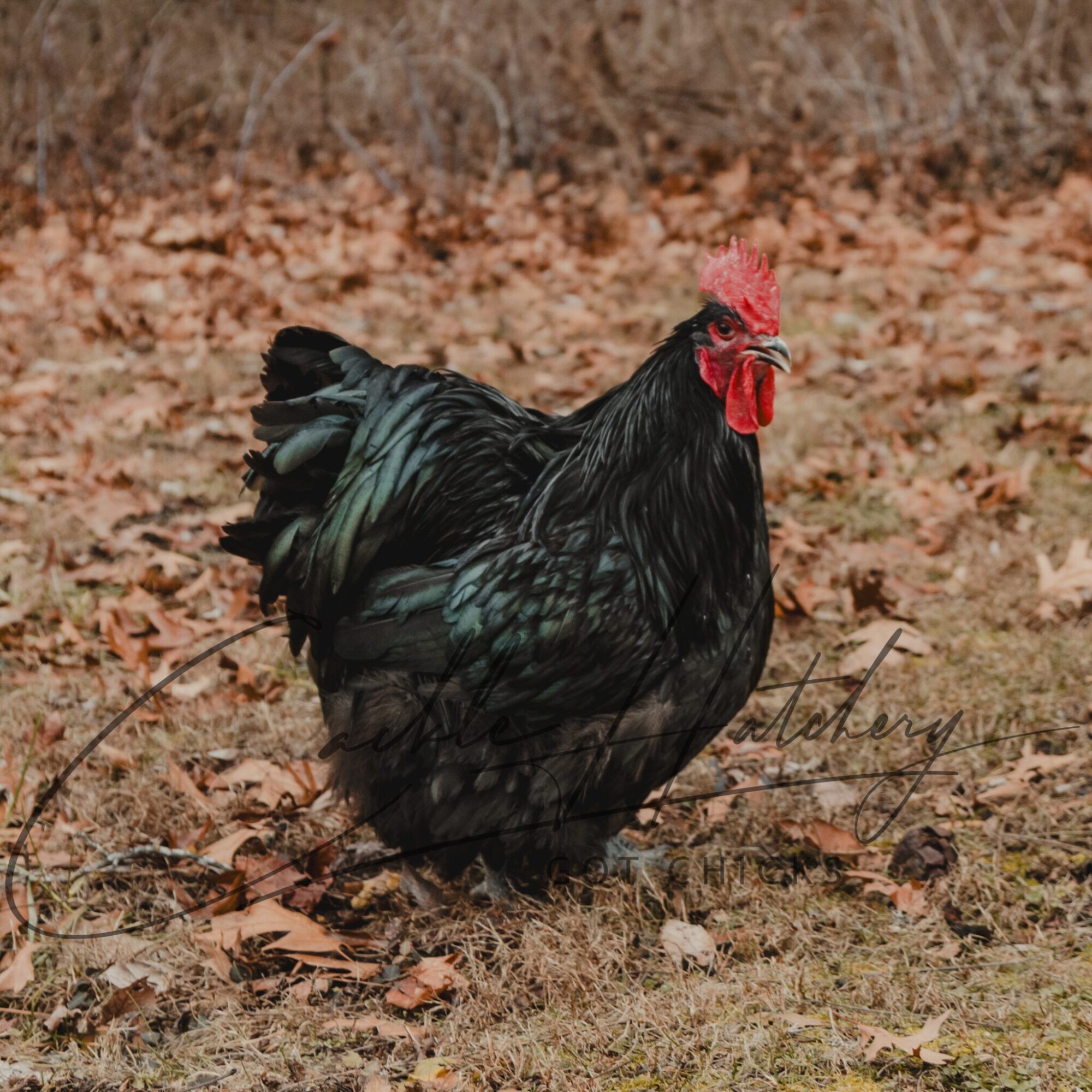
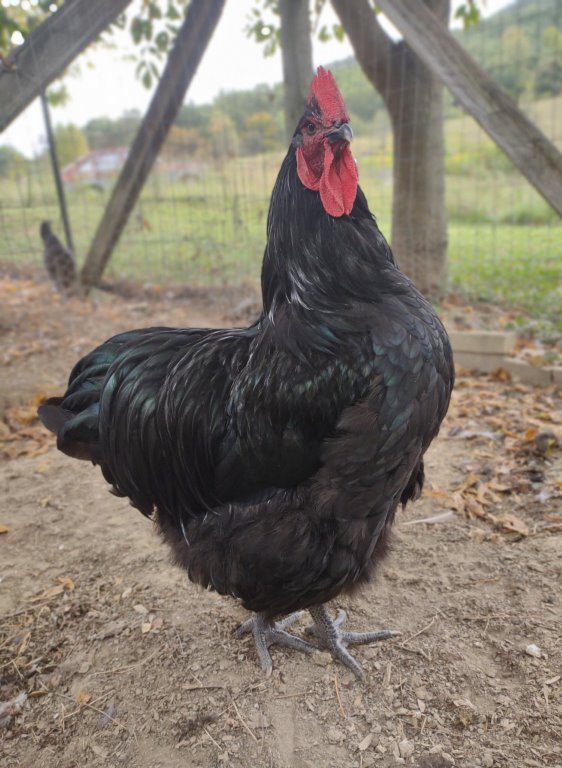
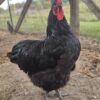
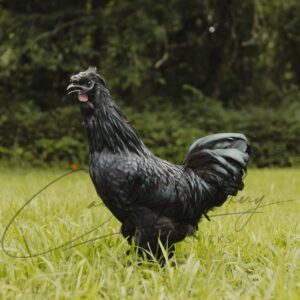
Black English Orpingtons have a deep, broad body, short back, small head, medium-size single comb, low stance, and abundant loose plumage. Their black feathering gives them a striking, polished look in the flock, while their rounded body type gives them the classic English Orpington shape.
The Orpington Club breed standard describes Orpingtons as deep, broad, and cobby, with a short curved back and a broad, deep, well-rounded breast.
Expected traits include:
- Black plumage
- 100% English stock
- Broad, round body type
- Shorter back and shorter legs than many American-type Orpingtons
- Small head
- Medium-size single comb
- Low stance
- Loose, full feathering
- Gentle temperament
- Tinted to brown eggs
- Dual-purpose value
Because English Orpingtons have looser plumage and a rounder body shape, they often look fuller and softer than many production-focused or American-standard Orpington lines.
English Orpington vs American Orpington Type
English Orpingtons and American Orpingtons share the same breed foundation, but they are often selected for different appearances.
A Black English Orpington is typically rounder, fluffier, lower-set, and shorter-backed. The loose plumage helps create the large, soft, rounded appearance that many customers associate with English Orpingtons.
An American or standard Orpington may have a slightly different body outline and is often selected toward American Standard of Perfection expectations. American Orpingtons are more commonly discussed in relation to APA-recognized varieties.
Choose Black English Orpingtons if you want the round English body type, gentle temperament, and 100% English stock.
Choose another Orpington line if you specifically want an APA-recognized American exhibition variety or a more production-focused backyard layer.
Egg Production and Broodiness
Black English Orpington hens are fair layers of medium-size eggs with tinted to brown shells. Cackle’s Black English Orpington listing describes them as dual-purpose birds with rich brown eggs.
Broodiness can vary by hen. Some English Orpington hens may go broody and sit on eggs, while others may focus more on laying. When hens do brood, Orpingtons are often appreciated for their calm nature and mothering ability.
Choose this variety for a balance of beauty, temperament, eggs, and dual-purpose value rather than maximum egg production. For the highest egg output, a production layer will usually be a better choice.
Temperament and Family-Friendly Traits
Black English Orpingtons are known for an unusually gentle temperament. They are easy to socialize, calm around people, and often a good fit for families with children.
This variety can work well for:
- Backyard family flocks
- Customers wanting gentle chickens
- Small farms and homesteads
- Brown or tinted egg flocks
- Orpington enthusiasts
- Customers wanting large, calm birds
- Flocks where temperament matters
- Keepers who enjoy beautiful, full-feathered chickens
Because they are large and calm, Black English Orpingtons are not usually the best choice for highly aggressive mixed flocks. Pair them with other calm or moderately assertive breeds and provide enough feeder, waterer, and roost space.
Winter Hardiness and Heat Tolerance
Black English Orpingtons are extremely winter hardy, thanks in part to their loose plumage and large body size. William Cook originally developed Orpingtons with practical utility in mind, including winter hardiness and dual-purpose value. The Livestock Conservancy also notes that Cook crossed Minorca, Black Plymouth Rock, and Langshan bloodlines while developing the Orpington.
Cackle Hatchery® notes that its Black English Orpingtons also tolerate summer heat. Even so, large, heavily feathered birds still need shade, airflow, and fresh cool water during hot weather.
For cold weather, provide dry bedding, good ventilation, draft protection, and unfrozen water. For hot weather, provide shade, airflow, and room to stay comfortable.
Black English Orpington vs Buff Orpington
Black English Orpingtons and Buff Orpingtons share the same broader Orpington heritage but differ in color, type emphasis, and customer goals.
A Black English Orpington has black plumage, 100% English stock from Cackle Hatchery®, and a rounder English look.
A Buff Orpington chicken has the classic golden-buff plumage that made Buff Orpingtons one of the most popular backyard chickens in the United States.
Choose Black English Orpingtons if you want a rare, round, black English-style Orpington with a gentle personality.
Choose Buff Orpingtons if you prefer the classic buff color and a widely loved backyard breed.
Black English Orpington vs Black Orpington
A Black English Orpington is specifically 100% English stock and selected for English type: rounder body, looser plumage, shorter back, and a lower stance.
A Black Orpington chicken may refer to a more standard or non-English line depending on the source and breeding program.
Choose Black English Orpingtons if you specifically want English type and a full, rounded appearance.
Choose Black Orpingtons if you want a black Orpington but do not require 100% English stock.
Black English Orpington vs Other English Orpington Varieties
Black was the original Orpington color, making Black English Orpingtons especially important to breed history. However, customers who enjoy English Orpington type may also like other rare English-style colors.
If you want a black-and-white laced variety, compare Silver Laced English Orpington chickens.
If you want a celebratory royal color pattern with mahogany, black, and white markings, review Jubilee Orpington chickens.
Customers who want to compare multiple Orpington options can browse Orpington chickens for sale.
Is the Black English Orpington Chicken Right for Your Flock?
Choose Black English Orpington chickens if you want:
- 100% English stock
- The original Orpington color variety
- Glossy black plumage
- A round, full English body type
- A calm and gentle temperament
- A family-friendly backyard chicken
- Tinted to brown eggs
- A large dual-purpose breed
- Winter hardiness
- A bird that can also tolerate summer heat with proper care
However, consider another breed if you need high egg production, a smaller chicken, or an APA-recognized American exhibition variety. In short, Black English Orpingtons are best for customers who want gentle temperament, English Orpington type, classic black plumage, and a beautiful large backyard bird.
Care and Housing Tips
Black English Orpingtons need dependable care and enough space for their large, heavily feathered bodies. They do best with a clean coop, secure run, proper feed, fresh water, and predator protection.
For best results, provide:
- A dry, well-ventilated coop
- Predator-resistant fencing
- Clean bedding
- Fresh water at all times
- Balanced chick starter and age-appropriate feed
- Wide roosting space for large birds
- Roomy nest boxes for medium-size eggs
- Shade and airflow during hot weather
- Protection from drafts and damp bedding in cold weather
- Enough room to keep feathering clean and reduce stress
Because English Orpingtons have loose, full plumage, clean bedding and dry ground help keep feathers in good condition. In warm climates, ventilation and shade are especially important.
Recognition and Availability
English Orpingtons are not yet recognized by the American Poultry Association as a separate English type. Customers interested in APA exhibition should review current American Orpington standards and variety rules before purchasing for show purposes.
Cackle Hatchery® lists Black English Orpingtons as dual-purpose birds known for docile temperament, large size, and rich brown eggs. Since hatch dates and shipping windows can change during the season, customers should check Cackle Hatchery’s Chicken Availability Chart before ordering.
Related Breeds and Helpful Cackle Hatchery® Resources
Customers who like Black English Orpingtons may also enjoy other Orpington varieties, brown egg layers, gentle family breeds, and rare chickens.
Helpful Cackle Hatchery® links for this product page include:
FAQ: Black English Orpington Chicken
What is a Black English Orpington Chicken?
A Black English Orpington Chicken is a large, gentle, 100% English stock Orpington with black plumage, a round body, loose feathering, tinted to brown eggs, and family-friendly temperament.
Who created the Orpington chicken?
William Cook created the Orpington chicken in Orpington, Kent, England, during the late 1800s. The first Orpington variety was black and was developed in 1886.
Was Black the first Orpington color?
Yes. The Black Orpington was the original Orpington color variety developed by William Cook in 1886.
Where does the Orpington name come from?
The breed name comes from Orpington, a town in Kent, England, where William Cook developed the breed.
Are Black English Orpingtons 100% English stock?
Yes. Cackle Hatchery® describes its Black English Orpingtons as 100% English stock.
Are English Orpingtons recognized by the APA?
English Orpingtons are not yet recognized by the American Poultry Association as a separate English type.
What is the difference between English Orpington and American Orpington type?
English Orpingtons are generally rounder, fluffier, lower-set, shorter-backed, and shorter-legged than many American-type Orpingtons.
What do Black English Orpingtons look like?
They have black plumage, a broad body, short back, small head, medium-size single comb, low stance, and loose, full feathering.
What color eggs do Black English Orpingtons lay?
Black English Orpington hens lay medium-size eggs with tinted to brown shells. Cackle’s listing describes the breed as producing rich brown eggs.
Are Black English Orpingtons good layers?
They are fair layers and are best chosen for a balance of eggs, temperament, beauty, and dual-purpose value rather than maximum egg production.
Are Black English Orpingtons broody?
Broodiness is variable. Some hens may go broody, while others may not.
Are Black English Orpingtons friendly?
Yes. Black English Orpingtons are known for an unusually gentle temperament and are easy to socialize.
Are Black English Orpingtons good with children?
Yes. Their calm, gentle nature makes them an excellent backyard pet option for families with children.
Are Black English Orpingtons winter hardy?
Yes. They are extremely winter hardy, helped by their large bodies and loose plumage.
Are Black English Orpingtons heat tolerant?
Yes. Cackle Hatchery® notes that its Black English Orpingtons also tolerate summer heat, although they still need shade, airflow, and cool water.
Are Black English Orpingtons dual-purpose chickens?
Yes. Orpingtons were originally developed as hardy dual-purpose birds for eggs and meat. The Livestock Conservancy notes William Cook developed the breed using practical utility crosses.
What is the difference between Black English Orpington and Buff Orpington?
Black English Orpingtons have black plumage and 100% English stock from Cackle Hatchery®. Buff Orpingtons have golden-buff plumage and are one of the most popular Orpington varieties.
What is the difference between Black English Orpington and Black Orpington?
Black English Orpingtons are specifically 100% English stock with the rounder English body type. Black Orpingtons may refer to other black Orpington lines that are not necessarily English type.
Are Black English Orpingtons good for beginners?
Yes. They can be a good choice for beginners who want gentle, large backyard chickens and have enough coop and run space.
Where can I check Black English Orpington availability?
Customers can check Cackle Hatchery’s Chicken Availability Chart for current hatch and shipping timing. Availability can change during the season.




Reviews
There are no reviews yet