Description
Mottled Japanese Bantam Chicken
Breed Overview and Origin
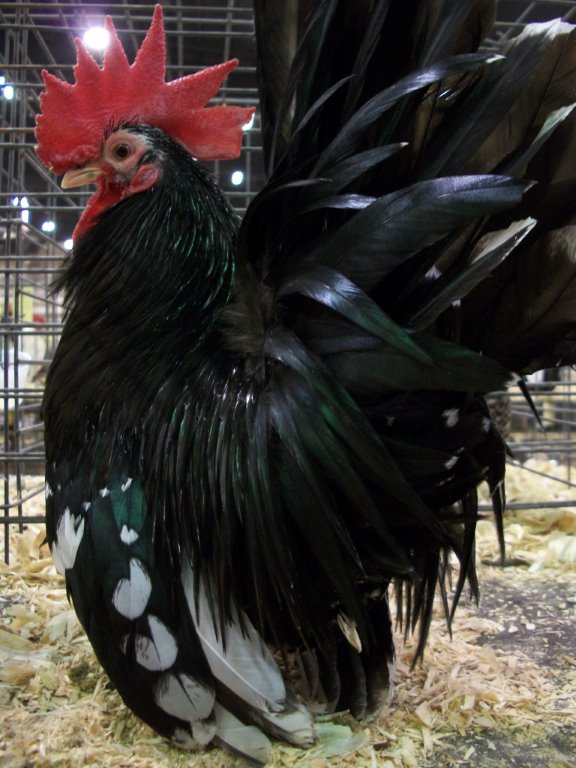
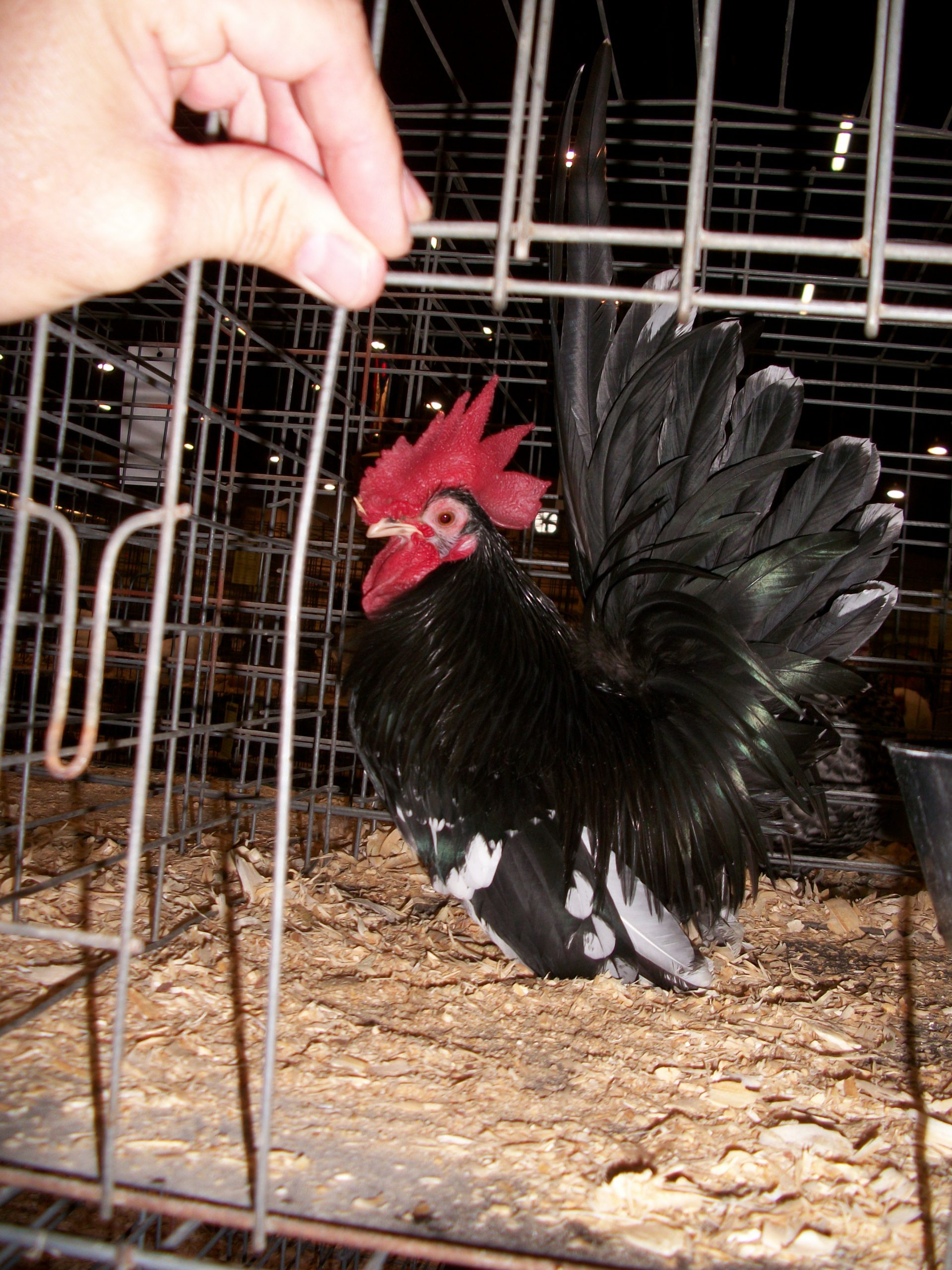
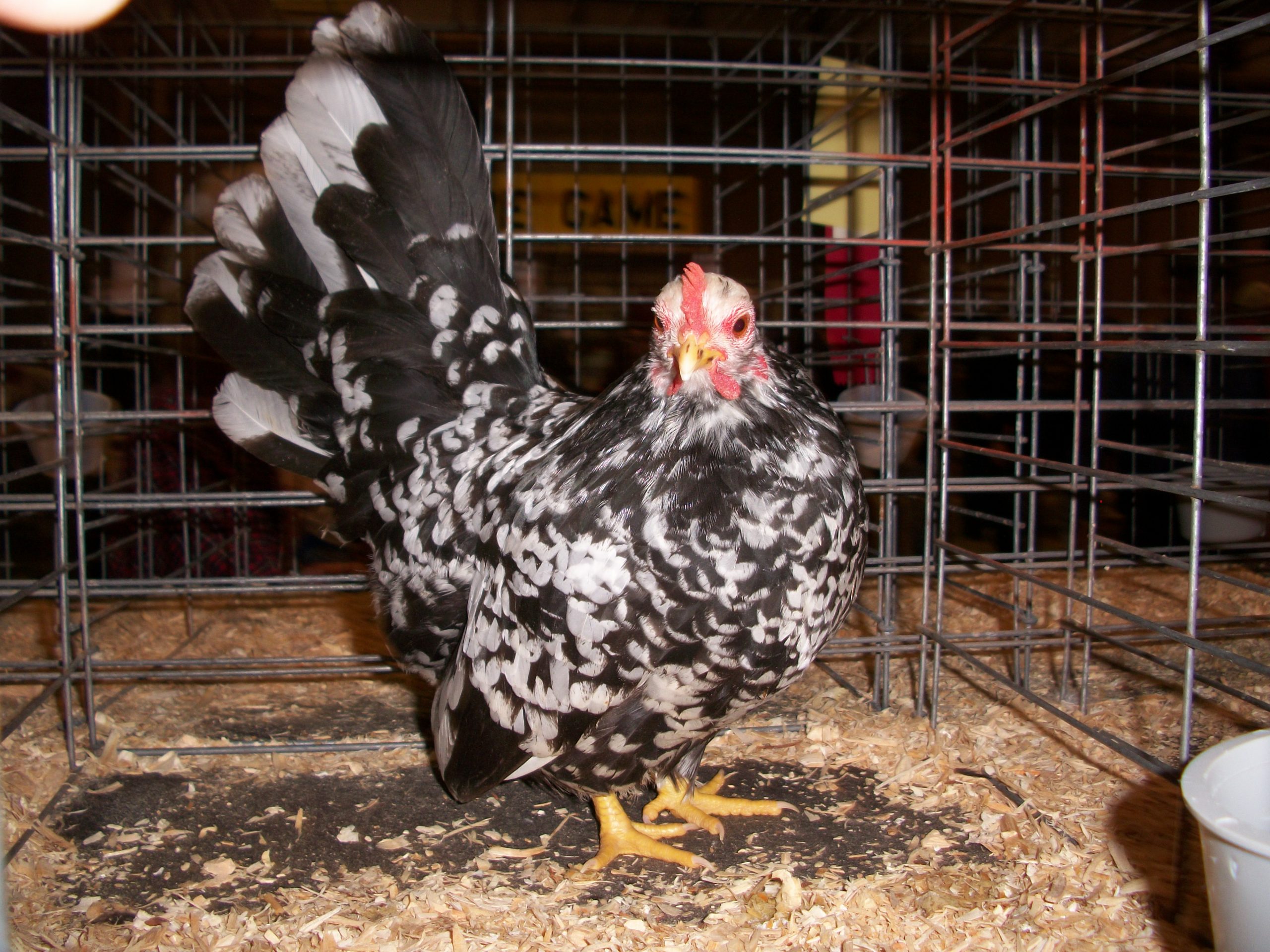
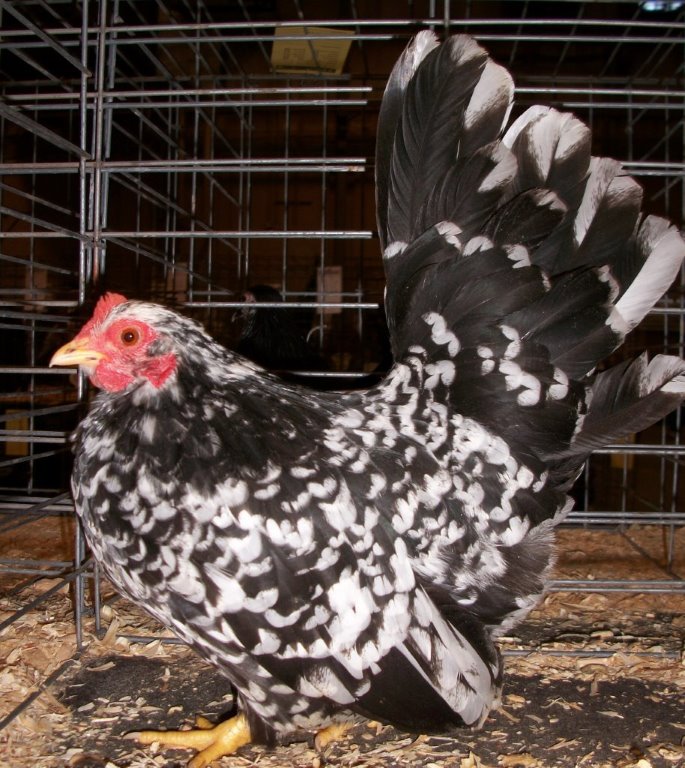
The Mottled Japanese Bantam chicken is a true miniature chicken with black mottled plumage, short legs, large wings, and a proud ornamental stance. If you want a small show bird with classic Japanese Bantam type and a bold black-and-white pattern, this variety makes a beautiful choice for exhibition, 4-H, hobby flocks, and small backyard coops.
Japanese Bantams, also known as Chabo, have a long history as ornamental chickens. The Livestock Conservancy describes the Japanese Bantam as one of the oldest recorded true bantam breeds in the world and notes that birds matching the breed’s description appeared in Japanese art and embroideries as early as the 1600s. The same source explains that Japanese Bantams have no large-fowl counterpart, which means they are true bantams rather than miniature versions of a standard-size breed.
Cackle Hatchery’s guide to True Bantam Chicken Breeds also explains that true bantams are naturally small breeds. That distinction matters for customers who want a genuinely miniature chicken with a long ornamental history, not a reduced-size version of a larger breed.
Cackle Hatchery® offers the Mottled Japanese Bantam as a small, showy bird for customers who enjoy true bantams, clean-legged exhibition chickens, and unique color patterns. The Mottled Japanese Bantam variety entered the American Poultry Standard of Perfection in 1947, according to the original Cackle Hatchery® description.
Appearance and Characteristics
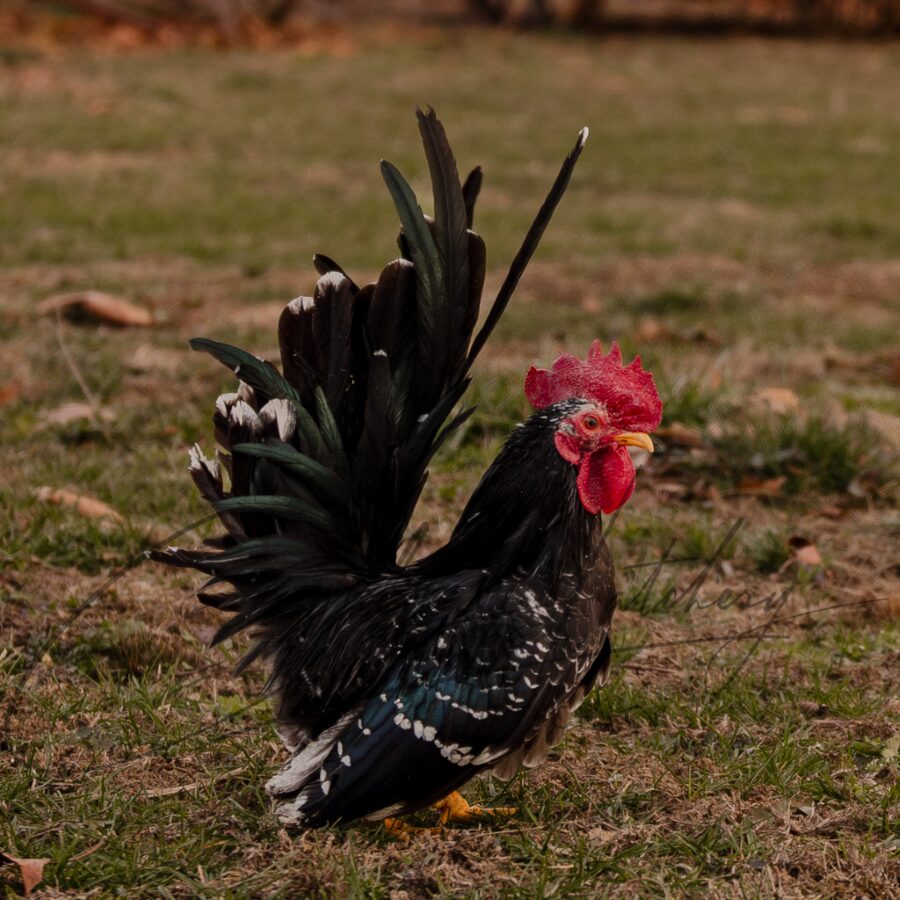
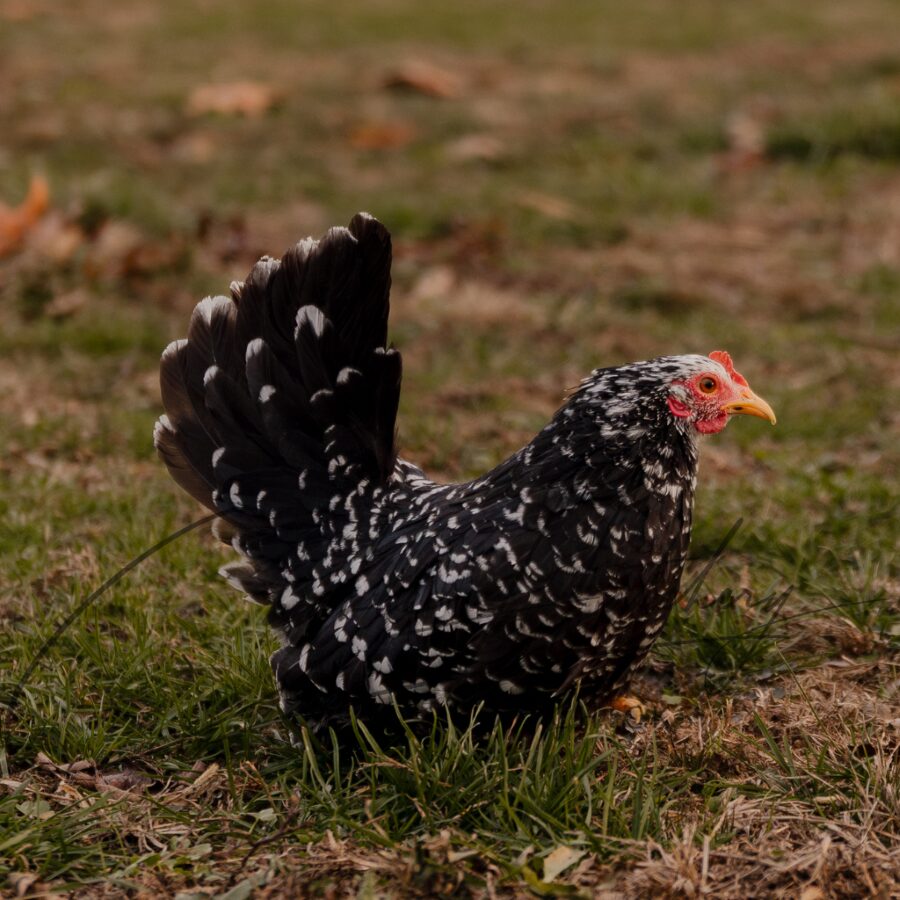
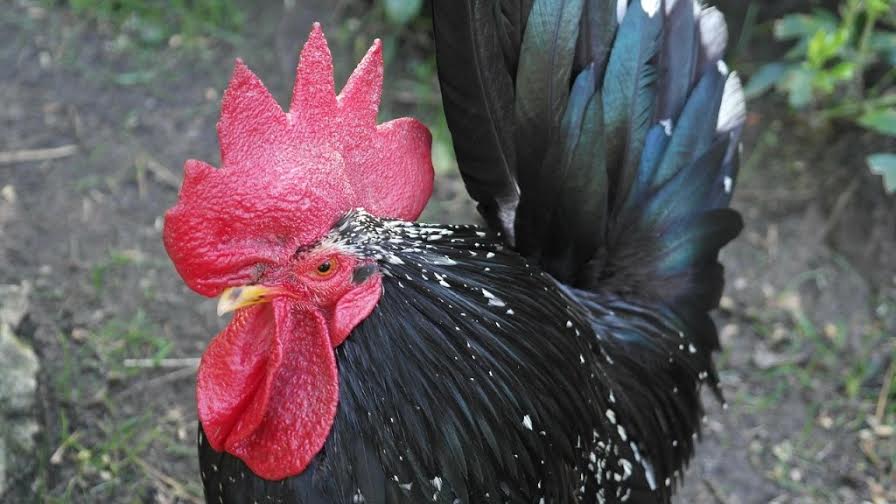
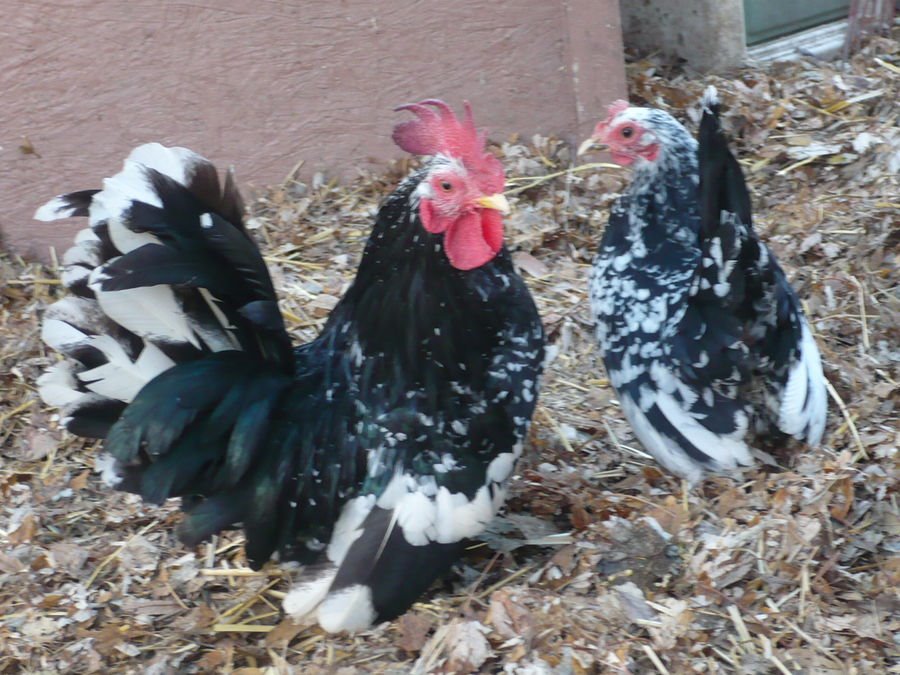
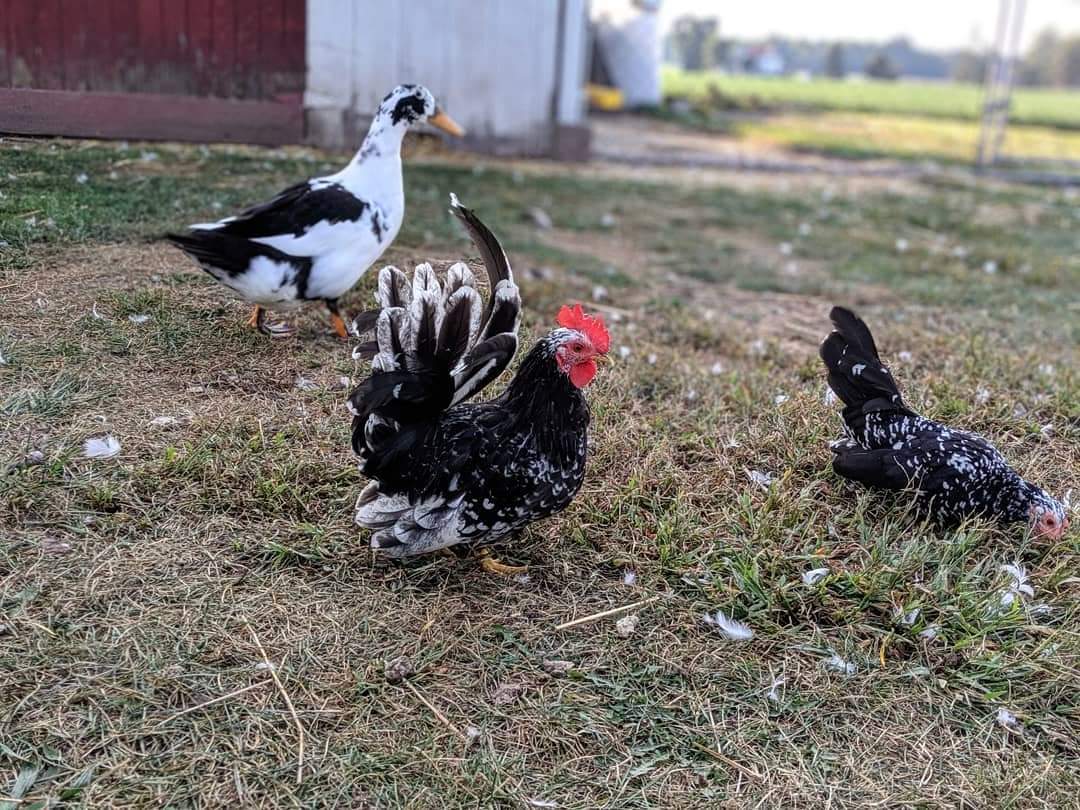
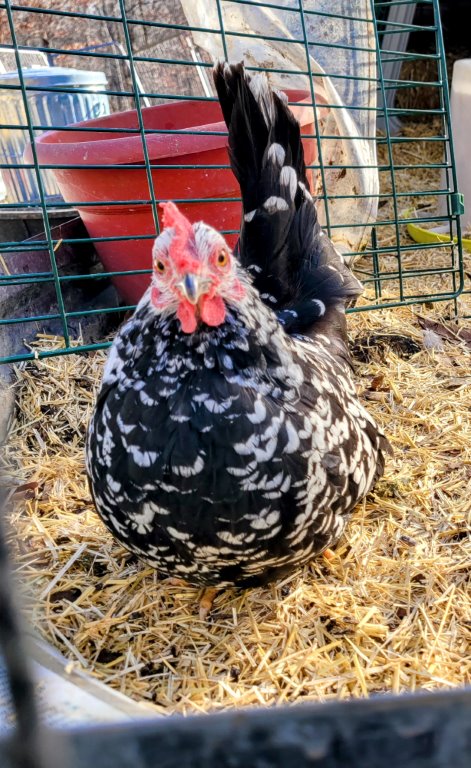
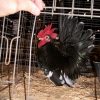
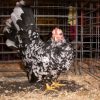
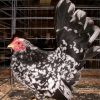
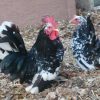
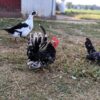
Mottled Japanese Bantams have the classic Japanese Bantam look: short legs, a compact body, a large comb, oversized wings, and a high arched tail. Their wings often touch or nearly touch the ground, giving the bird a wide, low, ornamental profile.
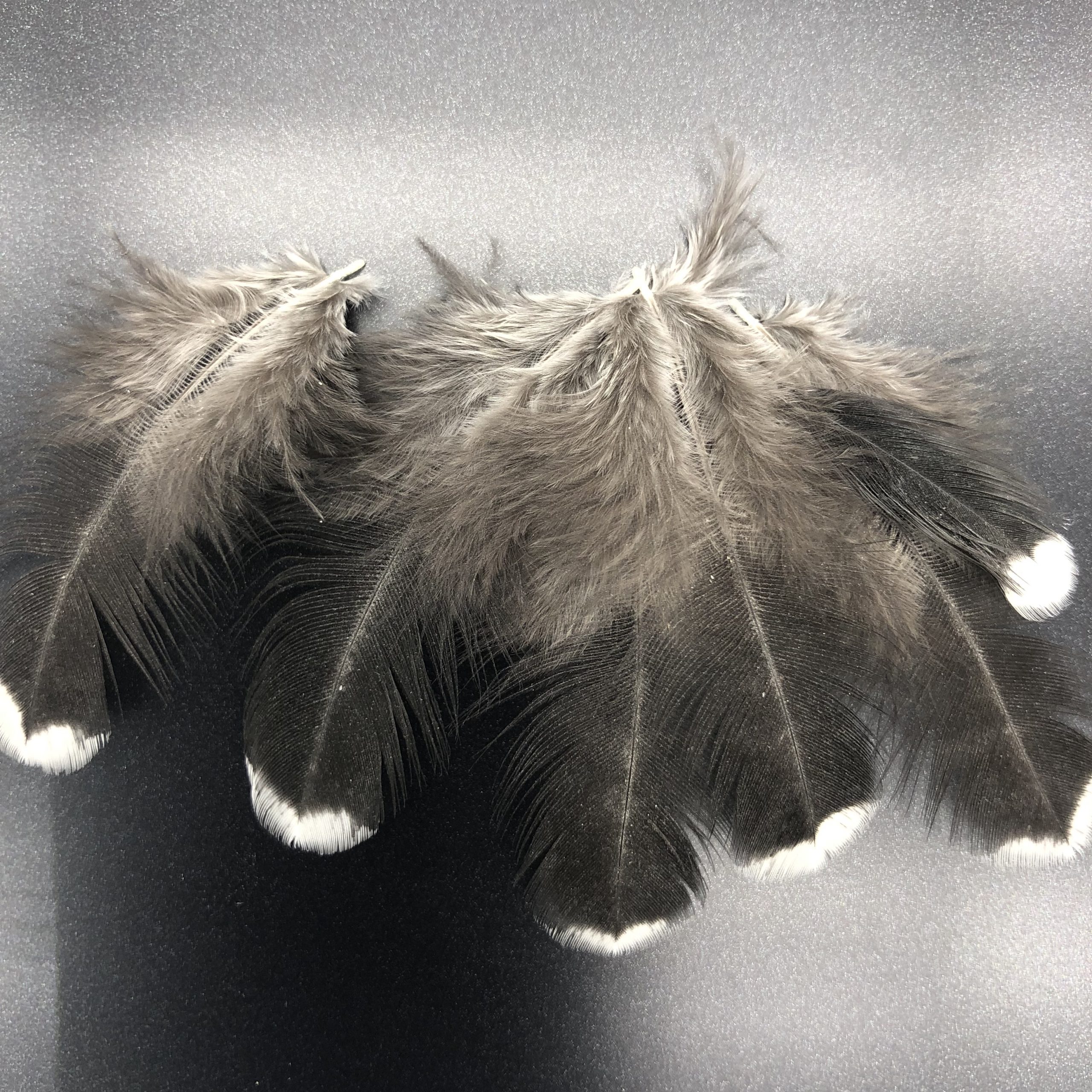
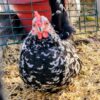
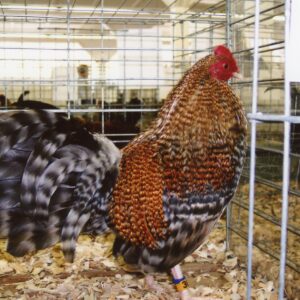
The mottled feather pattern adds strong visual interest. Black feathers tipped or marked with white create a spotted appearance that looks sharp in a show pen and eye-catching in a backyard bantam flock. Because mottling can vary from bird to bird, each Mottled Japanese Bantam may show a slightly different pattern.
Short legs create much of the breed’s charm, but they also affect care. Cackle Hatchery’s article The Lethal Creeper Gene in Japanese Bantams explains that Japanese Bantams bred for exhibition must have short legs under the Standard of Perfection, and that this trait connects to the dominant creeper gene.
Because of their body type, these bantams do best with low roosts, clean bedding, and dry ground. Muddy runs, deep wet bedding, and rough terrain can make short-legged birds uncomfortable.
Mottled Japanese Bantam vs Other Japanese Bantams: How to Choose
Mottled Japanese Bantams share the same short-legged, upright-tailed body type as other Japanese Bantam varieties. The main difference is color.
Choose Mottled Japanese Bantam if you want a black-and-white patterned true bantam with short legs, large wings, and strong exhibition appeal.
Choose Black-Tailed White Japanese Bantam chickens if you prefer a white body with a contrasting black tail. Cackle lists that variety as baby chicks only, with no sexing available and seasonal shipping from early February through mid-August.
Choose Black-Tailed Buff Japanese Bantam chickens if you prefer buff body coloring with a black tail.
Choose White Japanese Bantam chickens if you want an all-white bird with the same Japanese Bantam type. Cackle lists White Japanese Bantams as baby chicks only, with no sexing available and seasonal shipping from early February through mid-August.
Choose Black Japanese Bantam chickens if you prefer glossy black feathering, short legs, and large wings. Cackle describes the Black Japanese Bantam as a true bantam with glossy black feathering, short legs, and large wings.
For customers who want a hatchery-choice mix, the Japanese Bantam Assortment Special offers assorted Japanese Bantam varieties based on what hatches.
Egg Production and Utility
Mottled Japanese Bantams serve mainly as ornamental, pet, and exhibition chickens. Their small size, short legs, large wings, arched tail, and mottled coloring make them more valuable for beauty and show appeal than for production.
Hens may lay small eggs, but customers should not choose this breed for steady egg production. If you want a flock focused on eggs, a standard-size layer or a more productive bantam will usually fit better. However, if your goal is a true bantam with personality, compact size, and exhibition style, the Mottled Japanese Bantam offers plenty of charm.
Because Japanese Bantams are very small, they do not serve as meat birds. Their value comes from ornamental type, companionship, exhibition potential, and breed preservation.
Temperament and Suitability
Mottled Japanese Bantams are generally well behaved, alert, and full of personality. Their small size makes them appealing for hobby flocks, small backyard setups, and youth exhibition projects.
Still, small birds need careful protection. Secure fencing, covered runs, and predator-safe housing help protect them from hawks, cats, raccoons, and other threats. Since Japanese Bantams have short legs, clean and dry ground matters more than it does for taller breeds.
This variety can work well for:
- Poultry exhibitors
- 4-H and youth show projects
- Bantam hobby flocks
- Small backyard coops
- Customers who want true miniature chickens
- Keepers who enjoy ornamental breeds
- Families who want a small pet chicken with style
A different breed may suit you better if you want heavy egg production, a meat bird, or a rugged free-range chicken for rough outdoor conditions.
Is the Mottled Japanese Bantam Chicken Right for Your Flock?
Choose Mottled Japanese Bantam chickens if you want:
- A true bantam chicken breed
- A small ornamental show bird
- Black mottled feathering
- Short legs and arched tail feathers
- Large wings that touch or nearly touch the ground
- A pet or hobby bird with classic Japanese Bantam type
- A variety recognized in the American Poultry Standard of Perfection in 1947
- A breed that works well in secure small-flock setups
- A bantam that pairs well with other small, calm chickens
Consider another breed if you mainly want high egg production, meat, or a hardy free-range chicken for rough conditions. Mottled Japanese Bantams shine when customers value compact size, ornamental beauty, and show-bird character.
Important Note About the Lethal Creeper Gene
Japanese Bantams carry an important genetic trait that customers should understand, especially if they plan to breed them. The short legs that define exhibition Japanese Bantams connect to the creeper gene. Cackle Hatchery’s article The Lethal Creeper Gene in Japanese Bantams explains that Japanese Bantams bred for exhibition must have short legs under the Standard of Perfection. Unfortunately, the dominant creeper gene can reduce hatch rates because embryos with two copies usually die during incubation.
This genetic pattern does not mean the birds are unhealthy. Instead, it explains why Japanese Bantam eggs may hatch at lower rates than customers expect from some other breeds. Breeders should learn how the short-leg trait works before planning a breeding pen.
For customers who simply want pets or show birds, the creeper gene mostly provides helpful background. For breeders, however, it becomes an important part of responsible flock planning.
Breed History and Preservation
Japanese Bantams have a long ornamental history. The Livestock Conservancy notes that Japanese Bantams, known as Chabo in Japan, were revered as living garden ornaments and often passed down in families from generation to generation. Today, fanciers in Europe, the United Kingdom, and the United States continue to admire the breed’s tiny legs, large tail, and dramatic proportions.
The Mottled Japanese Bantam variety entered the American Poultry Standard of Perfection in 1947, according to the original Cackle Hatchery® description. That recognition gives the variety a clear place in American exhibition poultry.
Cackle Hatchery® also preserved a valuable breeder note for this variety: in 2015, Cackle added bloodline from Paul Kroll to improve shorter legs and wing size. That flock-history detail matters because Japanese Bantams depend heavily on correct body type, short legs, and wing carriage.
For customers who enjoy heritage-style exhibition poultry, this breed offers more than small size. It connects a backyard flock to centuries of Japanese ornamental breeding and modern American bantam shows.
Recognition and Availability
The Mottled Japanese Bantam variety entered the American Poultry Standard of Perfection in 1947, according to the original Cackle Hatchery® description. It belongs to the clean-legged, single-comb bantam type and remains a strong choice for customers who want a small ornamental show bird.
Cackle Hatchery’s Bantam Chickens for Sale category notes that Cackle offers many bantam breeds for pets, showing, small backyards, and variety. The category also notes that many bantam breeds and colors typically hatch and ship from February through August, with booking often starting in January.
Because bantam availability can change quickly, customers should check the Chicken Availability Chart before ordering. Cackle’s availability chart helps customers review current hatch and shipping timing before placing an order.
Related Breeds and Helpful Cackle Hatchery® Resources
Customers who like Mottled Japanese Bantams may also enjoy other Japanese Bantam varieties and clean-legged bantam breeds from Cackle Hatchery®. Start with the Bantam Chickens for Sale category to compare miniature chickens, true bantams, and ornamental show birds.
For customers who want a hatchery-choice mix, the Japanese Bantam Assortment Special offers assorted Japanese Bantam varieties based on what hatches. The Clean Leg Bantam Assortment Special may also include Japanese Bantams along with other clean-legged bantam breeds.
Helpful Cackle Hatchery® links for this product page include:
FAQ: Mottled Japanese Bantam Chicken
What is a Mottled Japanese Bantam chicken?
A Mottled Japanese Bantam chicken is a true bantam variety with black mottled feathers, short legs, large wings, and an arched tail. Customers usually choose it for pets, exhibition, 4-H, and ornamental backyard flocks.
Are Mottled Japanese Bantams true bantams?
Yes. Japanese Bantams are true bantams, which means they do not have a large-fowl counterpart. Cackle’s True Bantam Chicken Breeds article explains that true bantams are naturally miniature chicken breeds.
What color eggs do Mottled Japanese Bantams lay?
Mottled Japanese Bantam hens may lay small eggs. Customers should choose this breed mainly for ornamental and exhibition value rather than heavy egg production.
Are Mottled Japanese Bantams good egg layers?
No. Japanese Bantams do not rank as heavy egg layers. They serve mainly as ornamental, pet, and show chickens rather than production birds.
Are Mottled Japanese Bantams friendly?
Mottled Japanese Bantams can make enjoyable pet chickens when keepers handle them calmly and provide a safe setup. Their small size and showy personality make them fun for hobby flocks.
Are Mottled Japanese Bantams good for beginners?
They can work for beginners who understand bantam care. New keepers should provide secure housing, low roosts, dry bedding, predator protection, and a safe setup for short-legged chickens.
Are Mottled Japanese Bantams good for children or 4-H?
Yes. Mottled Japanese Bantams can work well for 4-H and youth exhibition projects when children handle them gently and adults help with care.
Are Mottled Japanese Bantams good for free range?
They can enjoy outdoor time, but a secure covered run usually works better than open free range. Their small size and short legs make predator protection especially important.
Are Mottled Japanese Bantams cold hardy?
Mottled Japanese Bantams can handle cool weather with a dry, draft-free coop and good ventilation. Because they are small and short-legged, they need clean bedding and protection from wet ground.
Are Mottled Japanese Bantams heat tolerant?
They can do well in warm weather when keepers provide shade, ventilation, and cool clean water. During extreme heat, small bantams need close attention because they can stress quickly.
Do Mottled Japanese Bantams go broody?
Japanese Bantams may show broodiness, but customers should not choose this variety only for hatching. Broodiness can vary by individual hen, season, age, and flock management.
How big do Mottled Japanese Bantams get?
Mottled Japanese Bantams are very small chickens. They are true bantams, so they stay much smaller than standard-size chickens and fit well in small ornamental or exhibition flocks.
Are Mottled Japanese Bantams good for showing?
Yes. Mottled Japanese Bantams make excellent show birds because of their short legs, large wings, mottled feather pattern, arched tail, and recognized exhibition type.
What is the lethal creeper gene in Japanese Bantams?
The lethal creeper gene affects the short-leg trait in Japanese Bantams. Cackle Hatchery explains that birds with one copy show short legs, while embryos with two copies usually die during incubation, which can reduce hatch rates.
What is the difference between Mottled Japanese Bantam and Black-Tailed White Japanese Bantam?
Mottled Japanese Bantams have black mottled feathering. Black-Tailed White Japanese Bantam chickens have white body feathering with a black tail.
What is the difference between Mottled Japanese Bantam and Black Japanese Bantam?
Mottled Japanese Bantams have black feathers marked with white mottling. Black Japanese Bantam chickens have glossy black feathering without the mottled pattern.
Does Cackle Hatchery® offer other Japanese Bantams?
Yes. Cackle Hatchery® offers several related varieties, including Black-Tailed Buff Japanese Bantam chickens, Black-Tailed White Japanese Bantam chickens, White Japanese Bantam chickens, Black Japanese Bantam chickens, and Gray Japanese Bantam chickens.
Where can I check Mottled Japanese Bantam chick availability?
Customers can check Cackle Hatchery’s Chicken Availability Chart for current hatch and shipping timing. Bantam availability can change during the season, so checking the chart helps customers plan ahead.





Christina Wilson –
MY FAVORITE Bantam breed ever!! I purchased 5, sent 6 but ended up with only 3 survivors. They are now 3 months old and i have 2 Roos and 1 Hen! They have the most personality out of all my Bantams. They are so soft and will come to you, very friendly and make me laugh! I want more Mottleds, please send more 😉 Thank you Cackle I love them so much!
Whittni (@WhitsFlock) –
These Mottled Japanese are great! We kept 2 roosters and 1 pullet of this variety. 1 rooster is exceptionally docile and the other rooster is just gorgeous to look at and hand feed (he’s not a hold me cuddle type of rooster like the other). The pullet was always skittish as a chick and into a pullet as well. Normally we don’t keep any skittish chickens at all. However, she was exceptionally beautiful. Her tail is noticeably higher than our gray japanese bantam pullets and her legs are super short. I think she would place at a county fair. The roosters are glossy pretty boys. One rooster has 5 points on his comb, nice and thick–the less friendly one. The friendly roo who likes to be babied has 7 points. However I think they’re growing into gorgeous birds. I do think both the Mottled male and females are a bit bigger than other Japanese Bantam varieties I’ve raised, still VERYYYY QUIET breed and variety. I love that trait about Japanese. Between both boys, I’ve heard them crow maybe 4 times in the past month. It’s wild, and they coexist with my banty flock and OEGB rooster without any issues. One of the best breeds! Just remember they need a covered run since they’re so short. Straw helps them a lot in winter.
Cute but there’s a problem –
Well
My chickens are alive and well today I have 4 hens and 1 roo pretty good but my rooster is infertile
Alyjah –
I don know
I order 5 chicks got 4 hens and 1 rooster pretty great! But my only rooster I have isn’t fertile and is missing toe nails,
Prismtz01 –
Sweetest birds ever!
I ordered 5 chicks for my little sister, and I just have to say, I’ve fallen in love with these buddies as well<3 you can’t go wrong with these little cuties!
martin –
Hello
Hello and thanks for reaching out to me i really appreciate your business…i had great experience placing my order with you guys. Very friendly staff. I recieved 9 out of 5 mottled japanese bantam that i ordered on only 4 survived
dk –
Thanks
All my chicks did the best they’ve ever done.
Packing peanut –
Surprise!
Got one of these that was a packing peanut in one of our local feed stores order of chickens. They sold it to me aa silkie but I knew it wasn’t.
No one could figure out what this chicken nugget was so I emailed cackle and they responded swiftly.
I did have a few chicks die almat immediately. Nothing was wrong. I know because I helped the feed store unliad the chicks. Lost 4 blue silkies day one but this lil nugget has been a champ and is thrivin and is really active and social. Really this breed the best so far.
Noah Vance –
A great bantam to start out with!
I purchased 15 of these in 2015. I purchased another 25 this spring(2018) and out of the 40 chicks 16 hens made it to adulthood. I have managed to hatch out over 100 chicks this spring using the older stock from 2015. They are an outstanding bantam to have on your farm. The hens sit on clutches of 10-12 eggs and every one will hatch. I would recommend this bantam 110%
Emily Ohio April 2008 –
Thank You Cackle Hatchery
I received my order this morning and could not be more pleased! I ordered 30 chicks and received 57. They are beautiful! Also I want to thank you for offering a discount to 4-Hers! I really appreciate it. I will be showing my birds at the fair this year. You folks also have AWESOME customer service, so keep up the good work! You have won my business!