Description
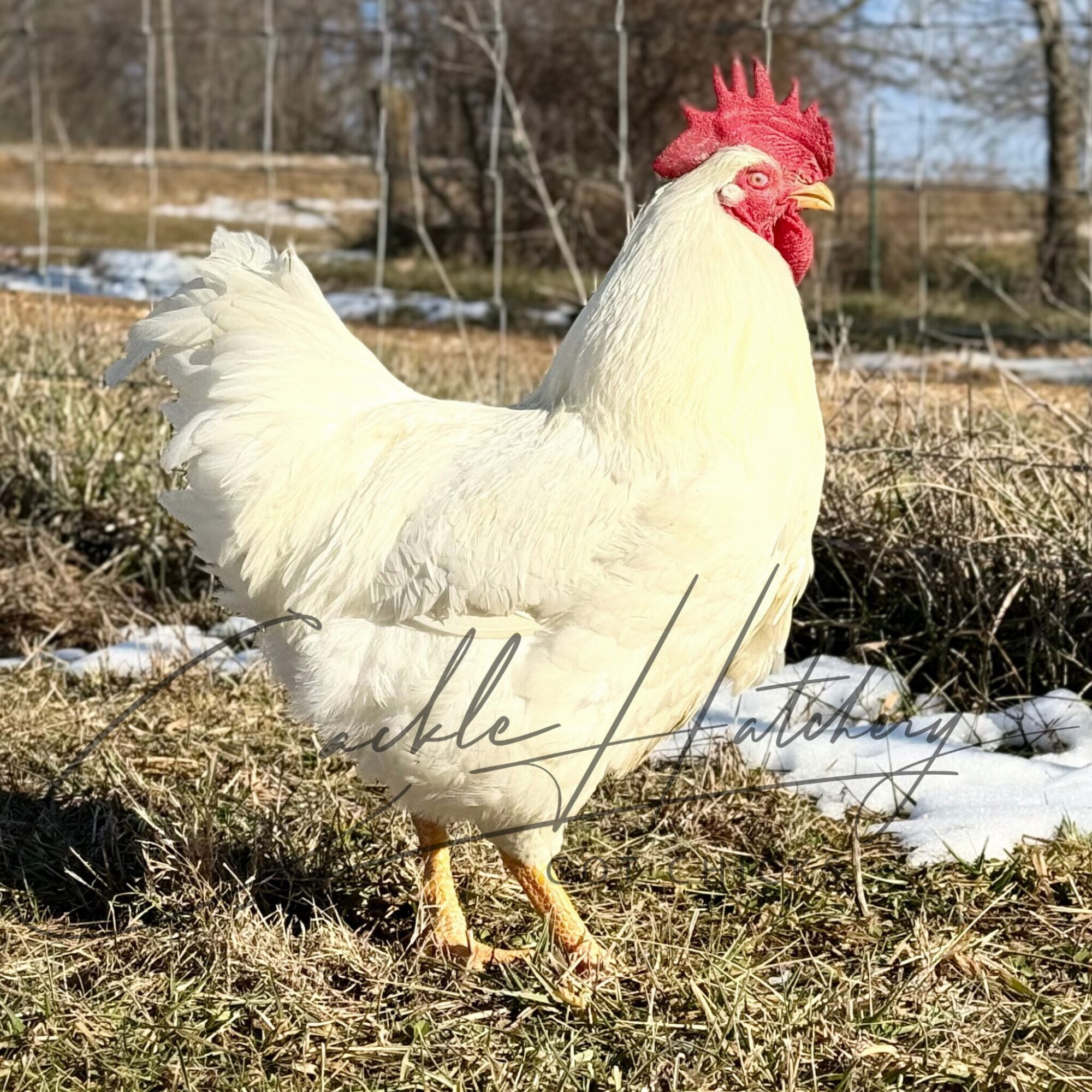
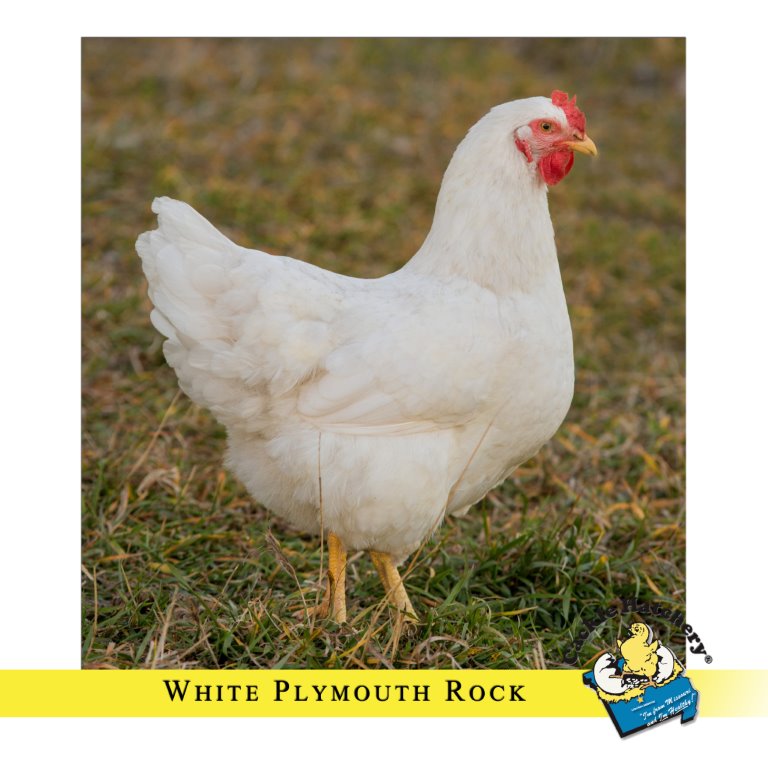
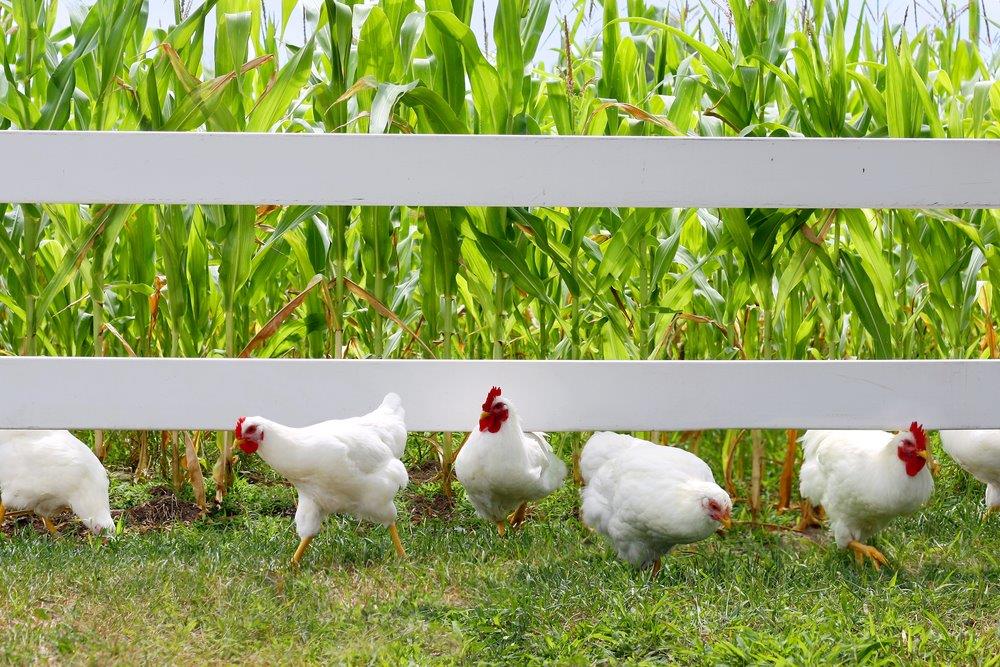
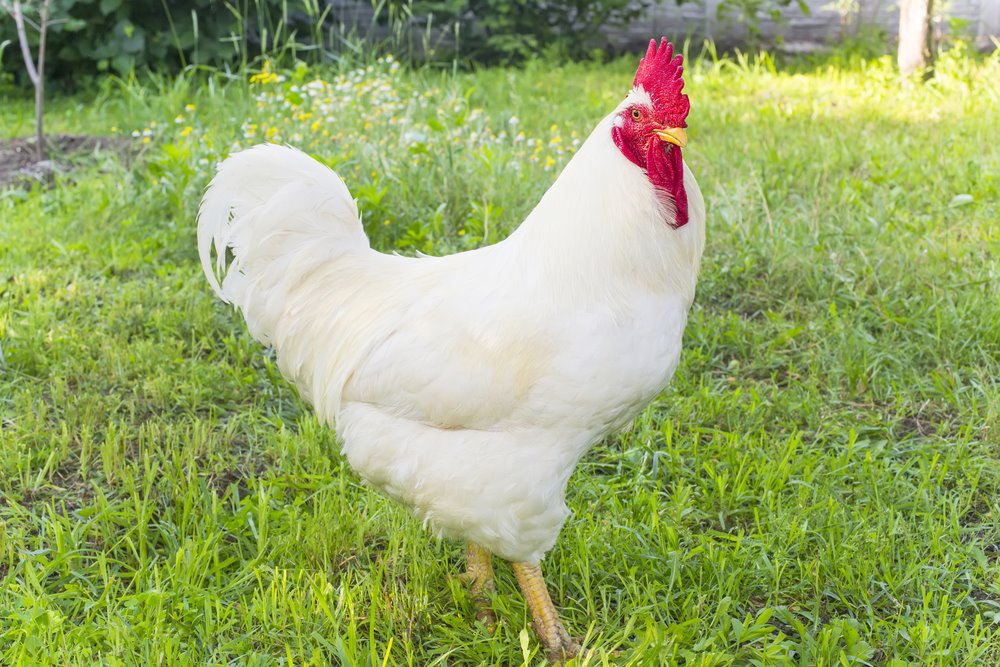
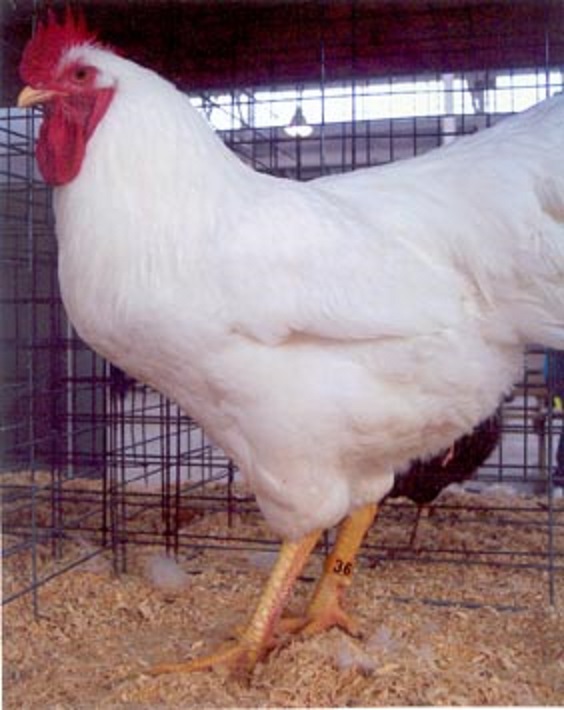
White Plymouth Rock Chicken
Breed History and American Heritage
The White Plymouth Rock Chicken, often called simply the White Rock, was recognized as a distinct pure breed and admitted to the American Standard of Perfection in 1888. This breed is part of the historic Plymouth Rock family and represents one of the classic American farm chickens that many people remember from traditional family farms.
The White Rock remains an important American poultry heritage breed, valued for both egg production and meat quality. It continues to play a role in modern poultry production as part of the female side used in some commercial Cornish Broiler Cross breeding programs.
Cackle Hatchery® has been developing its White Plymouth Rock bloodline since 1937, focusing on dependable egg production, strong growth, and a calm temperament suited for backyard flocks.
Production and Performance
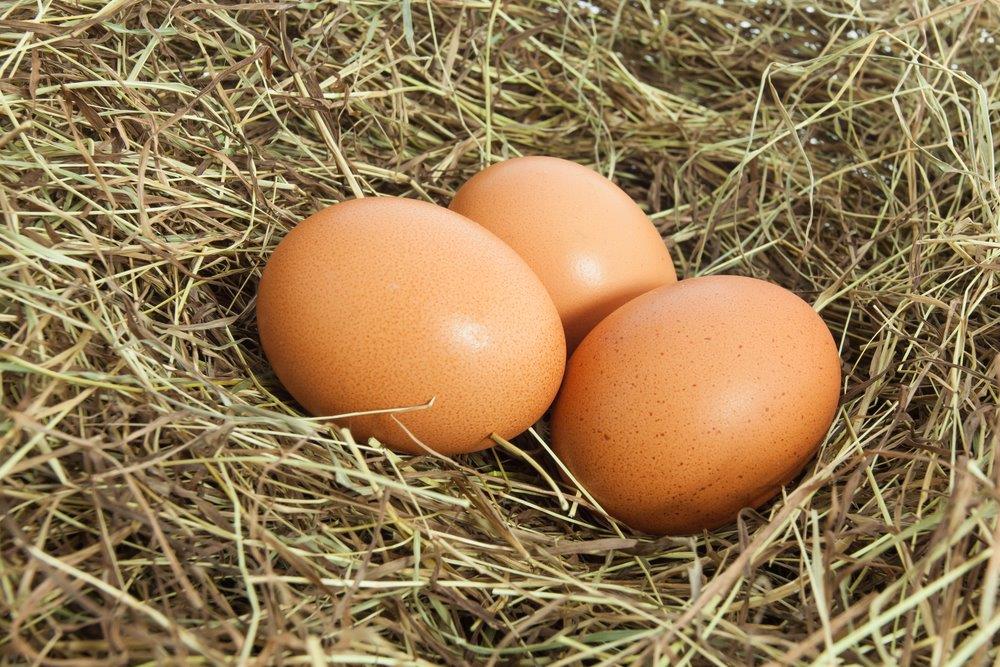
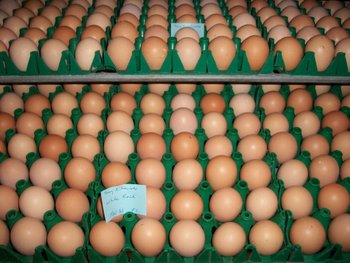
The White Plymouth Rock is considered an excellent dual-purpose chicken, producing both quality meat and steady egg production. Hens typically lay large to extra-large brown eggs, averaging about 200 to 280 eggs per year, depending on flock management and environment.
White Rock hens also mature relatively early and often begin laying around 5 months of age, making them one of the earlier maturing heritage laying breeds. Cockerels grow well and are known for making excellent fryers.
Adult hens typically weigh around 7½ pounds, while roosters average about 9½ pounds. Pullets usually weigh about 6 pounds, and cockerels about 8 pounds, giving this breed a strong, well-balanced body size for both egg and meat production.
Appearance and Breed Characteristics
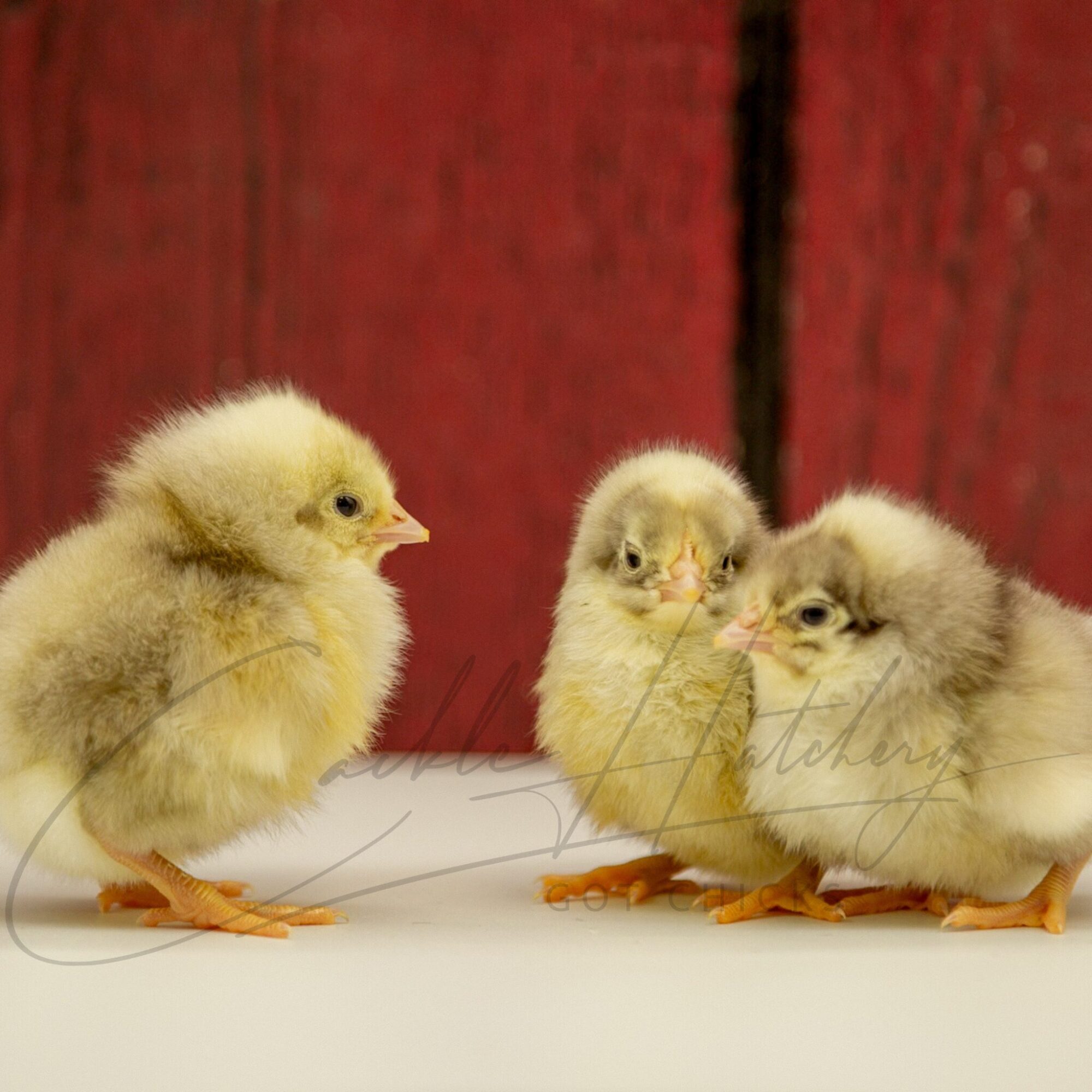
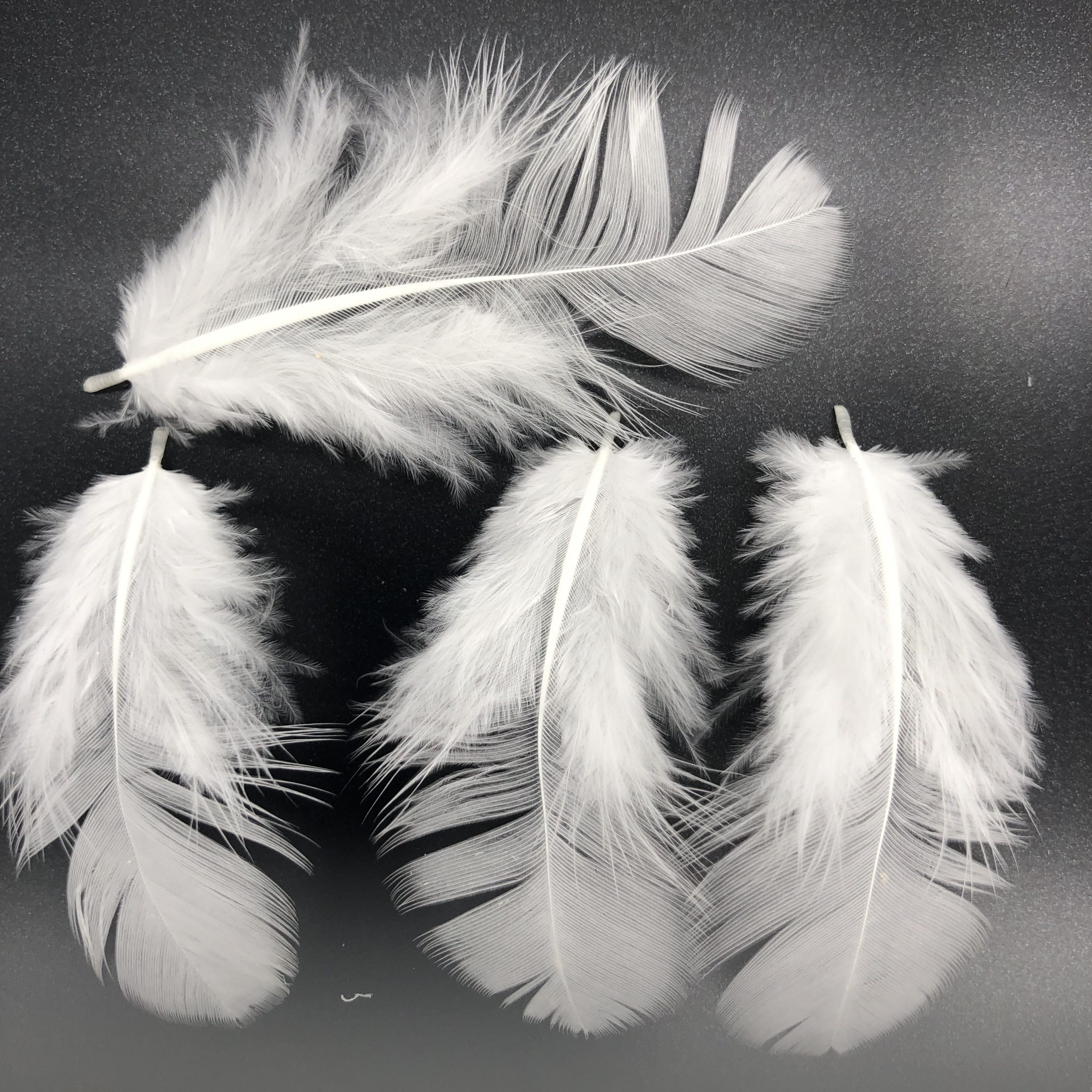
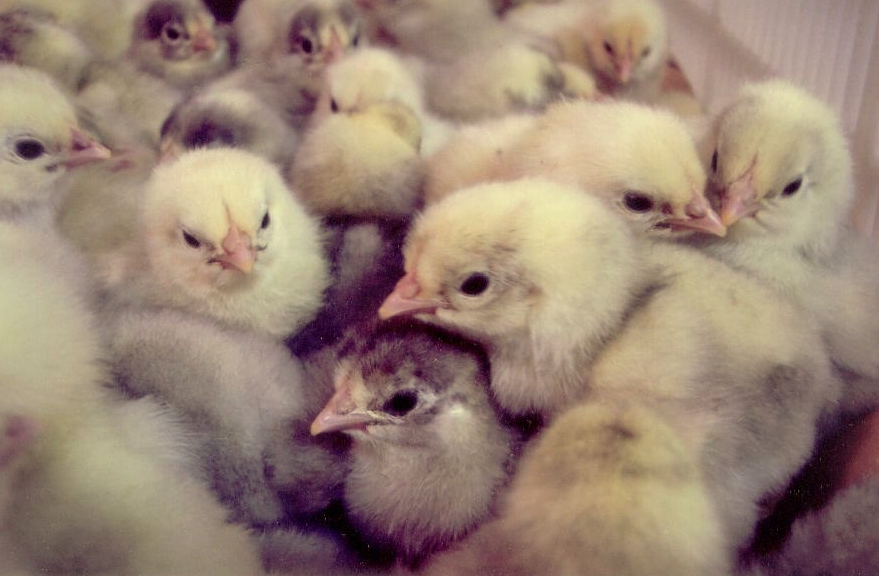
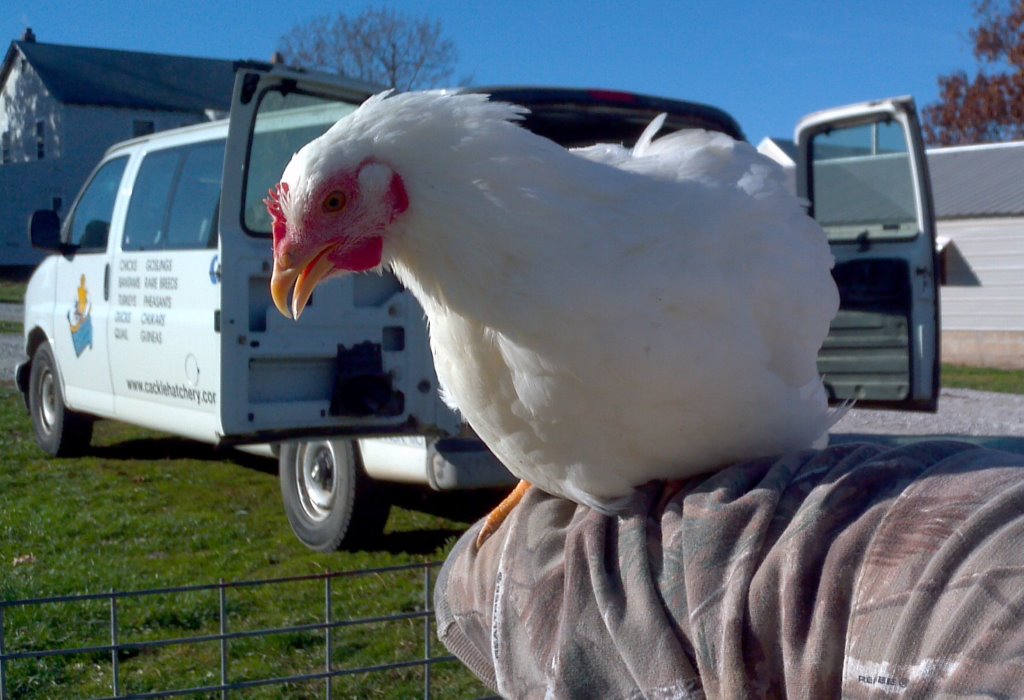
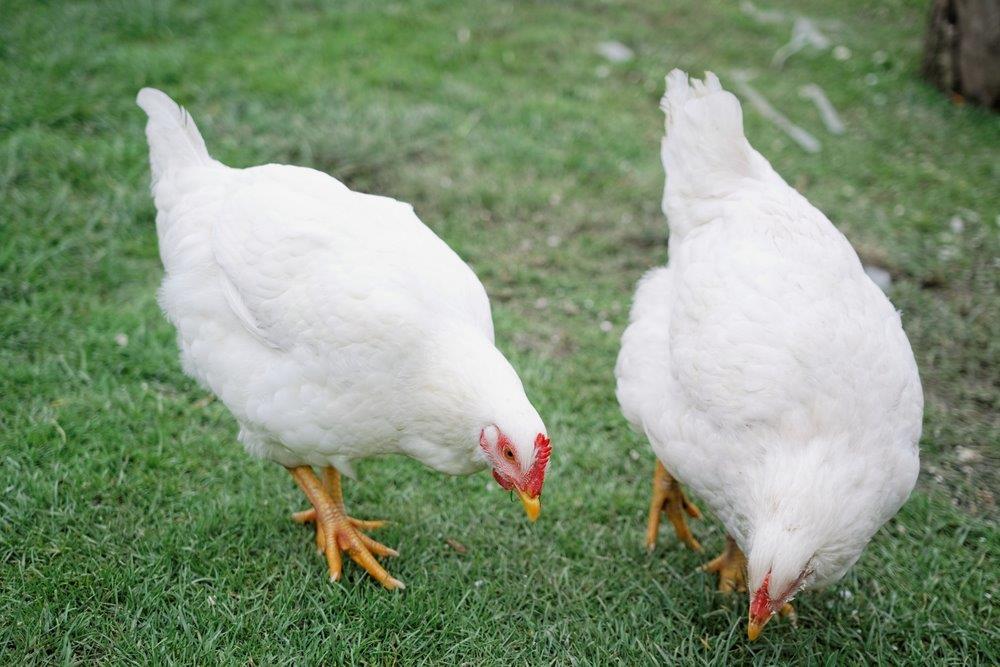
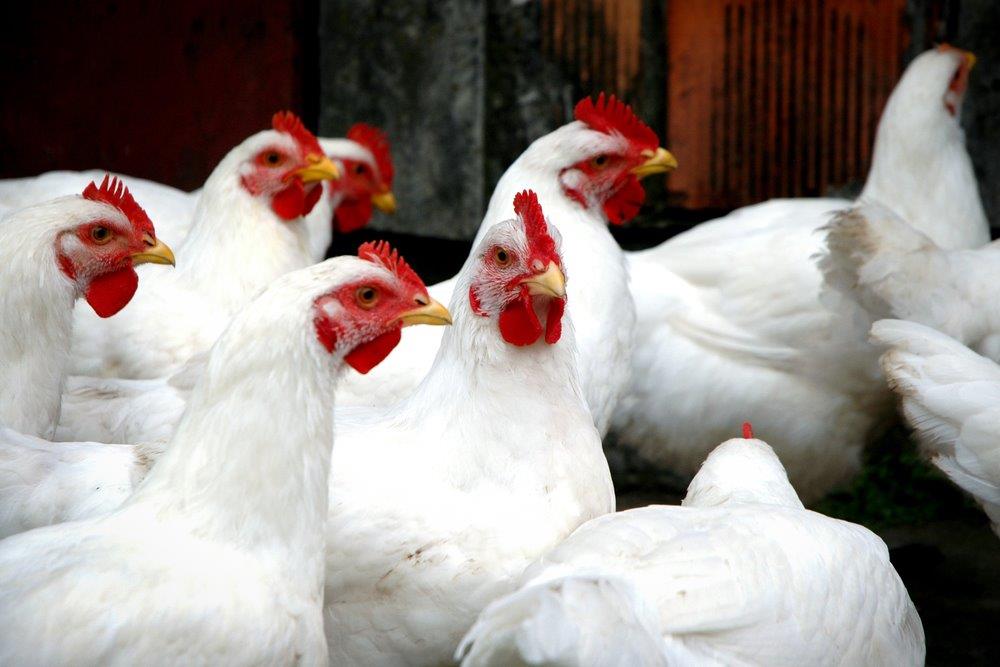
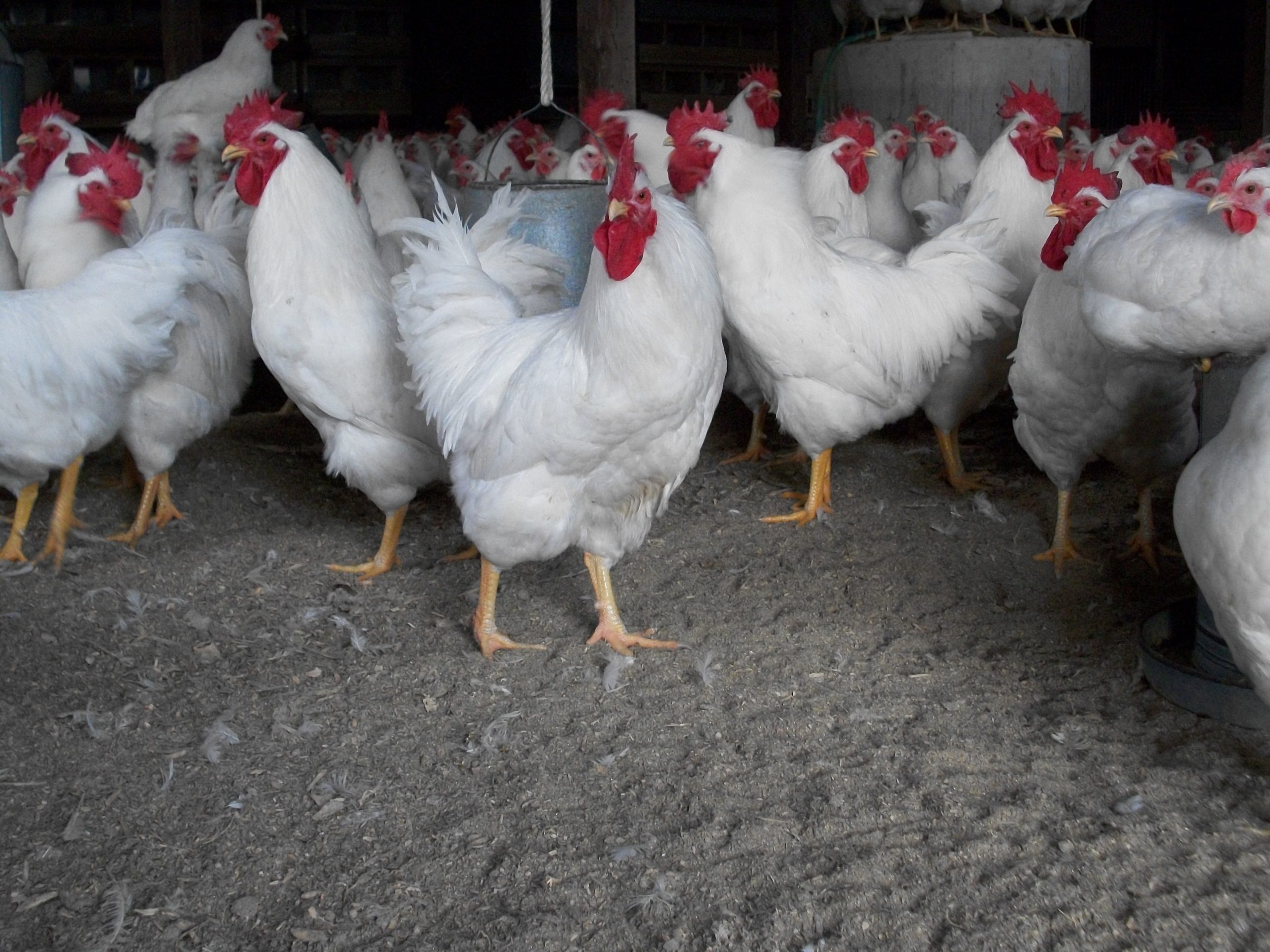
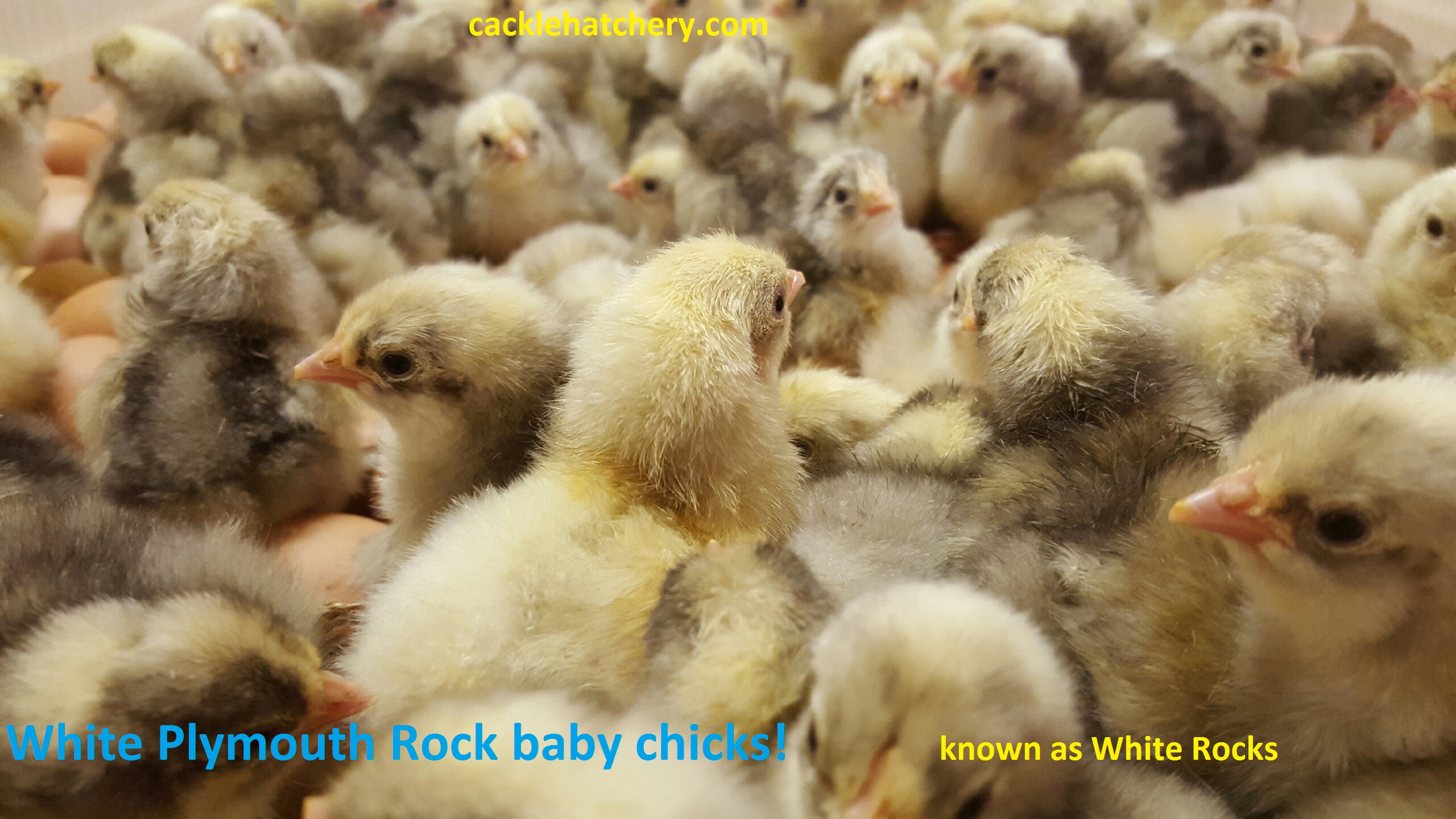
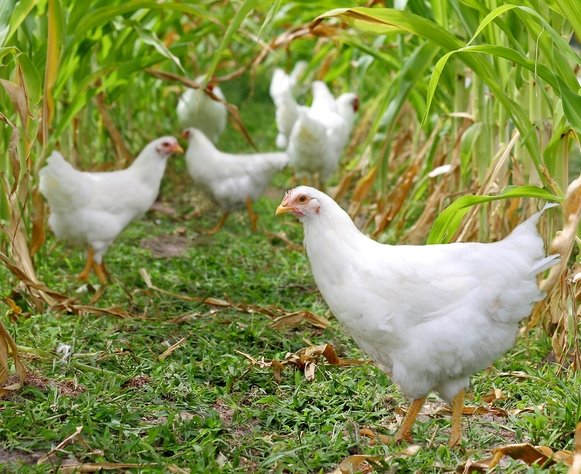
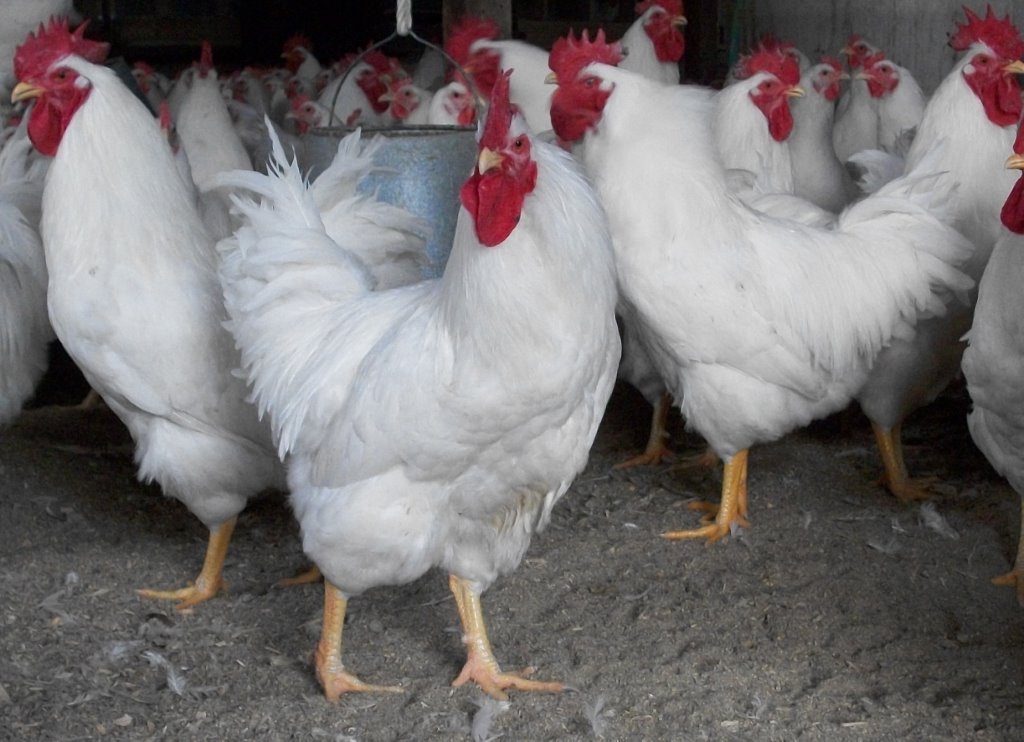
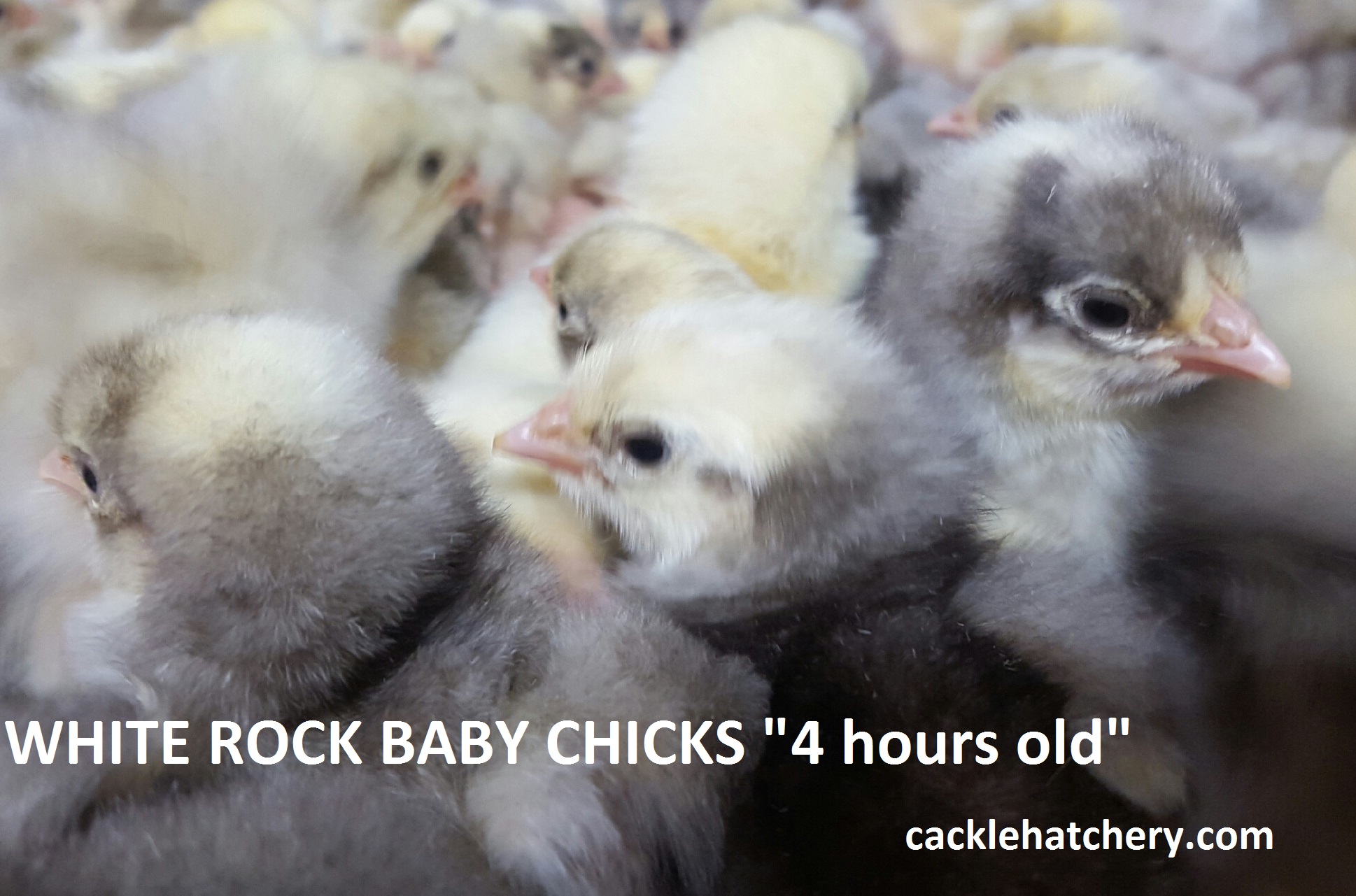
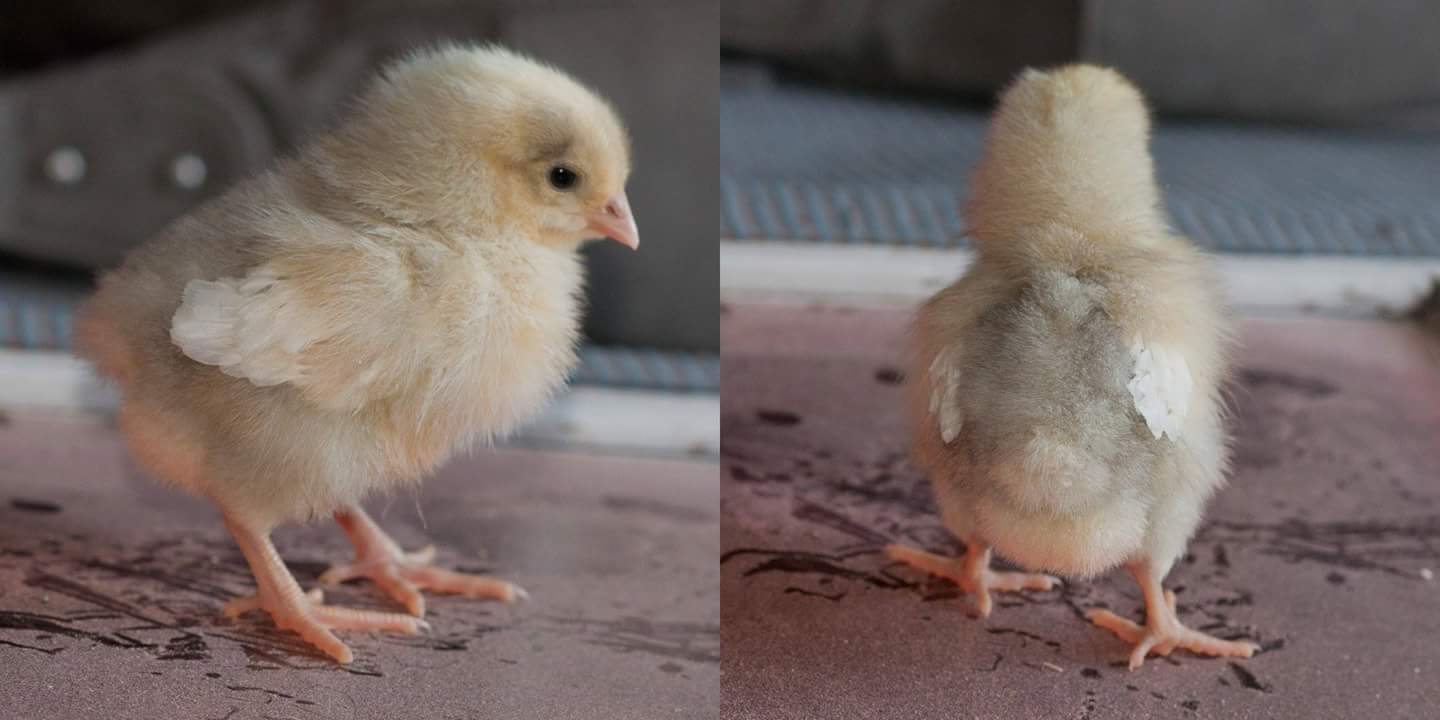
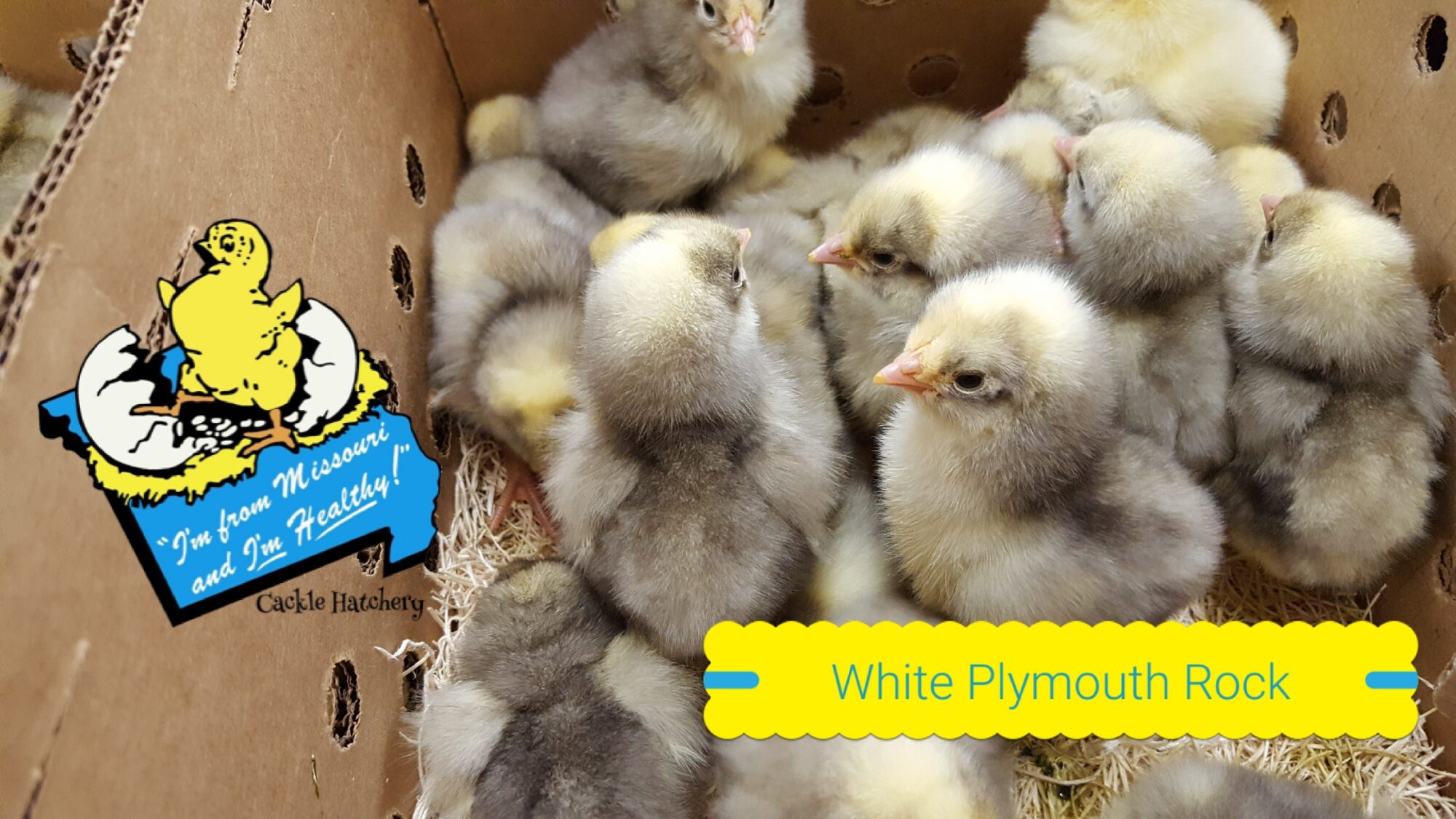
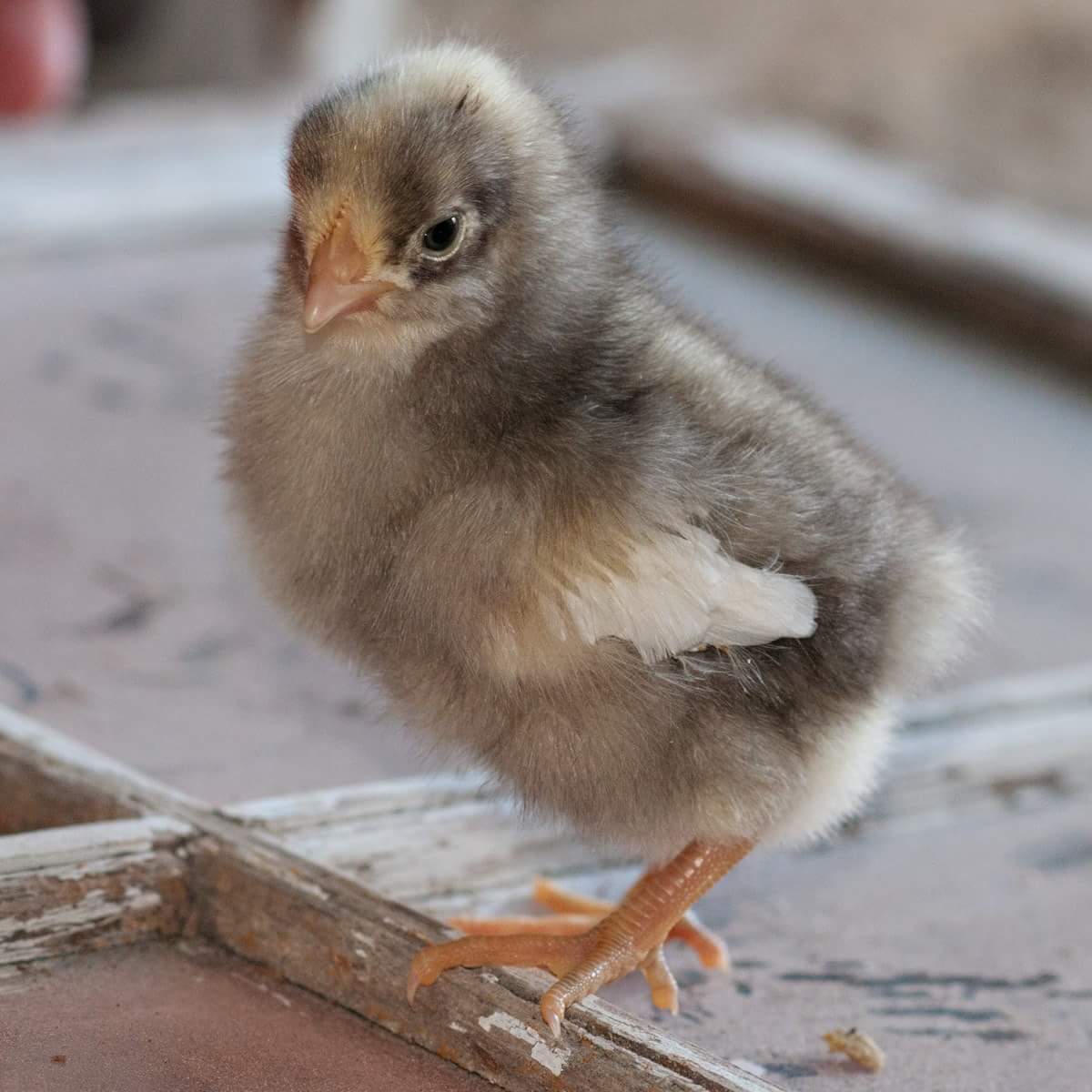
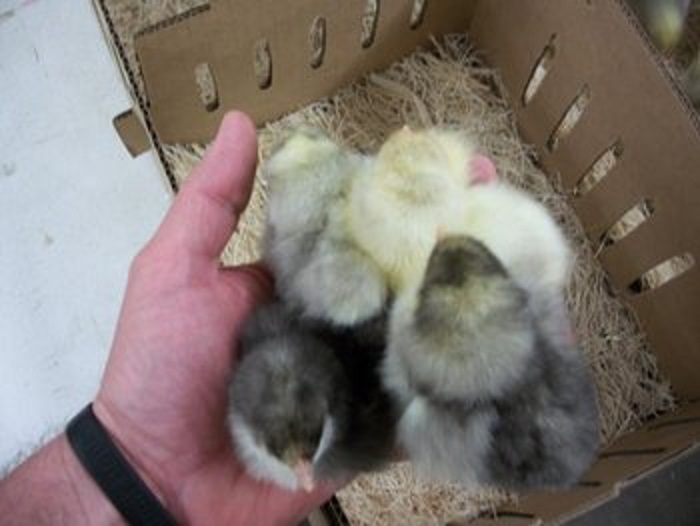
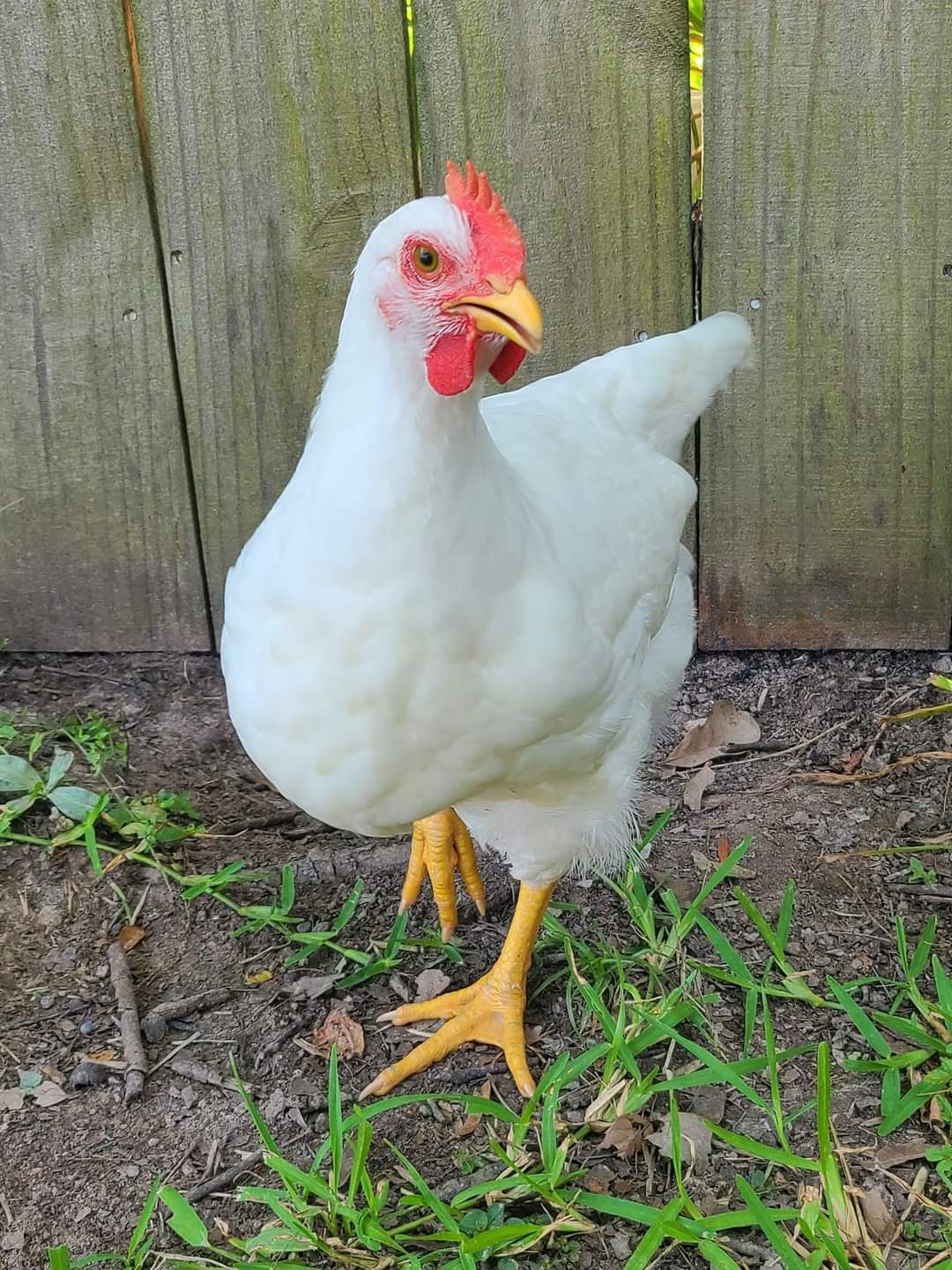
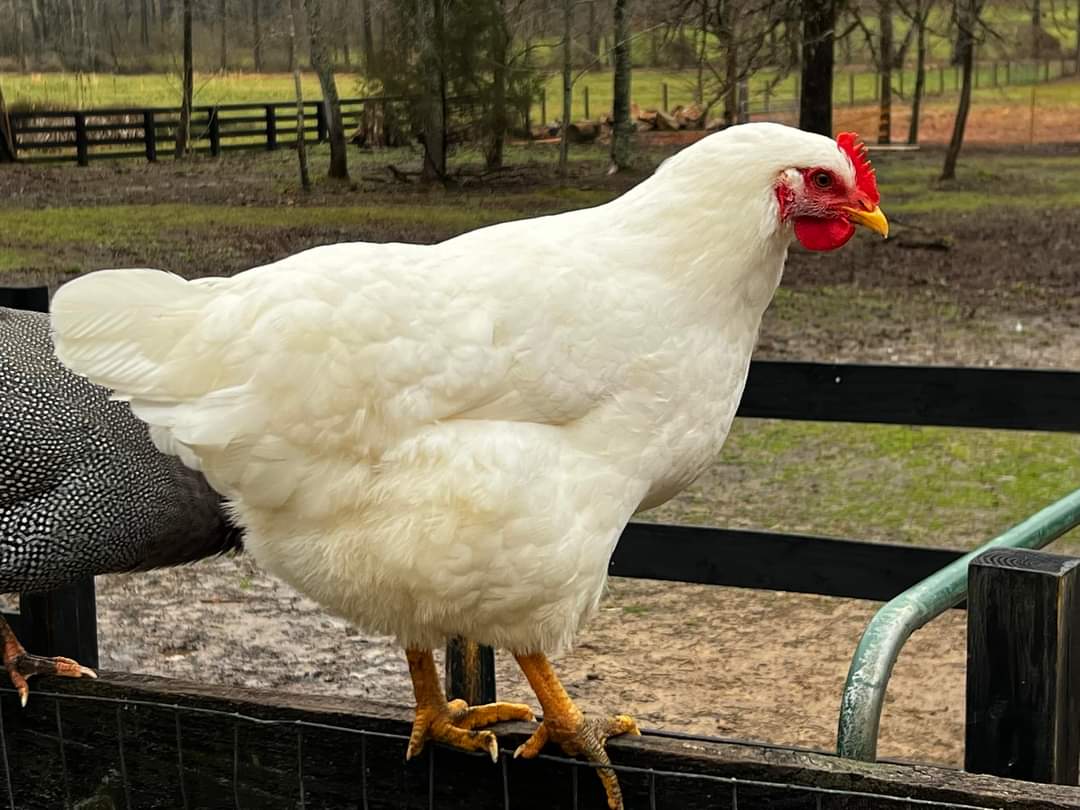
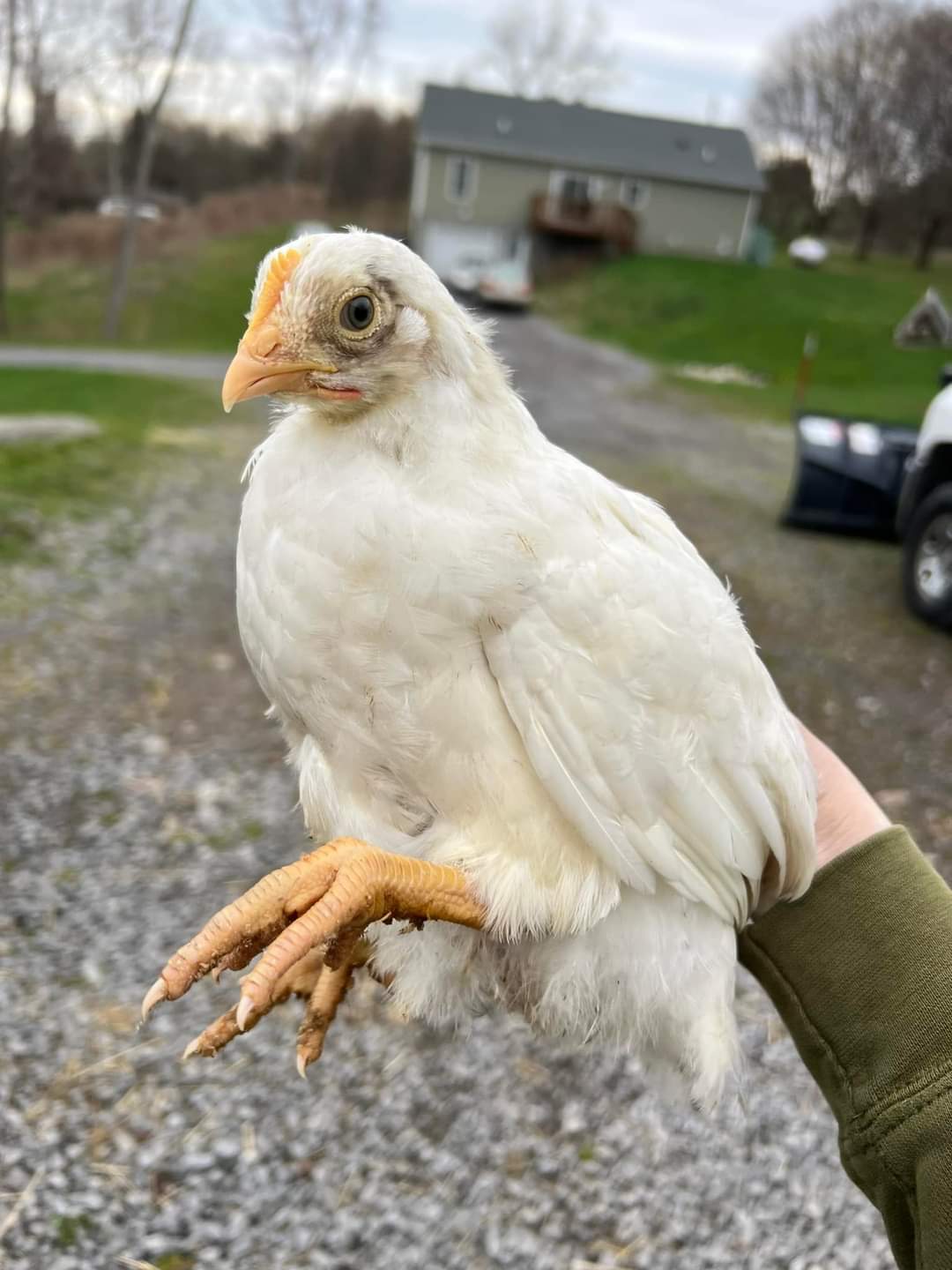
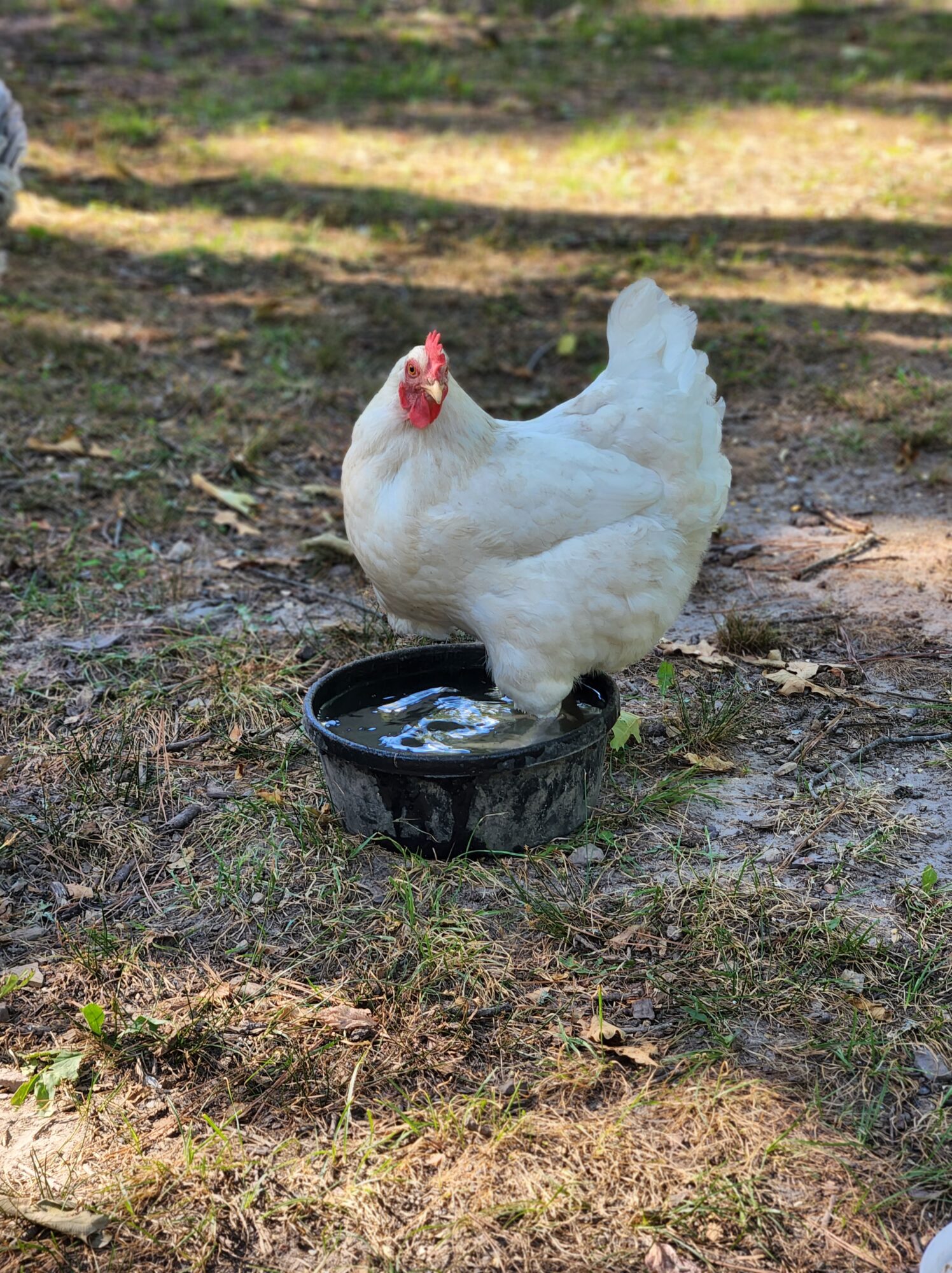
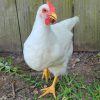
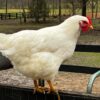
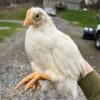
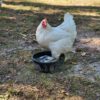
White Plymouth Rocks are pure white in feather color as adults. However, chicks may hatch with fuzz that ranges from white to darker smoky shades before transitioning to white feathers as juvenile feathers grow in.
Adults typically have yellow legs, although younger birds may sometimes show darker leg coloring early in development. Their soft feathering and down-like undercoat help make them very cold hardy, allowing them to perform well in northern climates.
Temperament and Backyard Suitability
White Rocks are known for being graceful, inquisitive, friendly, and easy to manage, making them excellent backyard flock birds and family-friendly chickens. While they are similar in temperament and production to Barred Plymouth Rocks, they offer the same performance traits in a clean white feather pattern.
They are typically docile and integrate well into mixed flocks. Broodiness can vary by individual hen, and some may make good mothers when allowed to hatch and raise chicks naturally.
Molting and Egg Production Cycles
Like most laying hens, White Plymouth Rock hens will go through a molting period, usually after several months of steady laying. During this time, egg production slows or stops while the bird replaces feathers.
Hens may lose feathers and appear rough during this period. Their comb and face color may fade from bright red to pale pink. Molting typically lasts 4 to 8 weeks. When comb and wattles return to bright red and hens become more vocal, egg production usually resumes shortly after.
Flock Management and Breeding
White Plymouth Rocks prefer roost heights between two and four feet and typically perform best with a breeding ratio of about ten females to one male.
Fertility commonly ranges between 65 and 80 percent, with chick gender accuracy typically falling between 85 and 90 percent when professionally sexed.
Availability
Cackle Hatchery® proudly offers this classic White Plymouth Rock dual-purpose chicken for backyard and farm flocks.
At limited times of the year, we also offer White Plymouth Rock Fertile Hatching Eggs.
White Plymouth Rock Chicken FAQs
Are White Plymouth Rock chickens good egg layers?
Yes. White Plymouth Rock hens typically lay 200 to 280 large brown eggs per year and are known for steady, reliable production.
What color eggs do White Plymouth Rock chickens lay?
They lay large to extra-large brown eggs.
Are White Plymouth Rock chickens friendly?
Yes. They are generally docile, friendly, and easy to manage, making them excellent backyard chickens.
When do White Plymouth Rock hens start laying eggs?
Most hens begin laying around 5 months of age, depending on management and nutrition.
Are White Plymouth Rocks good dual-purpose chickens?
Yes. They are valued for both egg production and meat quality, making them a classic American farm breed.
Availability
Available Low Availability Unavailable
| Date |
Available? |
| 2026-04-06 |
|
| 2026-04-07 |
|
| 2026-04-08 |
|
| 2026-04-13 |
|
| 2026-04-14 |
|
| 2026-04-15 |
|
| 2026-04-20 |
|
| 2026-04-21 |
|
| 2026-04-22 |
|
| 2026-04-27 |
|
| 2026-04-28 |
|
| 2026-04-29 |
|
| 2026-05-04 |
|
| 2026-05-05 |
|
| 2026-05-06 |
|
| 2026-05-11 |
|
| 2026-05-12 |
|
| 2026-05-13 |
|
| 2026-05-18 |
|
| 2026-05-19 |
|
| 2026-05-20 |
|
| 2026-05-25 |
|
| 2026-05-26 |
|
| 2026-05-27 |
|
| 2026-06-01 |
|
| 2026-06-02 |
|
| 2026-06-03 |
|
| 2026-06-08 |
|
| 2026-06-09 |
|
| 2026-06-10 |
|
| 2026-06-15 |
|
| 2026-06-16 |
|
| 2026-06-17 |
|
| 2026-06-22 |
|
| 2026-06-23 |
|
| 2026-06-24 |
|
| 2026-06-29 |
|
| 2026-06-30 |
|
| 2026-07-01 |
|
| 2026-07-06 |
|
| 2026-07-07 |
|
| 2026-07-08 |
|
| 2026-07-13 |
|
| 2026-07-14 |
|
| 2026-07-15 |
|
| 2026-07-20 |
|
| 2026-07-21 |
|
| 2026-07-22 |
|
| 2026-07-27 |
|
| 2026-07-28 |
|
| 2026-07-29 |
|
| 2026-08-03 |
|
| 2026-08-04 |
|
| 2026-08-05 |
|
| 2026-08-10 |
|
| 2026-08-11 |
|
| 2026-08-12 |
|
| 2026-08-17 |
|
| 2026-08-18 |
|
| 2026-08-19 |
|
| 2026-08-24 |
|
| 2026-08-25 |
|
| 2026-08-26 |
|
| 2026-08-31 |
|
| 2026-09-01 |
|
| 2026-09-02 |
|
| 2026-09-07 |
|
| 2026-09-08 |
|
| 2026-09-09 |
|
| 2026-09-14 |
|
| 2026-09-15 |
|
| 2026-09-16 |
|
| 2026-09-21 |
|
| 2026-09-22 |
|
| 2026-09-23 |
|
| 2026-10-05 |
|
| 2026-10-06 |
|
| 2026-10-07 |
|
| 2026-10-12 |
|
| 2026-10-13 |
|
| 2026-10-14 |
|
| 2026-10-19 |
|
| 2026-10-20 |
|
| 2026-10-21 |
|
























Corinna –
Disappointed
I ordered 22 chicks (20 females, 2 males)on 03/07/20 and received 30 on 03/17. I ordered 3 austrawhites, 3 brown leghorns, 3 delawares, 3 new hampshires, 3 white rocks, 5 blue layer assortment, 1 dominique cockerel, and 1 Delaware cockerel. I accept that chick sexing is not 100%. I CAN’T except that receiving EIGHT (8) cockerels was an accident, especially when one is an autosexing breed, cream legbar! I don’t have a claim for not receiving what I ordered as the cockerels were part of the bonus extras. I sell eggs. I don’t butcher – only cull when necessary. I maintain a few roosters for flock management, breeding and predator assistance. This was my 3rd order from Cackle and there have been issued with all but this was the worst. I think this will be my last. Being a dumping ground for roosters is unacceptable!