

Description
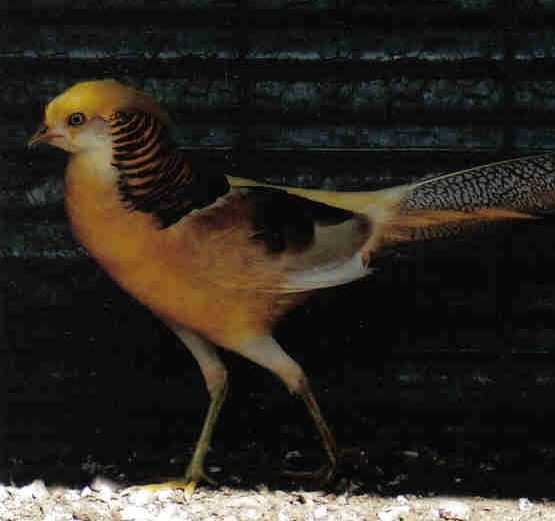
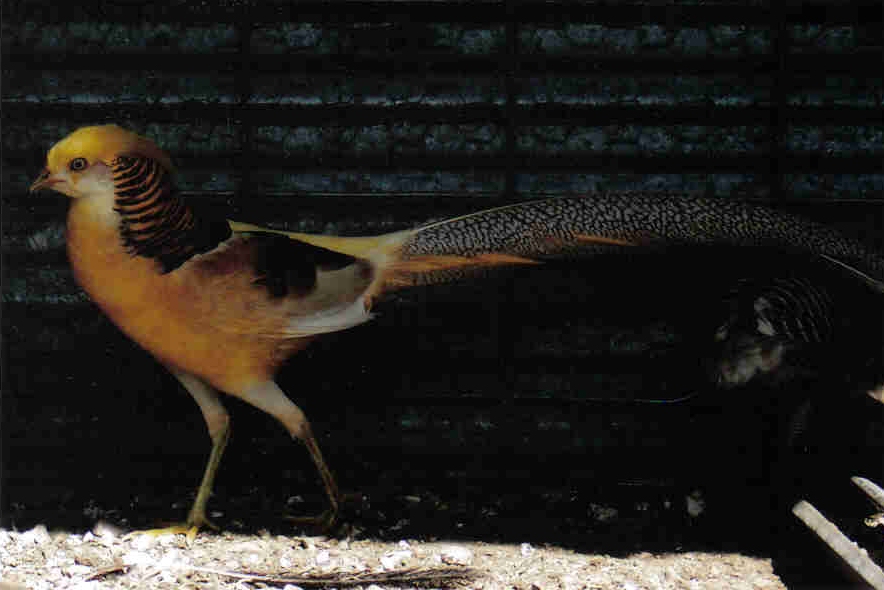
The Yellow Golden Pheasant (Chrysolophus pictus) is a color mutation of the wild type Golden Pheasant, distinguished by its brilliant yellow plumage instead of the typical red. Developed by Allesandro Ghigi of Italy, it’s sometimes known as Ghigi’s Golden Pheasant. Yellow Golden Pheasants are resilient and docile, making them one of the easiest gamebirds for beginners.
Description
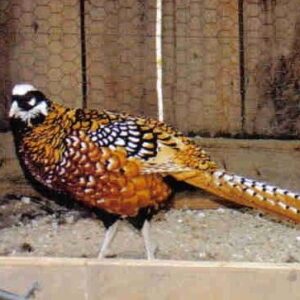
Compared to the Golden Pheasant, the Yellow Golden male (cock) has a more pastel appearance, with a pale yellow crest and rump, pale orange cape, and a pale salmon-orange body. The tail takes up two-thirds of the bird’s total length.
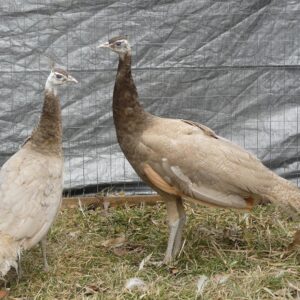
The female (hen) has duller looking plumage. She is smaller and the tail is about half her total length. The chicks wear brownish camouflage plumage.
| Average | Male | Female |
| Weight | 1.8 lb | 1.4 lb |
| Length | 38 in | 20 in |
Habitat
The Yellow Golden Pheasant originally hails from the rugged mountainous forests of Western China, where the undergrowth is dense enough to offer both hiding places and things to eat. These birds are cold hardy and need only minimal shelter, even in cold weather. However, they do need some shelter as protection from rain and wind. And, to keep the cock’s vibrant yellow feathers from fading, they need ample shady places away from the sun.
A pair requires a predator-proof pen enclosing a minimum space of 150 square feet with lots of perches at various heights. They should also have an abundance of planted bushes where they can hide, especially while nesting.
Diet
The natural diet of Yellow Golden Pheasants consists of berries, greens, grains, seeds, and insects. A gamebird ration, supplemented with leafy greens, provides them with vitamins and fiber. Supplemental protein sources are insects and mealworms. Small amounts of scratch grains provides additional energy during cold weather.
The hens need access to free choice oyster shell for strong eggshells. Chicks should begin with gamebird starter, moving to gamebird grower as juveniles. And throughout their lives, pheasants need clean, fresh water available at all times.
Temperament
Yellow Golden Pheasants are usually easy going, although juveniles and territorial males occasionally do fight. Otherwise they are calm enough to hand tame, given time and patience.
Lifespan
With appropriate care, nutrition, and disease prevention, Yellow Golden Pheasants can live for 15 to 20 years.
Breeding
Yellow Golden Pheasants are polygynous, with males able to breed up to 3 hens. The hens lay in their first year and are good setters, provided they have a natural environment with adequate space for foraging, mating, and nesting, as well as ample materials for nest building. Otherwise artificial incubation may be preferable.
- Breeding season: April through June
- Clutch size: 8 – 12 eggs
- Egg color: cream or tan
- Incubation period: 22 – 23 days
You might also like these other pheasants offered by Cackle Hatchery® — Ornamental Pheasant Chicks and Mature Pheasant Pairs
We can not ship grown fowl to Minnesota.


Reviews
There are no reviews yet