A chicken’s egg tooth is a tiny horn-like projection at the tip of the upper beak of a newly hatched chick. Its purpose is to help the chick break through the shell at hatching time. Soon after the chick hatches, the egg tooth falls off. Domestic poultry and other birds share this trait in common with most reptiles.
What is an egg tooth?
A chicken’s egg tooth is a temporary sharp, horn-like projection on a chick’s upper beak. It is made of keratin, the same hard protein material that develops into the chick’s beak and claws. The chick uses its egg tooth to chip its way out of the shell at hatch time.
How does an egg tooth develop?
As a chick embryo grows during incubation, the egg tooth appears on the seventh day. As hatching time approaches and the chick’s beak continues to grow, the egg tooth becomes sharp and hard.
What is an egg tooth used for?
Approximately three days before the hatch, a chick embryo uses its egg tooth to break through the inner membrane at the blunt end of the egg. Until then, the embryo has absorbed oxygen through the shell pores.
As hatching time nears, however, the chick needs more oxygen than it can get through the shell’s pores. So it breaks into the air cell at the blunt end of the egg, a process called internal pipping.
The air cell between the inner membrane and the shell provides the chick with additional oxygen. This extra oxygen allows the bird to exercise its nascent respiratory system. The oxygen in the air cell is just enough to keep the chick going until it can punch a hole through the brittle shell into the outside world.
How does a hatching chick break through the shell?
At this point, the chick’s beak and claws have not yet grown strong enough to break through the tough shell. That amazing feat can be accomplished only with the help of the egg tooth. Some three days after the chick penetrates the air cell, it uses its egg tooth to poke a hole in the shell.
The first tiny hole though the shell, or external pip, occurs thanks to an enlarged pipping muscle at the back of the bird’s neck. This muscle begins to spasm, giving the chick enough impetus to pip through the shell’s outer membrane, then through the shell itself.
The task requires a lot of tapping against the tough shell. The job is so exhausting that, once the chick has punched an initial hole through the shell, it rests for up to 8 hours.
Once rested, the chick rotates counterclockwise while using its egg tooth to chip the shell thousands of times. Finally it breaks the shell about three-quarters of the way around, unzipping the shell to creating a shell cap at the blunt end. This effort can take as long as 5 hours.
Trying to straighten its neck and break free, the chick pushes its head against the shell cap. After about 40 minutes of hard work, the chick gets the shell cap free.
It then takes a short rest before making one mighty kick to get out of the shell. Wet and exhausted from its prodigious effort, the chick takes a nice long nap.
How long does pipping take?
A chicken normally hatches within 24 hours of the first external pip. Larger poultry species may take as long as 48 hours.
After the hatch, the chick’s beak continues to grow and strengthen. But the egg tooth — no longer needed — does not grow along with the rest of the beak. Eventually the egg tooth comes loose and falls off.
Some chicks lose their egg tooth within a few hours after hatching. Other chicks may retain their egg tooth for 4 days or more.
Frequently Asked Questions
What is an egg tooth?
A chicken’s egg tooth is a temporary sharp projection on the upper beak of a newly hatched chick. The chick uses it to chip it’s way out of the shell at hatch time.
What does an egg tooth look like?
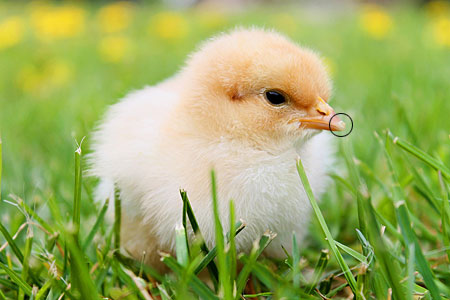
It looks like a tiny horn, usually white or light-colored, at the tip of the chick’s upper beak.
Why does the egg tooth fall off?
It falls off because it is no longer needed.
How long does it take for an egg tooth to fall off?
That depends on how fast the chick’s beak grows. The egg tooth can fall off the beak anywhere from shortly after hatch to 4 days or more after the hatch.
What happens to the egg tooth after hatching?
It falls to the ground or brooder floor. If you’re lucky, you may find the tiny thing after it falls off.
Do all birds have an egg tooth?
No. A few bird species are strong enough to kick their way out of the shell at hatching time.
Do ducks have an egg tooth?
Yes, ducks and all other types of poultry use an egg tooth to break out of their shells.
Do snakes have an egg tooth?
Egg-laying snakes and lizards have an egg tooth. So do turtles.
Does the breeder flocks’ diet affect the egg teeth of offspring?
Yes. Breeders fed a balanced diet rich in protein, calcium, phosphorus, and other essential minerals and vitamins produce chicks with stronger and larger egg teeth.
Helpful Links
Egg Incubation: Should You Help Chickens Hatch?
Incubation Humidity Affects Pipping
Hatching Eggs Offered by Cackle Hatchery®
And that’s today’s news from the Cackle Coop.
Gail Damerow has raised chickens and various other poultry for more than 5 decades and has written numerous books about them, many available from the Cackle Bookstore. Image by Philipp Kleindienst.