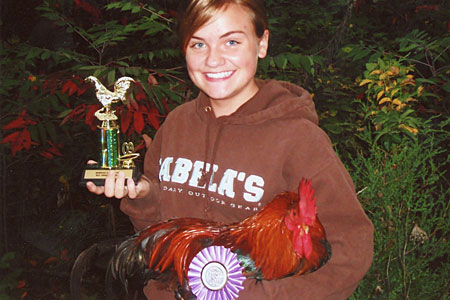
Exhibiting poultry can be fun, interesting, and educational. It’s also a great way to meet people of all ages from all walks of life who share a common interest. But it can be stressful, especially for the first time exhibitor. It can also be stressful for the birds. In his book Showing Poultry, veteran poultry judge Glenn Drowns offers tips on stress-free poultry exhibiting.
Handle and Hold Poultry Properly
For starters, your birds need to get used to being handled. If you intend to show them, handle them frequently, Drowns advises. Your birds need to become familiar and comfortable with human contact if they are to develop the desirable show traits of being calm and relaxed.
Each type of fowl responds to the show experience differently. Accordingly, Drowns offers tips on how to handle and hold chickens, bantams, ducks, geese, turkeys, and guinea fowl.
To Bath or Not to Bath?
Bathing your show entries is another potential source of stress. As Drowns points out, giving birds a bath can be a challenge and can get messy when a bird does not cooperate.
From this perspective, ducks and geese may be the easiest type of poultry for first-time exhibitors. Waterfowl are more forgiving of learner mistakes, says Drowns, and they are easy to ready for a show. If you give them their own water container to clean up in, ducks and geese almost get themselves ready.
On the other hand, turkeys and guinea fowl should not need a bath, says Drowns. Guineas in particular become so stressed out when bathed that they drop their feathers, at which time you can say goodbye to any chance of winning a prize. Chickens, on the other hand, will benefit from a proper bath, and Drowns offers step-by-step instructions on how to do it right.
Reducing Showtime Jitters
Showtime itself can be a source of jitters for first-time exhibitors. Drowns offers a few ways to head off show nerves, including taking a few deep breaths on the morning of the show and visualizing the routine you have established with your birds.
After the show, your birds need to recover from the stress they endured in the disruption of their routine. If you worked with them regularly before the show, your birds will be less stressed than those that did not experience cage practicing and people exposure. And they will recover more quickly.
Showing Poultry is a handy resource for youngsters starting their first poultry projects. It is also a good introduction for parents who, along with their kids, wish to learn the ins and outs of stress-free poultry exhibiting.
Helpful Links
- 9 Reasons to Show Your Chickens
- Difference Between Production Chickens and Show Chickens
- Beginner’s Guide to Raising and Showing Chickens DVD
And that’s today’s news from the Cackle Coop.
Gail Damerow has written numerous books about keeping poultry, many of them available from the Cackle Bookstore.