
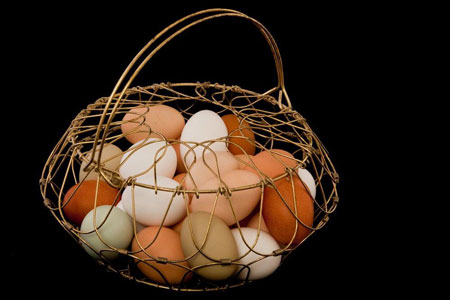
Most backyard chickens do not lay an egg every day of the year. The average mature, healthy hen takes 25 to 26 hours to produce one egg. So a hen that lays at 6:00 in the morning today will likely lay between 7:00 and 8:00 tomorrow morning. Since a hen normally doesn’t lay after dark, eventually she will skip a day. That’s only one of many reasons why a chicken does not lay an egg every day.
Why a chicken does not lay an egg every day.
Here are some of the reasons why a chicken does not lay an egg every day:
- Breed — some chicken breeds lay better than others
- Broodiness — a setting hen stops laying
- Molting — a molting hen may slow down or stop laying
- Age — the older a hen gets, the fewer eggs she lays
- Temperature — extreme cold or heat can cause a pause in laying
- Light — a hen may stop laying when light falls below 14 hours per day
- Nutrition — poor nutrition can reduce or stop egg production
- Stress — constant stress can reduce or halt laying
- Environment — a filthy coop can limit egg production
- Illness — disease or a heavy parasite load reduces production
Breed and broodiness affect how many eggs a hen lays.
The average hen takes 25 to 26 hours to produce an egg. All the hens in a flock don’t lay at the same time or on the same day, and they don’t all take the same amount of time to produce each egg.
The hens of some breeds or strains may take 24 hours or less to lay an egg. Others may take more than 26 hours. The interval of time between when a hen starts laying and when she takes a break is called her laying cycle.
Production breeds have the shortest interval between each egg, so they have the longest laying cycles. In 1979 the University of Missouri developed a super strain of Leghorns that took 24 hour or less to produce each egg. One hen laid 371 eggs in 364 days. But that’s highly unusual.
The average production Leghorn hen lays 220 to 300 eggs during the first year. A hybrid layer, such as Cinnamon Queen, averages 250 to 320 eggs per year. Dual-purpose breeds, such as Marans, may lay up to 200 eggs per year. Chickens kept mainly for exhibition produce fewer eggs than hens developed specifically for egg production.
The poorest layers are breeds that prefer to hatch eggs rather than lay them. Silkies, among other broody breeds, sometimes brood twice a year or even more. A hen stops laying while she is setting, and won’t start again until several weeks after her chicks hatch.
Molting and age affect why a chicken does not lay an egg every day.
When a pullet (young hen) first starts laying, she may lay only one egg every 3 or 4 days until her reproductive system gets fully geared up. Then, after she’s been laying for about eighteen months, she’ll take a break from laying to molt and refresh her plumage.
After the molt she’ll lay fewer eggs than she did during her first year. This pattern continues as the hen ages — each year she will lay fewer eggs than the year before. Peak production generally occurs during a hen’s first and second laying year, after which it gradually declines.
A healthy and well managed hen should lay for a good 10 to 12 years. Occasionally, you’ll hear of a hen laying to the ripe old age of 20, by which time she’s doing well to lay one egg a week.
Temperature and light influence production.
A hen’s production is affected by many external factors, including temperature and light. Hens lay best when the temperature is between 45°F and 80°F. When the weather gets much colder or much warmer, production slows down or stops while the hen uses her energy to maintain body temperature.
Most hens stop laying in winter, not necessarily because the weather turns cold. Rather, it’s because reproduction is sensitive to light exposure, and daylight hours are shorter in winter than in summer. When the number of daylight hours falls below 14, many breeds may stop laying until spring.
A hen’s diet affects how well she lays eggs.
A hen’s diet should include a well-formulated layer ration containing high quality protein for egg formation and a variety of vitamins, minerals, and other nutrients for overall health. A calcium supplement is also needed for strong eggshells.
Clean fresh water should, of course, always be available. Excluding the shell, an egg contains about 75% water.
Frequently Asked Questions
How many eggs will one chicken lay in a day?
The average chicken does not lay more than one egg a day.
Does a chicken lay an egg every day?
Most hens do not lay every day. However, even though all the hens in a flock do not lay every day, the flock as a whole may yield eggs almost every day.
Do chickens stop laying in a dirty coop?
Yes, a dirty coop is unhealthful for chickens. Laying hens are more comfortable in a clean coop with good ventilation to remove the excessive moisture and ammonia fumes generated by droppings.
How long can a chicken go without laying an egg?
Most chickens stop laying at various times throughout the year, but start laying again when conditions improve. A hen that does not lay at all could be old, diseased, fed poorly, or living in unhealthful conditions.
Does a hen need a rooster to lay eggs?
No, a hen will lay whether or not the flock includes a rooster. However, the eggs will not hatch into chicks unless a rooster is present.
Helpful Links
At What Age Do Hens Start Laying Eggs?
How to Feed Pullets for Optimal Egg Production
How Does an Egg Develop Inside a Chicken?
What to Do If My Egg Layer Stops Laying Eggs?
And that’s today’s news from the Cackle Coop.
Gail Damerow has raised chickens and various other poultry for more than 5 decades and has written numerous books about them, many available from the Cackle Bookstore.