Quite a large variety of bugs enjoy grain products as much as chickens do. Bugs eat the grain and propagate by laying eggs in the grain kernels. They can affect dried grains (chicken scratch), as well as processed pellets, crumbles, and mash. Let’s look at how to identify what kind of bugs they are, how they got into the new chicken feed, whether or not they’re bad for chickens, and what you can do about them.
How can you tell bugs are in your new chicken feed?
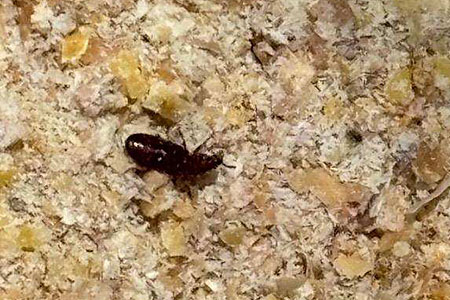
You will know bugs are in your new chicken feed if you see small, moving spots in and on the grain or feed. The spots may be dark or light colored, depending on the type of bug. Grain kernels will likely have holes drilled in them.
The feed may have a bad odor — musty, sour, or sickly sweet. Metabolic activity by some types of bug promotes moisture and mold growth, and can even cause the feed to heat up.
How do bugs get into a bag of chicken feed?
Bugs usually get into feed because it has been improperly handled and stored. Bugs most commonly get into new chicken feed at:
- The mill — Grain milling equipment is inadequately cleaned and sanitized.
- A warehouse — Temperatures above 60ºF, humidity above 60%, poor ventilation.
- The feed store — Similar conditions as in the warehouse.
Bugs might get into the grain from the environment, even before the grain reaches the mill. High temperatures and high humidity then create ideal conditions for bug breeding and mold growth. Poor ventilation, by not keeping the air moving, contributes to high temperatures and humidity.
And, by the way, even if no bugs are in your new chicken feed, they can infest the feed after purchase. The best way to keep bugs out of newly purchased feed is to store chicken feed properly.
How to identify bugs in new chicken feed?
To identify bugs in chicken feed you need a good magnifying glass or microscope. An easy way to capture bugs for examination is to place a piece of tape in the feed bag or bin. As bugs move around, some will stick to the tape.
Through the magnifying glass, look for evidence of bugs, their eggs, and cast skins. Check for change in the feed’s appearance or texture. The following table offers identification guidelines according to the bugs’ appearance and the damage they do to feed.
|
Bug |
Appearance |
Damage |
|
Grain weevil |
3-5 mm long. Black or dark brown. |
One of most common grain pests. Hollow or powdered grain. Fine dust in bag. |
|
Rice weevil |
3.5-4 mm long. Black or reddish brown with four redddish spots. Pitted surface. Long snout. Can fly. |
Holes in kernels. Fine dust in bag. Musty smell. |
|
Maize weevil |
3-4.5 mm long. Black to dark brown. Pitted surface. Slender snout. Can fly. |
Infests both growing and stored crops. Holes in kernels. Fine dust in bag. |
|
Grain mite |
0.3-.7 mm long. White or light color. Smooth, wingless, soft body. Minty odor when crushed. |
A common grain pest. Fine dust and/or moisture in bag. Sweet odor. Poultry eat less. |
|
Grain beetle |
2.5 mm long. Brown. Flattened, slender body in 3 segments with jagged ridges on both sides. Rarely fly. |
Prefers broken kernels (cracked grain). Cold tolerant. Promotes sweating, heating, and mold growth. |
|
Merchant grain beetle |
2-3 mm long. Flattened body in 3 segments. Often mistaken for grain beetle. Can fly. |
Prefers broken kernels (cracked grain). Less cold tolerant. Promotes sweating, heating, and mold growth. |
Are bugs in chicken feed bad?
Let’s put it this way: Finding bugs in new chicken feed is not good. Bugs eat the kernel germ and other nutritious parts of grain, resulting in a loss of nutritional value. A serious infestation can therefore lead to nutritional deficiencies, slow growth in young birds, and weight loss in mature poultry. Lower nutrition can also result in reduced egg production.
While the bugs themselves are not toxic, they indicate that the feed has been improperly stored. Further, the feed is likely old or damp. Dampness leads to mold growth, and molds produce toxins.
If the bug infestation is mild and you can feed the ration right away, it’s probably safe. But over time the bugs will become more numerous, affecting the feed’s nutritional quality and safety. If you have any doubts about whether or not to feed the ration, throw it out.
How to get rid of bugs in new chicken feed?
If you have only a small amount of feed, you can freeze it for a few days to kill the bugs. For a mild infestation, you can sprinkle a bit of diatomaceous earth [DE] into the feed as you pour it from the bag to the bin.
Eating DE won’t harm the chickens. But it will penetrate the bugs’ protective outer shell, causing the bugs to dry up. Be sure to wear a dust mask to avoid inhaling the DE. And be aware that DE won’t help if the bug infestation is severe.
How to avoid bugs in new chicken feed?
To avoid finding bugs in a new bag of chicken feed, bring home only as much as you can feed within about 2 weeks during warm, humid months. In winter, when temperature and humidity are lower, you can stretch that to 4 weeks. Even without bugs, the nutritional value of chicken feed will degrade less during these time periods.
Frequently Asked Questions
Can chickens eat feed with bugs in it?
Chickens eat insects. If the feed isn’t moldy or otherwise spoiled it should be fine to use. But if in doubt, throw it out.
How fast do bugs propagate in chicken feed?
Bugs in chicken feed propagate really fast. They have short life cycles, during which the females lay numerous eggs. A mild infestation of bugs therefore can pretty quickly become a serious infestation.
Are grain mites the same as chicken mites?
No. Grain mites and chicken mites are two different things. Grain mites invade processed, stored grains and grain products. Chicken mites affect chickens and impact their health.
Do grain mites bite people?
No. But some people have an itchy allergic reaction to the dust they create.
Why to bugs make holes in grain?
Bugs make holes in dried grain to lay eggs. When the bug eggs hatch, the larvae feed on the grain kernel.
How to keep bugs out of chicken feed?
Buy only as much chicken feed as you will use in 2 weeks during warm, humid months. When the temperature and humidity are lower, buy as much as you will feed within 4 weeks. Always store chicken feed in a closed bin in a cool, dry, well ventilated area.
Helpful Links
Feed Options — What Do Chickens Eat?
Chicken Feed — Whole Grains, Mash, Pellets, or Crumbles?
17 Questions about Feeding Chickens
And that’s today’s news from the Cackle Coop.
Gail Damerow has raised chickens and various other poultry for more than 5 decades and has written numerous books about them, many available from the Cackle Bookstore.