
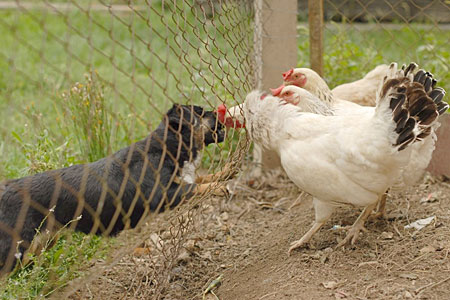
What is the number one cause of death in backyard chickens? If you said “disease,” you’d be wrong. The primary cause of death in chickens is predation. Let’s take a closer look at this problem.
How common is predation?
Even the number one cause of death in chickens isn’t overall that common, according to a 2014 survey done at University of California, Davis. Of 1,487 respondents in 47 states, 64% confirmed that — except for chickens raised for meat — none of their birds had died within the past year.
That’s right. A majority of respondents reported no deaths in their flocks during the past year. However, minimizing predation was the most cited chicken-keeping challenge, reported by 49% of respondents. These flock owners were equally distributed among urban, suburban, and rural environments.
Of those who did report having experienced mortality, predation was the most commonly cited cause, affecting 30% of all flocks. That means a mere 6% of flocks either experienced mortality from other causes, or respondents simply opted not to answer that question.
Why are chickens vulnerable to predation?
Chickens, as prey animals, are highly vulnerable to predation for these reasons:
- Small bird size
- Few defenses
- Inadequate protection
- Easy meal
What kills chickens and leaves them?
A frustrating situation is finding lifeless bodies in the chicken yard. Members of the dog family — domestic dogs, foxes, and coyotes — will kill multiple chickens and leave the dead bodies. So will raccoons and weasels.
This behavior is variously known as sport killing, joy killing, thrill killing, surplus killing, or overkill. Because so many chickens are readily available in one place, these predators instinctively grab and kill them without eating them. Killing multiple birds provides more meat while using less energy than hunting for each individual meal.
Sad to say, but killing actually gives them a rush — especially when chickens panic, increasing the fun by adding the element of brief pursuit. Skin a dead bird with no obvious sign of injury, and you will likely find red spots where pointed teeth bruised the skin without breaking through.
What diseases kill chickens?
In the same UC Davis survey, 58.6% reported health-related conditions in their flocks during the past year. The most common health concerns were external parasites, diarrhea, injuries, and “other” including prolapsed vent and sour crop.
A more recent three-year survey of poultry pathology labs in 8 states involved the examination of dead chickens to find out why they died. Of those necropsied, 42% involved tumor-causing diseases, such as Marek’s. Others had bacterial diseases (42%); parasites, including coccidia (28%); and viral diseases (7%).
Note that the pathology lab survey involved only deaths by disease. If the UC Davis survey is universally applicable, the pathology survey applies to less than 6% of flocks.
What disease causes sudden death in chickens?
A large number of diseases can cause sudden death in chickens. The most likely ones are sudden death syndrome (heart attack), ascites (heart failure), visceral gout (kidney failure), fatty liver syndrome (liver failure), Marek’s disease and lymphoid leukosis (viruses), acute colibacillosis and acute staphylococcosis (bacterial diseases).
What toxins cause death in chickens?
Moldy feed can develop toxins that kill chickens. Moldy feed is caused by bugs and moisture in the feed due to lack of proper feed storage. Other toxins include pesticides used near or around the coop.
Sometimes toxic weeds in the run can cause deaths. However, toxic weeds typically taste bad, and therefore properly fed chickens usually won’t consume enough to be affected.
Keeping chickens alive
The following measures go a long way toward preventing mortality from predation or disease:
- Providing a predator resistant coop
- Closing up the flock at night
- Having a well-fenced yard
- Covering the yard overhead
- Keeping guard animals
- Observing good biosecurity
- Using a boot bath
- Limiting visitors to the flock
- Limiting visits to other flocks
- Quarantining new birds
Assuming your chickens are kept in a safe and healthy environment, they can live for 10 years or more. But eventually they will succumb to old age. That’s simply a fact of life in the chicken lane.
Frequently Asked Questions
What is the primary cause of death in chickens?
The number one cause of death in chickens is predators of one sort or another.
What could kill a whole flock of chickens?
Dogs (including foxes, and coyotes), raccoons, and weasels can quickly kill a whole flock of chickens, often leaving the bodies behind.
What kills chickens at night?
Common nighttime prowlers that kill chickens include raccoons, foxes, weasels, and owls.
What kills chickens in the daytime?
Common daytime predators that kill chickens include domestic dogs, foxes, raccoons, and hawks.
Is it legal to kill a hawk that’s attacking chickens?
Yes, but… and it’s a pretty big “but.” Hawks are a protected species, so a number of conditions apply. Among several other conditions, you must have a permit. And to obtain a permit you must be able to prove that hawks are indeed attacking your chickens.
How to improve a flock’s survival rate?
Keep the flock in a safe environment with a predator-secure coop and run. Provide clean housing, proper nutrition, and fresh water. Practice good biosecurity. Know the signs of illness and immediately isolate any chicken that looks under the weather.
Helpful Links
Protecting Your Chickens from Predators
Keep Digging Predators Out of Your Chicken Yard
Free Range/Predator Resistant Chicken Special from Cackle Hatchery®
And that’s today’s news from the Cackle Coop.
Gail Damerow has raised chickens for more than 5 decades and has written numerous books about them —including books specifically dedicated to poultry predators or health concerns — available from the Cackle Bookstore.