

Description
Lady Amherst Pheasants Pair
Product Overview
The Lady Amherst Pheasants Pair is a beautiful ornamental pheasant pair for customers who want striking color, manageable temperament, and a rewarding aviary bird. Lady Amherst pheasants are known for their dramatic male plumage, calm nature, and adaptability to both hot and cold climates.
Cackle Hatchery® offers Lady Amherst Pheasants Pair for customers interested in mature pheasant pairs, ornamental game birds, and breeding projects.
These pheasants are often a good choice for beginning pheasant keepers because they are docile, hardy, and comparatively easy to manage when provided with a secure, enriched aviary.
Breed Overview and Origin
Lady Amherst pheasants, scientifically known as Chrysolophus amherstiae, are native to dense mountainous forests of southwestern China and Tibet.
They are named after British naturalist Sarah Amherst, who first introduced them to England from Asia. Their elegant appearance, unique courtship display, and striking male plumage have made them one of the most admired ornamental pheasants.
Cackle Hatchery® offers Lady Amherst pheasants as a pair, making them a strong option for customers who want an ornamental breeding project rather than day-old game bird chicks.
Appearance and Characteristics
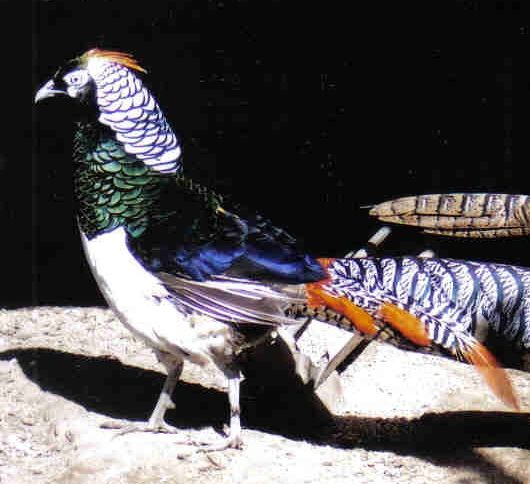
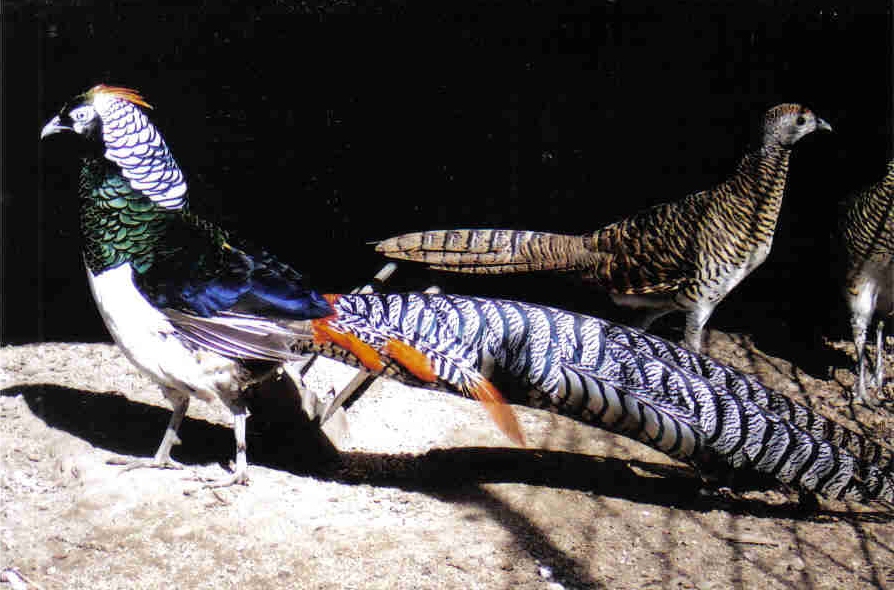
The Lady Amherst male, or cock, is one of the most visually impressive ornamental pheasants. He has black-and-silver plumage set off by a scarlet red crest, metallic green neck, and long black-and-silver barred tail.
A key feature is the male’s black-and-silver cape, also called a ruff. During courtship, he raises this cape in a dramatic display. Even young males may show early signs of this distinctive cape.
The female, or hen, is smaller and more naturally camouflaged. Her plumage includes black, rust, and brown tones, giving her a more subdued appearance that helps her blend into her surroundings.
Both males and females have greenish legs. Chicks look much like the hen.
Average size:
Male weight: 1.75 pounds
Female weight: 1.5 pounds
Male length: 45 inches
Female length: 26 inches
Temperament and Beginner Value
Lady Amherst pheasants are generally docile and easy to manage. This makes them one of the better ornamental pheasant choices for beginning pheasant keepers.
They are usually shy and cautious, and they often prefer to hide when they feel threatened. With time, patience, and gentle handling when young, they may become more comfortable around people.
Even though they are typically non-aggressive, males can become territorial during breeding season. Give breeding birds enough space, visual cover, and a secure enclosure to reduce stress and conflict.
Aviary and Habitat Requirements
In the wild, Lady Amherst pheasants live in dense mountainous forests. In captivity, they need a predator-proof aviary with enough ground space for foraging and enough height for brief flights.
Each pair should have at least 150 square feet of aviary space. These birds are able to fly, but they usually prefer to run on the ground.
A good Lady Amherst pheasant aviary should include:
Predator-proof fencing
A secure top or covered area
At least 150 square feet per pair
Ground space for foraging
Height for short flights
Shrubs or brush for hiding
Branches or roosts for perching
Shelter from rain, wind, and hot sun
Dry areas during wet weather
Because they are shy birds, cover and hiding places are important. A bare pen can increase stress, while shrubs, branches, and natural enrichment help them feel more secure.
Climate Hardiness
Lady Amherst pheasants do well in both hot and cold climates. They are hardy birds when they have enough space, good nutrition, and proper shelter.
In hot weather, provide shade and fresh water. In cold or wet weather, provide protection from wind, heavy rain, and harsh conditions. While they are adaptable, they should not be left without shelter in extreme weather.
A well-designed aviary helps them stay active, comfortable, and healthy year-round.
Diet and Feeding
Lady Amherst pheasants are ground feeders. In the wild, they eat grains, greens, insects, snails, and other small invertebrates.
In captivity, feed them a quality game bird ration supplemented with leafy greens and fresh fruit. During breeding season, mealworms can help boost protein. Clean, fresh water should always be available.
Insoluble grit is essential because it helps pheasants digest roughage and feed properly. Hens should also have access to oyster shell or another calcium supplement to support strong eggshells.
Chicks should be fed game bird starter until about six weeks of age. After that, they can transition to game bird grower.
Breeding Lady Amherst Pheasants
Lady Amherst pheasants are among the easier ornamental pheasants to breed. They are polygamous, and one male may breed up to three females.
Hens usually lay in their first year and prefer to nest in private with minimal disturbance. Providing cover, quiet nesting areas, and low-stress management can help improve breeding success.
Breeding details:
Breeding season: March through June
Clutch size: 6 to 12 eggs
Egg color: creamy buff
Incubation period: 23 to 24 days
During breeding season, males may become more territorial. Keep the aviary calm, avoid overcrowding, and monitor bird behavior.
Lifespan and Long-Term Care
Lady Amherst pheasants are active, hardy birds when kept in a proper aviary. With good nutrition, predator protection, clean water, and enough space to reduce stress, they may live 15 years or more.
Because of that long lifespan, customers should view a mature pheasant pair as a long-term ornamental bird project. Proper housing and care should be in place before the birds arrive.
Compatibility With Other Birds
Lady Amherst pheasants are generally non-aggressive outside breeding season and may get along with compatible species such as doves or peafowl in appropriate aviary settings.
However, mixed-species keeping requires careful planning. Space, temperament, feed needs, shelter, and breeding-season behavior all matter. Avoid overcrowding and provide enough cover so birds can move away from one another.
For many customers, keeping Lady Amherst pheasants as their own pair in a dedicated aviary is the safest and easiest option.
Lady Amherst Pheasant vs Golden Pheasant
Lady Amherst pheasants and Golden pheasants are both colorful ornamental pheasants, but their appearance is different.
Lady Amherst males have a white rump, long black-and-white barred tail, and black-and-silver cape. Golden pheasant males are known for bright red, gold, and orange coloring depending on the variety.
The two species can interbreed and produce colorful hybrids often called Rainbow Pheasants. Customers who want pure ornamental pheasant breeding should keep varieties separated and avoid accidental hybridization.
Customers interested in chick assortments may also compare Cackle Hatchery’s Assorted Rare Ornamental Pheasant option.
Lady Amherst Pheasant Pair vs Ornamental Pheasant Chicks
Choose a Lady Amherst Pheasants Pair if you want mature ornamental birds and a more direct start with a breeding pair.
Choose Assorted Rare Ornamental Pheasant chicks if you want to raise ornamental pheasants from day-old chicks and enjoy a possible assortment of varieties.
Cackle Hatchery’s Ornamental Pheasants for Sale category notes that rare ornamental pheasant chicks may include Lady Amherst pheasants along with several Golden Pheasant color patterns.
Ownership and Shipping Note
Cackle Hatchery® cannot ship grown fowl to Minnesota. Customers should also check their local wildlife agency or conservation department for any regulations, permits, or requirements before ordering pheasants.
Game bird ownership rules can vary by state, county, and intended use. Requirements may differ for ornamental keeping, breeding, release, exhibition, or farm use.
Responsible ownership starts before the birds arrive. Prepare a predator-proof aviary, shelter, feed, water system, and local compliance plan before ordering.
Is This Product Right for You?
Choose a Lady Amherst Pheasants Pair if you want:
A mature ornamental pheasant pair
A docile pheasant for beginners
A hardy bird for hot and cold climates
A colorful male with dramatic courtship display
A more naturally colored hen
A predator-proof aviary project
A pair suitable for ornamental breeding
A long-lived game bird species
A bird that can forage and perch in an enriched aviary
This product is not the best choice for customers without an aviary, customers wanting free-range pheasants, customers unable to provide predator protection, or customers in locations where grown fowl shipping is restricted.
Recognition and Availability
Cackle Hatchery® offers Lady Amherst Pheasants Pair for customers interested in mature ornamental pheasants. The grown fowl category also lists Lady Amherst Pheasants Pair among adult game fowl options.
Customers may also want to compare Silver Pheasants Pair, Red Golden Pheasants Pair, Yellow Golden Pheasants Pair, Reeves Pheasants Pair, Assorted Rare Ornamental Pheasant, and Ornamental Pheasants for Sale.
Related Products and Helpful Cackle Hatchery® Resources
If you like this product, you may also want to compare Silver Pheasants Pair, Red Golden Pheasants Pair, Yellow Golden Pheasants Pair, Reeves Pheasants Pair, Assorted Rare Ornamental Pheasant, Ornamental Pheasants for Sale, Game Bird Chicks for Sale, and Grown Fowl / Adult Fowl.
Helpful Cackle resources include Bird Watching: A Look at Pheasants and Chukar, Chicken Guarantees and Policies, Cackle Hatchery FAQ, Availability Chart, and Contact Cackle Hatchery.
FAQ: Lady Amherst Pheasants Pair
What are Lady Amherst pheasants?
Lady Amherst pheasants are ornamental pheasants native to southwestern China and Tibet. They are known for the male’s dramatic black, silver, red, green, and white plumage.
What is the scientific name of the Lady Amherst pheasant?
The scientific name is Chrysolophus amherstiae.
Who are Lady Amherst pheasants named after?
They are named after British naturalist Sarah Amherst, who first introduced them to England from Asia.
Are Lady Amherst pheasants good for beginners?
Yes. They are docile, easy to manage, and often a good option for beginning pheasant keepers.
Do Lady Amherst pheasants handle hot and cold climates?
Yes. They do well in both hot and cold climates when provided with proper shelter, shade, fresh water, and protection from harsh weather.
What does a male Lady Amherst pheasant look like?
The male has black-and-silver plumage, a scarlet red crest, metallic green neck, long black-and-silver barred tail, and a black-and-silver cape or ruff.
What does a female Lady Amherst pheasant look like?
The female has more subdued black, rust, and brown plumage. She is smaller than the male and has a shorter tail.
How large are Lady Amherst pheasants?
Average males weigh about 1.75 pounds and may reach about 45 inches long. Average females weigh about 1.5 pounds and may reach about 26 inches long.
What color legs do Lady Amherst pheasants have?
Both males and females have greenish legs.
What do Lady Amherst pheasant chicks look like?
The chicks look much like the hen.
What kind of aviary do Lady Amherst pheasants need?
Each pair needs a predator-proof aviary of at least 150 square feet, with ground space for foraging, enough height for brief flights, shelter, shrubs, and perches.
Do Lady Amherst pheasants fly?
Yes. They can fly, but they usually prefer to run on the ground.
What do Lady Amherst pheasants eat?
They eat grains, greens, insects, snails, and other invertebrates. In captivity, feed a game bird ration supplemented with leafy greens, fresh fruit, grit, and seasonal protein such as mealworms.
Do hens need calcium?
Yes. Oyster shell or another calcium supplement helps hens produce strong eggshells.
What should Lady Amherst pheasant chicks eat?
Chicks should be fed game bird starter until about six weeks old, then transitioned to game bird grower.
Are Lady Amherst pheasants aggressive?
They are generally shy, cautious, and non-aggressive, but males can become territorial during breeding season.
Can Lady Amherst pheasants be hand tamed?
With time, patience, and gentle handling when young, they may become hand tame.
How long do Lady Amherst pheasants live?
With proper management and nutrition, they may live 15 years or more.
Are Lady Amherst pheasants easy to breed?
Yes. They are considered one of the easier pheasants to breed.
Are Lady Amherst pheasants polygamous?
Yes. One male may breed up to three females.
When is Lady Amherst pheasant breeding season?
Breeding season is typically March through June.
How many eggs do Lady Amherst pheasant hens lay?
Hens usually lay a clutch of 6 to 12 eggs.
What color are Lady Amherst pheasant eggs?
The eggs are creamy buff.
How long is the incubation period?
Incubation takes about 23 to 24 days.
Can grown Lady Amherst pheasants ship to Minnesota?
No. Cackle Hatchery® cannot ship grown fowl to Minnesota.
Where can I check availability?
Check the Lady Amherst Pheasants Pair product page and Cackle’s Availability Chart for current ordering information.


Ivey Hernandez (verified owner) –
They where healthy when i picked them up but one sadly flew away and the other is still healthy