
Description
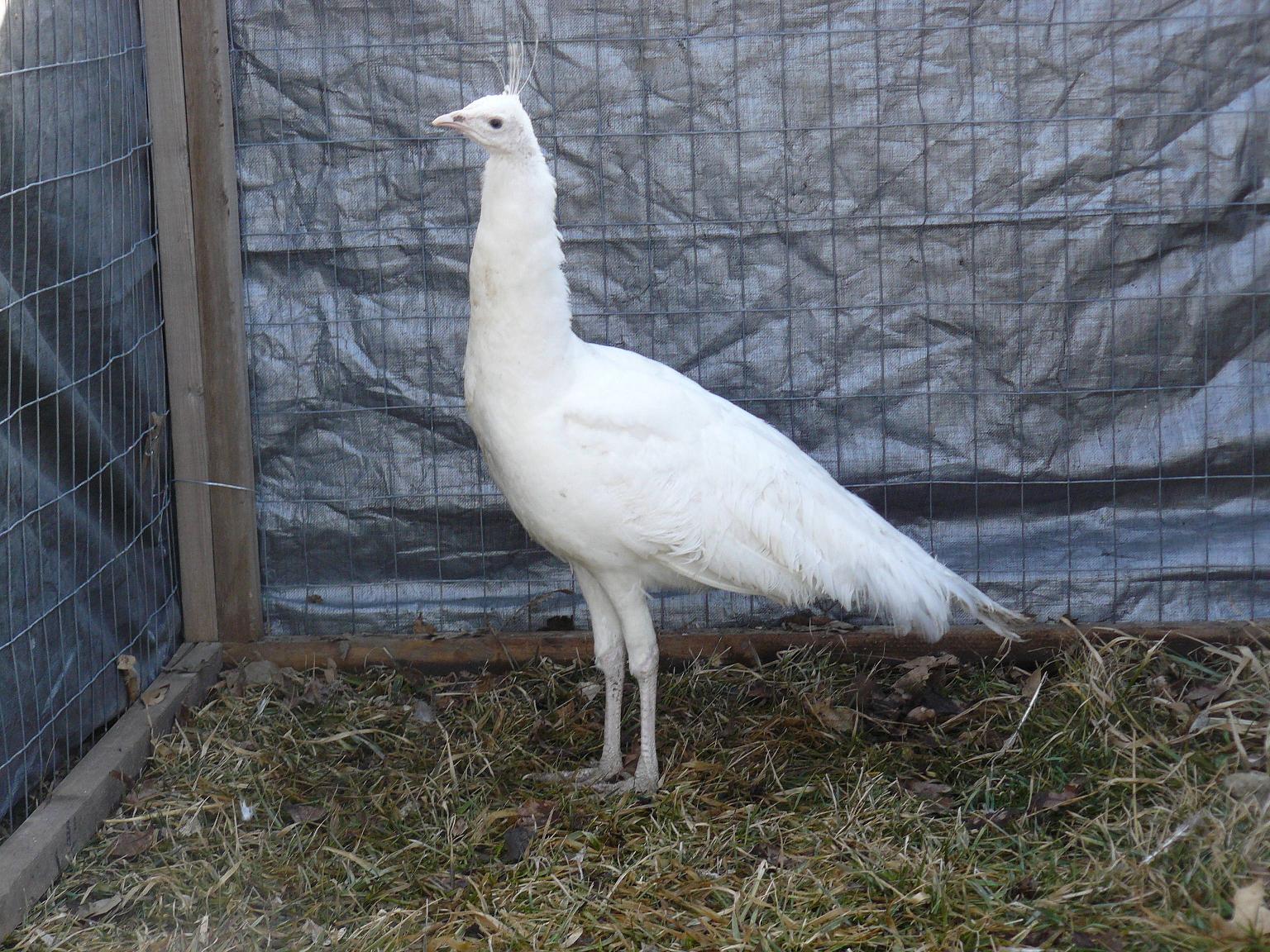
White Peafowl Pair
A White peafowl pair is the result of a genetic mutation of India Blue peafowl (Pavo cristatus). The mutation is called leucism and results in the loss of color in the plumage. All-white peafowl are the rarest of all varieties.
A peafowl pair consists of a mature male, or peacock, and a mature female, or peahen. An interesting aspect of leucistic peacocks is that they don’t hatch white. The peachicks, instead, start out with pale yellow down, eventually turning iridescent white as they mature.
Leucism versus Albinism
Although albino peafowl exists, they are even rarer than the leucistic variety. Both are the result of a recessive gene, but while albinism is a complete loss of pigment, leucism results in only a partial loss of pigment.
Unlike albinism, leucism affects only feather color, but not the color of the eyes or skin. A White peafowl pair has natural eye color, usually blue, and naturally pigmented skin. By contrast, an albino has pink eyes and pink skin.
Housing Peafowl
A White peafowl pair should be housed in a fully enclosed aviary to keep them from flying out and to protect them from predators. Additionally, it should have the following features:
- 10 x 20 feet per pair
- 7 feet tall
- Cover for hiding
- Shady for resting
- 2 x 4 foot roosts, 4+ feet above ground
- Nesting material on the ground
Feeding Peafowl
During most of the year, feed your White peafowl pair gamebird maintenance ration. If that’s not available locally, turkey maintenance ration is similar. During breeding season, feed them gamebird layer ration or turkey layer ration.
Don’t hang the waterer, but place it directly on the ground. Otherwise flying birds may get tangled. Offer an oyster shell supplement to ensure strong egg shells. Occasional treats may include mealworms, sunflower seeds, and leafy greens.
Peafowl Behavior
A White peafowl pair will spend time foraging in the morning, pecking for seeds, grains and insects, small mammals, and small reptiles. During the warmer afternoon they rest in the shade and preen. Later in the day they forage some more before roosting for the night.
During breeding season, the males perform elaborate courtship displays. They will fan out their train and shake the feathers to create a rustling sound that attracts the peahen. The display of an all-white peacock is quite spectacular.
Peafowl Size
| Mature Size | Peacock | Peahen |
| Weight | 8-13 lbs | 6-9 lbs |
| Length | 70-98 in | 35-43 in |
| Wingspan | 51-63 in | 31-51 in |
| Train | 60-72 in | none |
Breeding Peafowl
A White peafowl pair reaches sexual maturity at 2 to 3 years of age. The peahen lays 3 to 8 light brown eggs before incubating them for 28 to 30 days. The peahen’s lack of camouflage color puts her at a disadvantage during this time, so provide plenty of cover to hide her nest.
White bred to White breeds true. Although the peachicks start out yellow, they mature to have all-white feathers, just like their parents.
Peafowl Health
Health issues are rare for peafowl. A well-cared for White peafowl pair will live for 20 years or even longer.
If the pair free ranges, however, you may need to control internal parasites. In that case, deworm every three months using Piperazine, Ivermectin, Fenbendazole.
Peafowl Permits
The need to obtain a permit for peafowl varies by jurisdiction: state, county, and even city Ordinances may restrict what and how many peafowl you can keep, their housing, setback distances, and the noise they make.
Frequently Asked Questions
Are peafowl noisy?
They can be. The peacock lets out a loud scream, night or day. It’s his way of defending his territory, attracting a mate, and alerting of potential danger.
How do peafowl defend against predators?
Except for flying, peafowl are nearly defenseless. And highly visible White peafowl are especially vulnerable. A fully enclosed aviary is therefore essential for housing a White peafowl pair.
What is the rarest color for peafowl?
The white variety is the rarest of peafowl colors.
What are the eye spots called on a peacock’s train feathers?
The eye spots on a peacock’s train are called ocelli. The ocelli of a White peacock, like the rest of his feathers, are iridescent white.
For More Information
Raising Peafowl — 6 Pros and 6 Cons
Keeping Peafowl, Do’s and Don’ts
Let’s Get Started Raising Peafowl
If you prefer peachicks, assorted peafowl chicks are also available from Cackle Hatchery®.



Reviews
There are no reviews yet