
Description
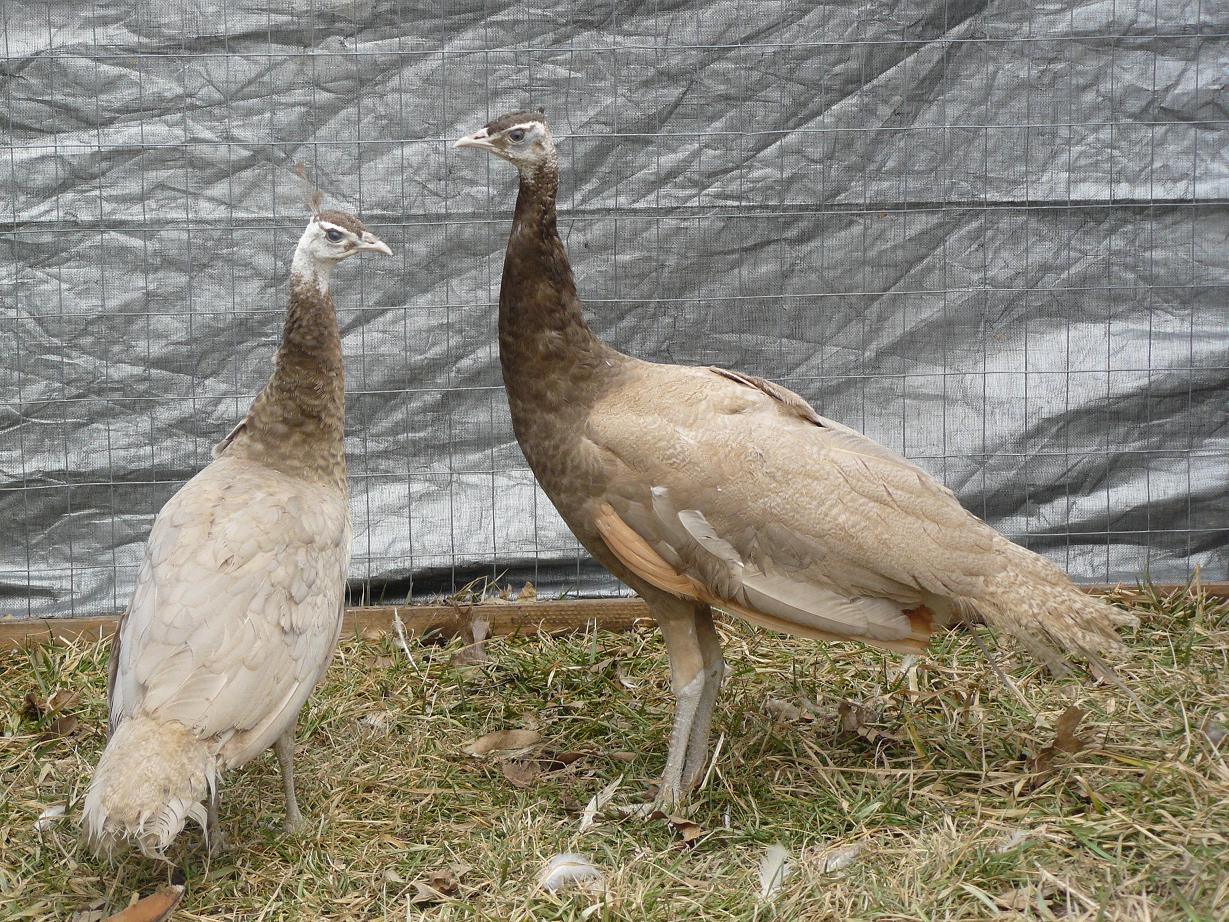
Cameo Peafowl Pair
Cameo is the fourth color mutation of the India Blue peafowl (Pavo cristatus), appearing in the United States around 1967. This Cameo peafowl pair is similar to a Buford bronze pair, only paler. The cameo color is a sex linked recessive trait.
This pair includes one mature male, or peacock, and one mature female, or peahen. The cameo mutation results in shades of brown, tan, and white. As mating season progresses, the feathers lose color and become significantly paler.
After each molt, the male is a creamy brown with dark chocolate neck feathers. Unlike other varieties, the plumage lacks iridescence. The female is a much lighter brown, with darker rusty metallic neck feathers. The peachicks are creamy tan.
Only the peacock has a train, or extra long tail coverts, which he displays while courting. The eyes, or ocelli, of a Cameo train are dark brown, fading over time until the next molt.
Housing Peafowl
A fully-enclosed Cameo aviary should keep the pair in and protect them from predators. The following features are essential for the pair’s well-being:
- 10 x 20 feet per pair
- 7 feet tall
- Lots of shrubbery for cover
- Shady areas
- 2 x 4 foot roosts, 4+ feet above ground
- Nesting material on the ground
Feeding Peafowl
Feed your Cameo peafowl pair a gamebird maintenance ration. If that’s not available, a turkey maintenance ration is similar. During breeding season, feed the pair a gamebird layer or turkey layer ration.
Place the watering station on the ground, not hanging. Otherwise a flying bird might get tangled in a hanging drinker. Provide an oyster shell supplement for strong egg shells. For treats, these birds enjoy mealworms, sunflower seeds, and leafy greens.
Peafowl Behavior
Your Cameo peafowl pair will spend their mornings foraging for seeds, grasses, grains, and insects. At midday they’ll likely take a break from foraging to preen and rest in the shade. In late afternoon, they’ll forage some more, then go to roost for the night. During breeding season, the male will fan his tail feathers and shake them to create a rustling sound that attracts the peahen.
Peafowl Size
| Mature Size | Peacock | Peahen |
| Weight | 8-13 lbs | 6-9 lbs |
| Length | 70-98 in | 35-43 in |
| Wingspan | 51-63 in | 31-51 in |
| Train | 60-72 in | none |
Breeding Peafowl
Cameo bred to Cameo breeds true. In other words, the peachicks will look just like the parents. Here’s what you can expect from a breeding pair:
- Sexual maturity: 2-3 years
- Eggs per clutch: 3-8
- Color of eggs: light brown
- Incubation period: 28-30 days
Peafowl Health
Peafowl rarely experience health issues. A well-cared for Cameo peafowl pair will live 20 years or more.
If peafowl free range, internal parasites can become an issue. To control them, deworm every three months. The most common dewormer for peafowl is Piperazine, although Ivermectin or Fenbendazole are also used.
Peafowl Permits
Peafowl permits vary from state to state, from county to county, and may also be required within a city. Local ordinances may impose restrictions on how many peafowl you can have — or if you can have them at all— the type of aviary you are allowed, setback distances, and noise.
Frequently Asked Questions
Are peafowl noisy?
Yes. Although peahens emit a variety of pleasant sounds, peacocks make a loud, shrill scream that can be heard for long distances, day or night. They also make a variety of other sounds, including whistles, goose-like honks, and a sort of roar.
Why do peacocks scream at night?
Peacocks scream to communicate with other peafowl, to defend their territory, to attract mates, and to announce potential danger.
How many peafowl color mutations are there?
In addition to the colors of the two main species (India Blue and Java Green), to date there are 9 color mutations.
Are Cameo peafowl rare?
Yes. All but the India Blue are extremely rare.
For More Information
Raising Peafowl — 6 Pros and 6 Cons
Keeping Peafowl, Do’s and Don’ts
Let’s Get Started Raising Peafowl
If you prefer peachicks, assorted peafowl chicks are also available from Cackle Hatchery®.



Reviews
There are no reviews yet