
Description
India Blue Peafowl Pair
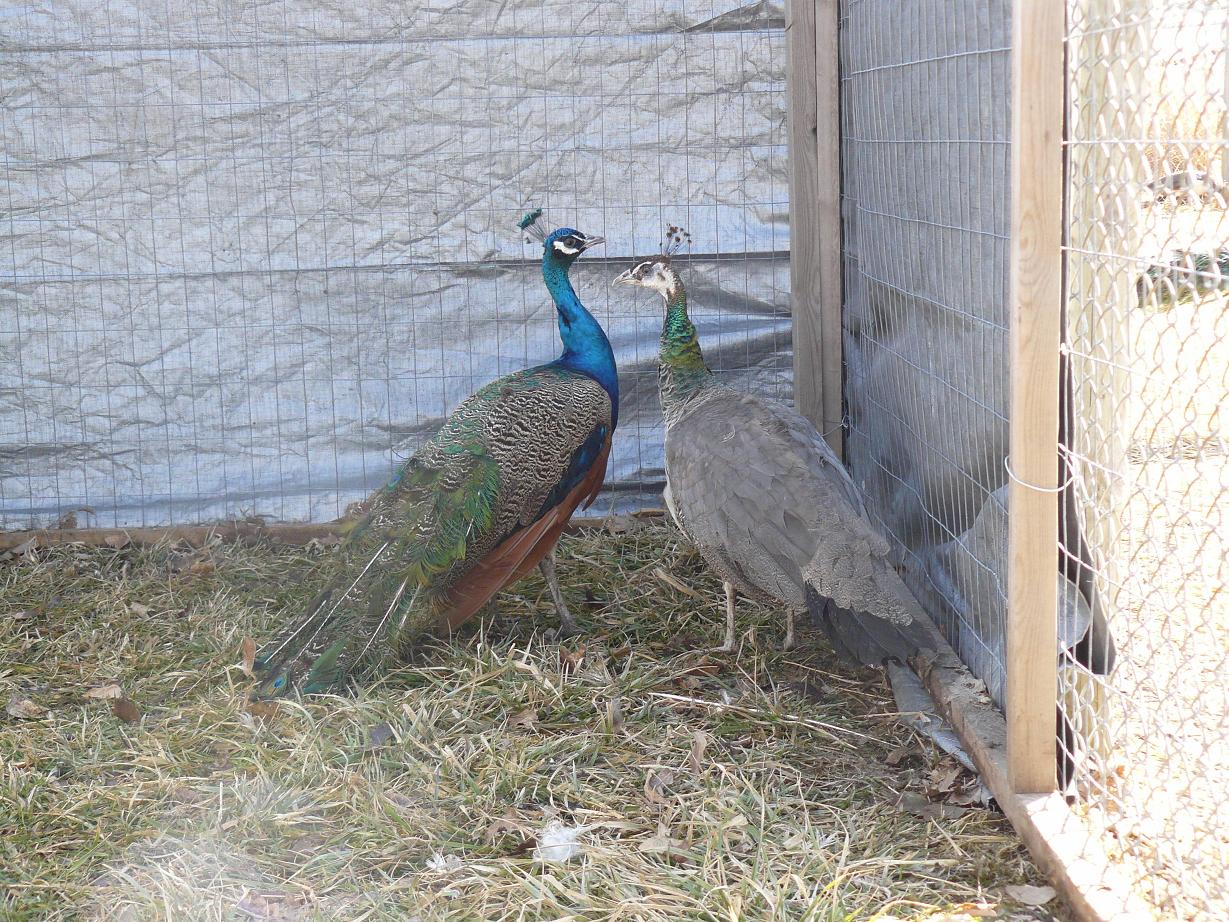
Of all the various types of peafowl, India Blue (Pavo cristatus) is the original and by far the most popular variety. This India Blue peafowl pair consists of one mature male, or peacock, and one mature female, or peahen.
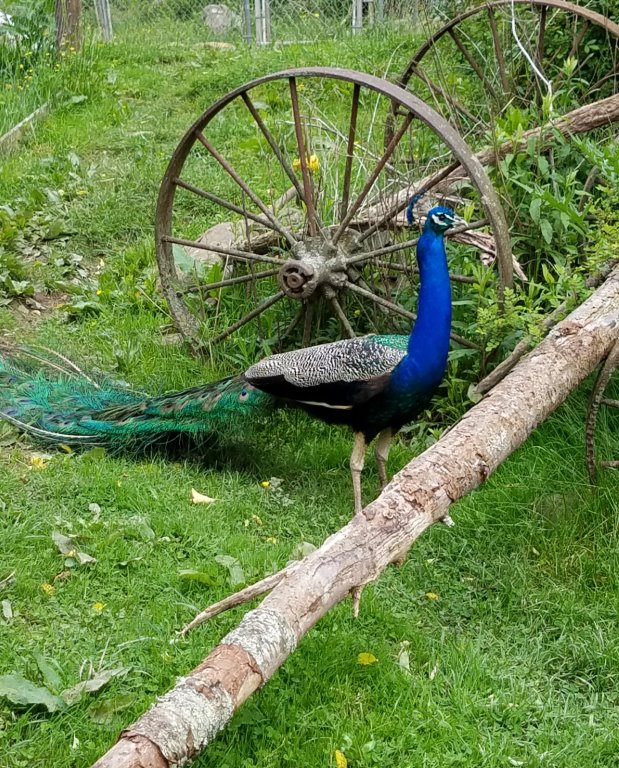
India Blue is referred to as the wild type, native to India and Sri Lanka. The flashy peacock has a barred wing pattern and a bright metallic blue head, neck, and breast. The peahen is brown, which helps her hide from predators while setting, and has a metallic green neck.
Peachicks are brown and buff. They are difficult to identify by gender. But, by about 6 months of age, the male chicks will develop blue feathers, while the females start showing green.
Only the peacock has a train, which consists of long tail coverts displayed during courting. The eyes, or ocelli, of an India Blue train are dark blue. The multicolored train is iridescent, with different colors appearing in different light.
Housing Peafowl
The natural habitat of an India Blue peafowl pair is open lowland forests. They thrive in both tropical and dry habitats. Their aviary should be fully enclosed to keep them in and to protect them from predators. It should imitate as much as possible their natural habitat by providing:
- 10 x 20 feet per pair
- 7 feet tall
- Plenty of bushy cover
- Shady areas
- 2 x 4 foot roosts, 4+ feet above ground
- Nesting material on the ground
Feeding Peafowl
Peafowl are omnivorous, having a native diet that includes seeds, insects, fruits, small mammals, and reptiles. In captivity, feed your India Blue peafowl pair a gamebird maintenance ration. During breeding season, switch to gamebird layer ration or, if it’s not available, turkey layer ration.
Provide water on the ground, rather than in a hanging drinker, to prevent flying birds from getting tangled. Furnish an oyster shell supplement for strong egg shells. Occasional treats may include mealworms, sunflower seeds, and leafy greens.
Peafowl Behavior
Peafowl spend their mornings foraging for food on the ground. During a midday break they drink, preen, and rest. They forage again when the temperature cools, then roost for the night.
During breeding season, the peacock performs elaborate courtship displays. At that time he will fan out his tail and shake the tail feathers to create a rustling sound.
Peafowl Size
| Mature Size | Peacock | Peahen |
| Weight | 8-13 lbs | 6-9 lbs |
| Length | 70-98 in | 35-43 in |
| Wingspan | 51-63 in | 31-51 in |
| Train | 60-72 in | none |
Breeding Peafowl
An India Blue peafowl pair reaches sexual maturity at 2 to 3 years of age. The peahen will lay between 3 and 8 light brown eggs before incubating them for 28 to 30 days. The peachicks begin roosting at about 2 weeks of age.
Peafowl Health
Peafowl have few health issues. If free ranged, the main consideration is internal parasites. Controlling worms involves deworming every three months. The most common dewormer is Piperazine, although Ivermectin or Fenbendazole are also used to deworm peafowl.
Peafowl Longevity
An India Blue peafowl pair lives 15 to 20 years in the wild. They will live longer in captivity, if well cared for.
Peafowl Permits
Permits for owning exotic birds vary by state, county, and even city. Local ordinances may also dictate what and how many birds may be kept on residential properties, enclosure types, setback distances, and noise abatement.
Frequently Asked Questions
What is the most common peafowl?
The most common variety is India Blue.
How many color varieties in peafowl?
There are 10 color varieties so far. Other than the original India Blue, peafowl of other colors are extremely rare.
How to identify peafowl color?
Peafowl color is based on the color of the neck feathers.
Are peafowl noisy?
Yes. Mature peacocks make a loud shrill call, day or night, that travels for miles. Peahens, however, have a variety of pleasant, chatty sounds.
Can peafowl fly?
Yes, but they fly only for short distances, mainly to escape predators or to roost up off the ground.
For More Information
Raising Peafowl — 6 Pros and 6 Cons
Keeping Peafowl, Do’s and Don’ts
Let’s Get Started Raising Peafowl
If you prefer peachicks, assorted peafowl chicks are also available from Cackle Hatchery®.



Brad Caskey –
peacock
beautifully peacock