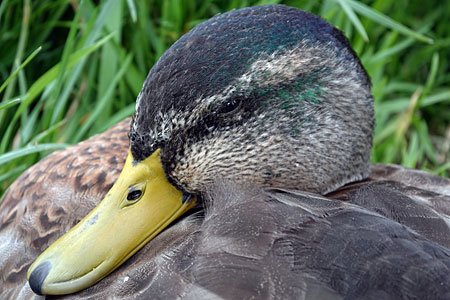
In the fall, mature drakes start looking more like hens. Don’t worry — it’s perfectly normal. Like other birds, ducks periodically replace their old worn-out feathers with a new set of plumage in a process called molting. Mature hens renew their feathers after the annual breeding season, too. But mature drakes go through two annual plumage changes —the basic, or eclipse, molt and the breeding, or nuptial, molt — during which drakes temporarily lose their curly tail feathers and some drakes change color, too.
How often do ducks molt?
Mature ducks experience one full molt each year. This molt is the eclipse molt.
During this molt, colorful drakes of mallard-derived breeds change color and take on the camouflage pattern of the females. Then, just before breeding season, drakes go through a second, partial, molt that restores their more brilliant plumage. This molt is the nuptial molt.
What causes a drake to change color?
Unlike chickens and most other birds — which lose their flight feathers sequentially — Mallards drop all 10 primary wing feathers at the same time when they molt. So they can’t fly for some three to five weeks while the feathers grow back. Drakes change color, taking on the hens’ muted color pattern, so they can more easily hide while they are vulnerable to predators.
After the flight feathers regrow, drakes undergo a partial molt to regain their colorful nuptial plumage. The best time to observe that beautiful green sheen is when this molt is complete and the feathers are new. Hens, meanwhile, retain the same camouflage color pattern year round.
At what time of year do ducks molt?
Domestic ducks usually molt in late summer or early fall after the nesting season but before cold weather sets in. The molt typically starts in late June and continues through early August. Ducks that molt entirely out of season may have experienced a stressful change in their environment, diet, or state of health that should be investigated.
Not all ducks in the same flock molt at the exact same time. Since their flight feathers therefore grow back at different times, some can fly while others still can’t. Breed, genetics, and geographic location all effect the timing of a molt. Further:
- Ducks of the same breed in the same flock may molt at different times.
- Drakes and hens often have different molting cycles.
- Ducks of differing ages tend to molt at different times.
- A duck may molt at a different time each year.
- Not all ducks in a flock require the same amount of time to complete the molt.
Do all drakes go through a dramatic color change?
All mallard-derived drakes go through two annual molts. But drakes don’t as noticeably change color in breeds where the males and females look similar, such as Pekins and Cayugas. The all-black Cayuga, on the other hand, often develops a few white feathers after a molt.
The most dramatic change in color between eclipse and nuptial molts occurs in breeds in which drakes and hens have distinctly different plumage patterns. These breeds include Mallard, Rouen, and Welsh Harlequin. Muscovies, by the way, are only distantly related to mallard-derived breeds and do not go through a double molt.
How to tell the difference when drakes look like hens?
Not only do some drakes dramatically change color to look more like hens during the eclipse molt, but all drakes temporarily lose the curly sex feathers at the top of their tails. But you can still tell the drakes from the hens by looking for these tell-tale signs that they are truly male:
- Size — Drakes are typically heavier, with thicker necks and larger heads than hens.
- Voice — Drakes have a raspy voice, while hens quack loudly.
- Bill — Drakes and hens retain their mature bill colors despite molting.
- Color — Even during the eclipse molt, colorful drakes often show traces of their nuptial plumage.
What should I know about molting ducks?
During the molt, ducks scratch and preen more than usual. Because they are uncomfortable, they may become uncharacteristically crabby.
Females that are laying will decrease production, or stop laying altogether. That’s because the energy they normally use for producing eggs goes into producing feathers instead.
Since feathers consist mainly of protein, molting ducks benefit from a protein supplement. Good sources of supplemental protein include dried mealworms and crickets, and high-protein game bird or turkey layer rations. Supplemental animal protein not only helps ducks through a molt, but also improves the plumage of those destined for exhibition.
Because ducks can’t fly until their flight feathers grow back, they are more vulnerable to predators during the molt. To keep them safe, double-check to make sure their facilities remain predator resistant and that they have plenty of places to hide. Once your drakes go through the complete annual color change and are their beautiful selves again, they can fly and therefore are better able to evade predators.
FAQs
What is the eclipse molt?
The eclipse molt is the basic full molt that results in drakes looking more like hens.
What is the nuptial molt?
The nuptial molt, or breeding molt, occurs after drakes regrow their primary wing feathers. Once they can fly, they go through a partial molt to return to their original plumage color.
When do ducks molt?
Domestic ducks molt in late spring or early fall, after nesting season but before the weather turns cold.
Why can’t ducks fly when they molt?
When ducks molt, they drop all their primary wing feathers at one time. They are unable to fly until the primaries regrow.
Why do ducks stop laying eggs when they molt?
Hens stop, or decrease, laying eggs when they molt because all their energy goes into regrowing fresh plumage.
Why do some drakes change color while others don’t?
Drakes that differ significantly in plumage color from hens of the same breed change color more dramatically than drakes that have the same basic plumage color as the hens.
Do drakes look just like hens during the molt?
Not exactly. When a drake takes on the more camouflage plumage color of a hen of the same breed, he still shows signs that he is actually a drake.
Helpful Links
Mallard Ducks Choose a Mate by Drake’s Bill Color
And that’s today’s news from the Cackle Coop.
Gail Damerow is the author of An Absolute Beginner’s Guide to Raising Backyard Ducks : Breeds, Feeding, Housing and Care, Eggs and Meat and other poultry books available from the Cackle Hatchery® Bookstore.