
Description
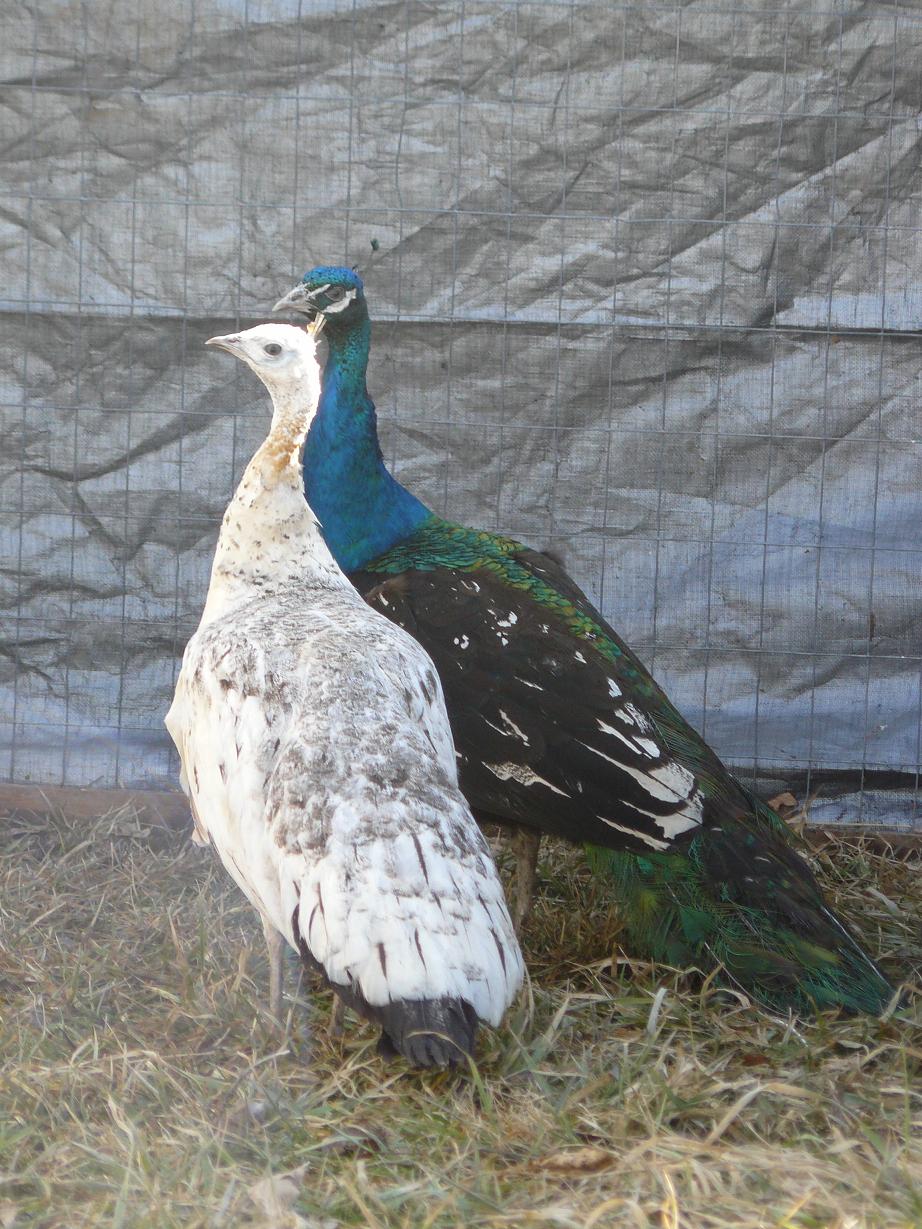
Black Shoulder Peafowl Pair
Black Shoulder is the first pattern mutation of the India Blue peafowl (Pavo cristatus). While color refers to the birds’ dominant color, pattern refers to alterations in the colors or their arrangement. In this case, a recessive gene causes the wings (or shoulders) of the male in a Black Shoulder peafowl pair to be solid black, instead of being barred.
A pair includes one mature male, or peacock, and one mature female, or peahen. Only the peacock sports a train, consisting of long tail coverts that are fanned out during elaborate courtship displays. The peacock looks essentially like the India Blue male, except for the black wings.
The peahen, however, is quite different from the India Blue female. The hen is white, gray, or pale cream with a rusty/creamy colored neck and random dark spots on her body and wings. The peachicks are pale creamy-brown at hatch.
Housing Peafowl
Peafowl require a fully-enclosed aviary to keep the birds from flying out and to protect them from predators. The aviary needs the following minimal features:
- 10 x 20 feet per pair
- 7 feet tall
- Lots of shrubbery for cover
- Shady areas for lolling
- 2 x 4 foot roosts, 4+ feet above ground
- Nesting material on the ground
Feeding Peafowl
Feed your Black Shoulder peafowl pair a gamebird maintenance ration, or the similar turkey maintenance ration. During breeding season, switch to gamebird layer or turkey layer ration.
The watering station should be directly on the ground, not hanging, since flying peafowl may get tangled in a hanging drinker. An free-choice oyster shell supplement will ensure strong egg shells. Treats may include mealworms, sunflower seeds, and leafy greens.
Peafowl Behavior
Expect your Black Shoulder peafowl pair to spend their mornings foraging on the ground. As the temperature warms, they’ll stop foraging, but will drink water, and spend most of their time preening and resting. Toward evening, they’ll again forage before roosting for the night.
During breeding season, the male will display his train feathers by fanning them out in a semi-circle that can measure 6 or 7 feet wide. At the same time he shakes the train feathers to create a rustling sound. This display signals his strength and vitality as the potential father of the hen’s peachicks.
Breeding Peafowl
Black Shoulder bred to Black Shoulder breed true, so the peachicks will grow up to look like their parents. A black shoulder peafowl pair reaches sexual maturity at 2 to 3 years of age.
The peahen will lay between 3 and 8 light brown eggs before incubating them for 28 to 30 days. Hatching success depends on such things as the peahen’s health and the pair’s environment.
Peafowl Size
| Mature Size | Peacock | Peahen |
| Weight | 8-13 lbs | 6-9 lbs |
| Length | 70-98 in | 35-43 in |
| Wingspan | 51-63 in | 31-51 in |
| Train | 60-72 in | none |
Peafowl Health
On the whole, peafowl are hardy, healthy birds. A well-cared for Black Shoulder peafowl pair will live for 20 years or even more.
If they free range, control internal parasites by deworming every three months. The most common dewormer for peafowl is Piperazine, although Ivermectin or Fenbendazole are also used.
Peafowl Permits
Permits for owning exotic birds in residential areas vary considerably by state, by county, and even by city. Local ordinances may dictate if and how many peafowl you can keep, the type of enclosure you’re allowed to build, enclosure setback distances, and noise abatement measures.
Frequently Asked Questions
Are peafowl noisy?
Yes. Mature peacocks can emit a piercing scream, no matter what time of day or night. Peahens, on the other hand, make a variety of pleasant, chatty sounds.
What is the first pattern mutation appearing in peafowl?
Black Shoulder is the first pattern mutation reported in peafowl.
How many separate patterns of peafowl are there?
Five distinct peafowl patterns have been identified: Barred Wing (India blue), Black Shoulder (aka Solid Wing), Pied, Silver Pied, and White-Eyed (referring to oscelli).
What are a peacock’s ocelli?
Ocelli are the eye spots on a peacock’s train feathers.
For More Information
Raising Peafowl — 6 Pros and 6 Cons
Keeping Peafowl, Do’s and Don’ts
Let’s Get Started Raising Peafowl
If you prefer peachicks, assorted peafowl chicks are also available from Cackle Hatchery®.



Reviews
There are no reviews yet