Are Chickens with Beards Right for You?
Beards on chickens are the result of a genetic mutation. Ancient chicken keepers liked the unique appearance of chickens with beards, so they continued to breed more of the same. Other than the cuteness factor, scientists have yet to find any significant advantage or disadvantage to a beard on a chicken.
What are chickens with beards?
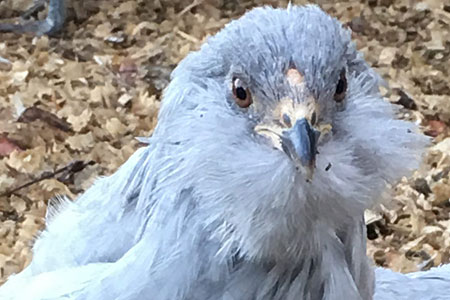
A beard on a chicken appears as cluster of elongated feathers growing beneath the beak. A full beard includes muffs, or additional feathers growing out from both cheeks. The face of a fully bearded chicken looks kind of round.
A partially bearded chicken has a beard, but no appreciable muffs. The same gene controls both the muffs and beard, and causes the wattles to shrink into the chin feathers. Cackle Hatchery® offers the following 10 fully bearded chicken breeds:
Ameraucana
The Ameraucana chicken was developed in the United States from blue egg chickens originating in South America. This friendly breed has a pea comb and comes in several color varieties, all of which have a beard. These links offer more information:
Blue Egg Chicken: Ameraucana or Americana?
Ameraucana Chickens in the Spotlight
Ermine Ameraucana Chickens in the Spotlight
Belgian d’Anvers
The Belgian d’Anvers breed is variously known as Antwerp Belgian and Bearded d’Anver. This active breed is a true bantam, meaning it has no larger counterpart. It comes in several color varieties, all distinguished by a beard and muffs. The hens lay small eggs with white shells. For more about true bantams, visit this link:
Belgian d’Uccle
The Belgian d’Uccle, also called Bearded d’Uccle, was developed by crossing the Belgian d’Anvers with bantam breeds having feathered legs and feet. Like the d’Anvers, it is a true bantam. This breed sports not only a beard, muffs, and leg feathers, but also vulture hocks. The latter consist of long, stiff feathers protruding back from the chicken’s lower thighs.
Crevecoeur
The rare dual-purpose Crevecoeur chicken breed from France has a full beard, a crest of head feathers, and a V-shape comb. This breed comes in one color — black. The hens are good layers of medium-size eggs with white shells.
What Is a Dual Purpose Chicken?
Easter Egger
The Easter Egger, like the Ameraucana, originates from South American blue-egg layers. It, too, has a beard and muffs, but is not a standardized breed. Individual chickens exhibit differing comb styles and plumage color patterns, with no two exactly alike. This chicken therefore offers great diversity in the flock, especially since the hens lay eggs in several different hues. These chickens come in both standard and bantam sizes. For details on the latter, visit this link:
Easter Egger Bantam Chickens in the Spotlight
Faverolle
The Faverolle, like the Crevecoeur, hails from France. In addition to having a beard and muffs, it has light feathering on the legs and toes, and is one of the few breeds with 5 toes instead of the usual 4. Faverolles are friendly chickens that come in several plumage patterns. The male’s pattern differs from the female’s, providing a nice contrast. The hens lay medium-size eggs with light brown shells.
5 Chicken Breeds that Have 5 Toes
Houdan
The Houdan descends from the Crevecoeur, and similarly has a beard, muffs, a crest, and V-shape comb. However, like the Faverolle, it sports 5 toes. The original color is black with blotchy white feathers, although it also comes in a white variety. The hens lay medium-size eggs with white shells.
Polish
The Polish breed has several color patterns in varieties that may be either with a beard and muffs or without. Both types have a puffy crest and a V-shape comb. The hens are good layers of medium-size eggs with white shells.
Are Polish Chickens Really from Poland?
Silkie
Silkies, too, can be either bearded or non bearded. This breed has numerous color varieties and several unique features. Its feathers are soft and fur-like. It has black skin, turquoise earlobes, a head crest, and a walnut comb. Like Faverolles, Silkies have 5 toes. The hens lay small eggs with tinted shells. This popular bantam breed is naturally super friendly.
Silkie Bantam Chickens in the Breed Spotlight
Sultan
The ancient Turkish Sultan sports a full beard, a crest, V comb, feathers on the legs and feet, vulture hocks, and 5 toes. Color varieties are pure white, pure black, and blue. The hens lay small eggs with white shells. Beautiful ornamental Sultans are excellent exhibition birds that also make easygoing pets.
How to breed chickens with beards?
The chicken’s beard is the result of an autosomal incomplete dominant genetic mutation. Autosomal means the mutation is not sex linked; in other words, it is not on the sex chromosomes but on the autosomal (non-sex) chromosomes. Incomplete dominance means that if one parent has a full beard and the other does not, the chicks may be partially bearded.
When breeding bearded chickens, all the offspring will have full beards (Mb) only if both parents have a full beard. From the time they hatch you can tell if the chicks are fully bearded, partially bearded, or non-bearded. The genetics work like this:
- Both parents have full beards (Mb/Mb to Mb/Mb)) — 100% of chicks will have full beards
- One parent has a full beard, the other has no beard (Mb/Mb to mb/mb) — 100% of chicks will have partial beards
- Both parents are partially bearded (Mb/mb to Mb/mb)— 25% of chicks will have full beards, 25% will have no beards, 50% will have partial beards
- One parent has a full beard, the other is partially bearded (Mb/Mb to Mb/mb)— 50% of chicks will have full beards, 50% will have partial beards
- One parent has a partial beard, the other has none (Mb/mb to mb/mb) — 50% of chicks will have partial bears, 50% will be non-bearded
- Both parents are non-bearded (mb/mb to mb/mb) — 100% of chicks will be non-bearded
Do chickens with beards require special care?
Some chickens have such large beards that the feathers interfere with their vision, which can make them a bit skittish. In that case, you may want to trim back the facial feathers just enough so the bird can see better.
A chicken’s beard can get wet when the bird dips its beak into the waterer for a drink. Feed might then stick to the beard, causing it to mat. In cold weather, a wet beard can freeze, resulting in frostbite to the underlying skin. Waterers that are less likely to soak beards include nipple drinkers, hanging waterers, and drinkers with a wide but shallow lip.
Dense feathering around the face can attract lice and mites. Inspect beards and muffs periodically and treat as needed for parasitic hitchhikers.
For these reasons, chickens with beards should to be monitored it case their beard feathers need attention. Further, chickens with beards tend to be docile, therefore any aggressive breeds in a mixed flock may bully them.
Frequently Asked Questions
Why do some chickens have a beard?
The chicken beard is basically ornamental and is the result of a genetic mutation.
Do chicken hens have a beard?
Yes, in bearded chicken breeds, both the roosters and the hens sport beards.
How to breed for chicks with full beards?
If you want 100% of the chicks to have full beards, both parents must have full beards.
Are chickens with beards friendly?
Chickens with beards are generally quite docile and friendly, making them excellent as backyard pets.
Do bearded chickens get along with non-bearded chickens?
Yes, chickens with beards get along well in a mixed flock, but since they tend toward docility they do better when combined with non-aggressive breeds.
Are chickens with beards right for you?
Provided the more aggressive breeds don’t bully them, and you don’t mind taking time to periodically check the facial feathers for potential problems, chickens with beards make a friendly and adorable addition to any backyard flock.
And that’s today’s news from the Cackle Coop.
Gail Damerow has raised chickens and various other poultry for more than 5 decades and has written numerous books about them, many available from the Cackle Bookstore.