A baby chick’s body is about 70% water. Therefore, water is the most important nutrient for a newly hatched chick. In fact, a hatchling can’t digest feed without water. So a chick should drink water even before it eats anything. Here are the ins and outs of how to water baby chicks.
How long can a baby chick go without water?
After a chick hatches, it shouldn’t go more than 48 hours before getting a drink of water. However, most chicks can survive up to 72 hours after hatch, provided they have sufficient yolk reserves. Yet, the sooner a baby chick drinks after hatching, the better.
Baby chicks are quick to learn to drink water. Just gently dip the beaks of a few of them into the drinking water as you place them in the brooder. You don’t need to dip them all. Once a few start drinking, the rest will follow.
When they are in the brooder and drinking well, they can go up to 6 hours without water. But at 12 hours without drinking water, chicks will start dying. It’s therefore best to provide clean, fresh drinking water in the brooder at all times. That way a chick can get a drink whenever it wants.
Why do chicks need water?
Without sufficient water, baby chicks won’t eat as much as they should, and therefore will be slower growing. Further, dehydration weakens the immune system, making the chick more susceptible to disease and even death. Chicks need water for these many reasons:
- Digest feed
- Absorb nutrients
- Faster growth
- Eliminate waste
- Enhance respiration
- Regulate temperature
- Lubricate joints
- Support immunity
- Reduce stress
- Prevent pasting
- Less mortality
What kind of water can baby chicks drink?
Baby chicks should have clean, fresh tap water available at all times. Water that’s safe for humans to drink is equally safe for chicks.
The water should be room temperature. Water that’s too warm discourages drinking. Water that’s too cold reduces body temperature, causing the chicks to chill.
Until their immunity develops, chicks are highly vulnerable to pathogenic organisms that spread diseases like Coccidiosis. To reduce contamination in the drinking water, replace the water and thoroughly clean the drinker at least once a day. You may need to clean the drinker more often if litter and shavings get in the water.
How do I know my chicks are drinking enough?
Brooded chicks that are actively eating and drinking, have bright eyes, and are happily peeping are drinking enough water. Signs of dehydration, meaning the chicks are not drinking enough, include these:
- Lethargy
- Huddling
- Closed eyes
- Weak chirping
- Not eating
Can baby chicks drink water from a bowl?
Baby chicks can drink from a bowl or saucer, but it’s not the best solution for offering water. Chicks will walk in the water, filling the bowl with bedding and droppings that spread disease. They’re likely to get wet and chilled. And some chicks may drown.
If you get caught short without a proper chick drinker, use a shallow bowl and fill it with marbles or clean gravel to reduce the water depth. Because a bowl will quickly accumulate droppings, clean it at least twice daily. Using a bowl for drinking water is not as safe or hygienic as other options.
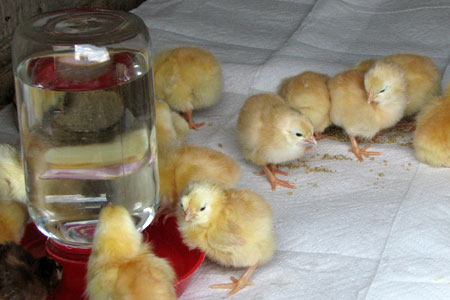
An inexpensive watering option is a screw-on plastic base that fits a one-quart narrow-mouth mason jar. Another option is an all-plastic one-quarter waterer that comes with a screw-on base. During the first few days after the hatch, a one-quart waterer will furnish enough water for up to 25 chicks in a brooder.
For smaller birds — such as tiny bantams, guinea keets, quail, and pheasants — you might put marbles or clean gravel in the base for the first few days until the birds grow big enough not to fall into the water. Or you could opt to use a drown-proof game chick waterer base.
A nipple system even further reduces contamination from bedding and droppings, but requires extra training to teach the chicks where to drink. Train chicks by tapping their beak against the nipple so water drips out for them to drink. You may have to do this several times before they “get it.”
Where should I place the chick waterer?
Put the chick waterer near the source of brooder heat, but not directly under it. The water should be close enough for the chicks to find it without wandering far enough to chill.
But if the drinker is placed directly under the heat source, the water can get warm enough to discourage drinking. Also, a chick might cuddle under the heater and accidentally fall asleep in the water trough and drown.
The water level in the drinker base should be between the height of a chick’s eye and the top of its back. When the water is at this height, birds drink more and spill less.
Do I need to add anything to baby chicks’ water?
Clean, fresh water is best for baby chicks. Why? Adding too much of anything can cause the chicks to drink less.
However, chicks that are suffering from shipping stress, or that have been too long in the incubator, may need an energy boost, such as one of these options:
- Electrolyte solution — offered for up to 72 hours after being placed in the brooder.
- Raw apple cider vinegar — at the rate of 1 teaspoon per quart for 3 to 5 days improves digestion.
Frequently Asked Questions
When should chicks start drinking water?
Chicks should drink water immediately upon being placed in the brooder, whether they’ve been shipped or hatched in an incubator.
Can chicks go all night without water?
Chicks in a brooder can go up to 6 hours without drinking water. But less a stressful option is to have fresh, clean drinking water available at all times.
What happens when a chick gets wet?
Chicks that get wet from splashed drinking water are likely get chilled, stop eating, suffer from hypothermia, and may die. If you discover a wet chick in the brooder, thoroughly towel it off and place it in a warm, dry place, preferably back into the dried-out and relittered brooder. If discovered early enough, the chick should be alright.
What can I use to water my chicks?
How to water baby chicks the best possible way is to use either a one-quart chick drinker with a screw-on base or a nipple system. These options are the safest and most hygienic.
And that’s today’s news from the Cackle Coop.
Gail Damerow has raised chickens and various other poultry for more than 5 decades and has written numerous books about them, many available from the Cackle Bookstore.