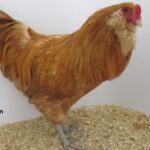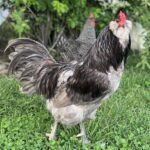
Easter Egger bantam chickens are a smaller version of chickens that originate from a cross between blue-egg laying Ameraucanas and breeds that lay eggs with brown shells. The result is a breeding population of chickens with a variety of conformations and plumage colors, and that lay eggs with a wide range of shell colors. Physical […]
Continue Reading
A chicken’s beak is an important tool for gathering food, drinking water, and exploring and manipulating objects in the environment. A chicken also uses its beak for preening, nest building, and engaging in social interactions. But occasionally a chick hatches with, or later develops, a deformity known as crossbeak. Also called crossed beak or scissors […]
Continue Reading
For exhibition purposes, large chicken breeds recognized by the American Poultry Association (APA) are organized into six classes. Most of the classes represent the geographic region where the breeds originated or were developed. Knowing a chicken’s APA class lets you infer a number of things about the breed, including temperament, laying ability, climate tolerance, and […]
Continue Reading
- Chocolate Egger™ – Sold as Baby Chicks Only
Minimums –
Not Sexed = 3
Female = 3
Male = 1
Total of 3 birds to ship
Seasonal/Shipped Feb thru October
Maximum 25 Female and Male
Continue Reading
The definition of black chicken breeds depends on who’s talking. The term might refer to a breed that’s truly all black — feathers, comb and wattles, beak, shanks and feet, skin, and even bones. But some chicken breeds with black skin and other body parts have varieties with alternative plumage colors besides black. Many chickens […]
Continue Reading
Chicken breeds with beards came about as a genetic mutation. Chicken keepers liked the appearance, and so they continued to breed more of the same. Other than the cuteness factor, scientists have yet to find any significant advantage or disadvantage to a beard on a chicken. A beard appears as elongated feathers growing beneath a […]
Continue Reading
Chicken keepers often use abbreviations and assume their listeners know what they mean. Here are some of the more common chicken breed abbreviations, along with abbreviations for variety features and those used for show that may be puzzling when you see them in poultry publications, forums, and websites. Note that abbreviations may be combined to […]
Continue Reading
“The shredder gene in lavender chickens causes the feathers to split and the barbs to detach, resulting in rough looking feather development,” explains Jeff Smith of Cackle Hatchery®. Lavender, also known as self blue, is a plumage color resulting from an autosomal recessive gene. Let’s explore how it works. Lavender vs. Blue The lavender gene […]
Continue Reading
Although the age at which hens start laying eggs depends on many factors, the ultimate factor is the breed. Some breeds mature fast and start laying as early as 4 months of age, while others mature more slowly and start laying much later. Below are just a few of the many chicken breeds, along with […]
Continue Reading
F2 Olive Egger™ – Sold as Baby Chicks Only
Minimums –
Not Sexed = 3
Female = 3
Male = 1
Total of 3 birds to ship
Seasonal/Shipped Feb thru End of October
Continue Reading