Placing a value on chickens killed by a dog is not always easy. To start with, most backyard chicken keepers value their chickens much more than the birds’ economic value. However, anyone wishing to obtain compensation from the dog’s owner must set aside emotions and try to make the best case for the chickens’ monetary […]
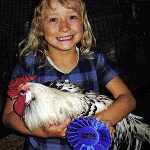
Production chickens are efficient producers of eggs or meat. “Efficient” means outputs are maximized, while inputs are minimized. In other words, production chickens are bred to produce more eggs or meat while eating less feed. The main difference between production chickens and show chickens is that efficient production is not a consideration in breeds developed […]
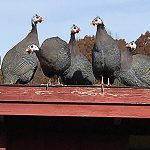
Guinea fowl are notoriously independent, often preferring to roost outdoors at night. They are more likely to perch high on a tree limb or on top of the coop roof, than to sleep inside, where they would be safe from owls and other night prowling predators. Getting guineas to go inside at night is the […]
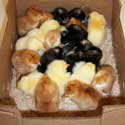
When planning your next order of chicks from the hatchery, give careful consideration to how many roosters you want (if any), and the real possibility that some of the chicks might not survive. Below are some important points to keep in mind when making your ordering decisions. Sexed Chicks For many breeds you have the […]
MAREK’S VACCINATION Cackle Hatchery® charges a flat fee of $10.00 for a Marek’s vaccination of 1-66 chicks. Anything over 66 chicks to be vaccinated we charge 15 cents a chick. Example 100 chicks to be vaccinated times .15 ea. = $15.00 fee for vaccination. These vaccinations must be given at 1 day of age. There […]
Commercially formulated rations are developed to maximize nutritional benefit based on a flock’s age, beginning with chick starter, then moving up to grower, developer, and lay ration as chickens mature. Meat birds have their own formulas for starter/grower rations and finisher ration intended to induce rapid growth. Aside from different formulas for different age groups, […]
Chicken eggs in the United States were once available in two basic shell colors — unimaginative white and traditional farmstead brown. Along with the ongoing boom in backyard chicken flocks comes an interest in eggs with shells in a wider array of colors, including pink, blue and green. One of the most startling colors is […]
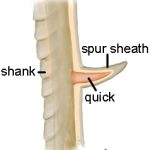
A chicken’s spur is an outgrowth of the leg bone, consisting of soft tissue covered with a protective sheath made of the same tough keratinous material that makes up the chicken’s claws and beak. The spur starts out as a little bony bump. As the chicken matures, the spur grows longer, curves, hardens and develops […]
A B C D E F G H I J K L M N O P Q R S T U V W X Y Z – A – Addled A rotten or otherwise inedible egg. Or an egg in which the embryo died during early incubation. Age of lay The age at which a […]