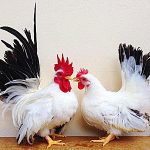
Japanese bantams bred for exhibition must have short legs, according to the Standard of Perfection. Unfortunately this trait comes with a dominant lethal gene called creeper (Cp). The creeper gene causes embryos to die during incubation, resulting in a reduced hatch rate for Japanese bantam eggs. Here’s how the lethal creeper gene works: Creeper Genetics […]
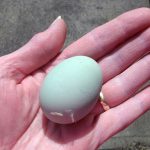
Developing chickens to lay eggs with consistently blue shells requires careful consideration and attention to the breeding. Even though blue shell color is a dominant trait, developing the best blue egg layers is always a challenge. For the 2022 chick season here at Cackle Hatchery® we prepared a ranked list of the best blue colored […]
Coccidiosis is the most common disease of brooded poultry. It affects primarily chicks and poults (baby turkeys). But it may also (though rarely) affect keets (baby guinea fowl), ducklings, and goslings. It is the most common cause of death in young poultry. What Is Coccidiosis? Coccidiosis is an intestinal disease caused by protozoa. It most […]
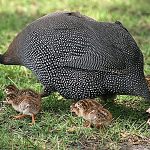
Guinea fowl are fiercely protective parents. Unfortunately they don’t seem to grasp the concept that their little ones can’t move as fast as the big guys. As a result, the keets easily get lost. Further, during their first two weeks of life baby guineas, or keets, chill easily. Trapsing through dew-wet grass while trying to […]
Cackle Hatchery® and Cackle’s Chicken Breeder Farms are members of the National Poultry Improvement Plan (NPIP). But exactly what is NPIP? What is NPIP? The National Poultry Improvement Plan is a nationwide collaboration between state and federal departments of agriculture. Its purpose is to monitor member flocks and hatcheries and certify them as being free […]