FREE SHIPPING on all supply order totals exceeding $25.00.
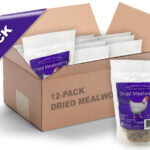
Pecking Order® Dried Mealworms – 12 Pack
Item #FT13
Continue Reading
FREE SHIPPING on all supply order totals exceeding $25.00.
Pecking Order® Dried Mealworms – 12 Pack
Item #FT13
Continue Reading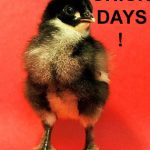
Chick Days occur during a brief period in spring when local feed, farm and home stores offer baby chicks — and sometimes ducklings, turkey poults and guinea keets — for sale. Nearly all stores have chicks around Easter time. With the ever-increasing popularity of chicken keeping, some stores start Chick Days in early February and […]
Continue Reading
Geese can get pretty aggressive. The behavior relates to the fact that they are large, clumsy birds. They can’t easily hide when threatened, so they resort to aggression to ward off danger. The best way to avoid aggression aimed in your direction is to take time to greet your geese whenever you enter their […]
Continue Reading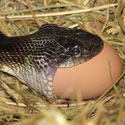
Rat snakes are often called chicken snakes because they hang around chicken coops. Their intent is to eat rats and mice, but after they’ve cleared out the rodents they look around for something else to eat. Bird eggs are often on a rat snake’s menu, and poultry eggs are no exception. Young poultry are also […]
Continue Reading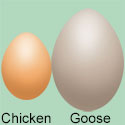
Goose eggs are delicious! Just one egg makes a formidable omelet, although goose eggs are less often used for culinary purposes than for hatching or — because of their large size and thick shells — for creating goose egg craft items such as Christmas ornaments and decorative jewelry boxes. Yet goose eggs may be used […]
Continue Reading
Black Swan Price Per Pair 3250.00 + 600.00 (Box, Postage & Handling)= 3850.00
Out Of Stock
Continue Reading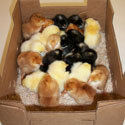
Chicks shipped by mail require a little extra TLC compared to chicks you might hatch at home. Think about how you feel after a long journey — dehydrated, exhausted, probably a bit cranky. What you look forward to most is a long drink and a warm bed. Baby chicks are no different. They suffer the […]
Continue Reading
FREE SHIPPING on all supply order totals exceeding $25.00.
Item #I13
PLEASE ALLOW AT LEAST 30 DAYS FOR SHIPPING
Continue Reading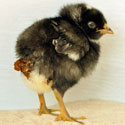
Pasty Butt — also known as pasting, paste up, or sticky bottom — is a common condition in newly hatched chicks. It occurs when soft droppings stick to a chick’s vent, then harden and seal the vent shut. If the condition is not corrected, the affected chick may die. Although pasting may be caused by […]
Continue Reading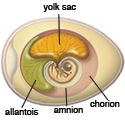
The hatching of a chick out of an egg — whether laid by a chicken, duck, goose, or other bird — is a remarkable process. Each chick enters the world with a built-in food supply that can sustain it for up to three days after the bird hatches. How does this happen? Starting on the […]
Continue Reading


