What you feed your baby chicks not only helps them grow and thrive, but also ensures good laying ability and fertility when they mature. On the other hand, improper nutrition can slow their development and have long-term negative consequences to their health and laying ability.
Shipping causes stress.
Chicks hatch with residual yolk reserves that continue providing nutrients for many hours. It’s nature’s way of allowing the early hatchers to remain in the nest until the whole brood has hatched.
Hatchery chicks shipped by mail take advantage of these yolk reserves for up to 72 hours while the chicks are in transit. But by the time chicks arrive by mail, they have nearly depleted their yolk reserves.
Offer water first.
To help chicks digest their first meal, make sure they drink room-temperature water first. They need to be well hydrated before they start eating. Feed them within 2 to 3 hours after the chicks drink water.
Water softens a chick’s feed, making it easy to digest. Water throughout the chick’s body also helps absorb nutrients in the feed. When chicks lack ready access to clean water, they will eat less and therefore won’t grow as well.
Hatching in an incubator, and especially followed by shipping, causes stress. To help chicks recover from this stress, you can add a poultry electrolyte and vitamin supplement to their water for about a week. After that, provide only fresh, clean water.
Then feed chick starter ration.
The best way to ensure chicks get all the nutrients they need is to feed them a commercial starter ration, which contains a mixture of grains, protein, vitamins, and minerals. Chick starter provides all the essential nutrients for proper growth. Anything additional that you feed baby chicks will dilute these nutrients and can create nutritional imbalance.
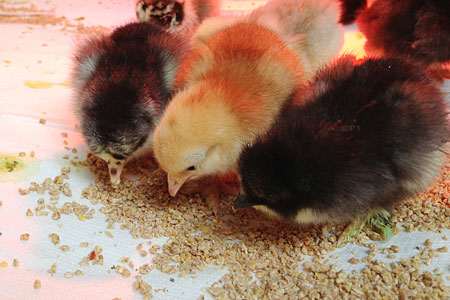
Chicks eat only a little at a time, so they need free-choice access to starter ration. Don’t worry — they won’t overeat. Feed only starter ration for at least the first two weeks, when chicks need those important nutrients for fast growth.
Medicated or non-medicated?
Some brands of chick starter contain a coccidiostat that inhibits the development of coccidiosis. If you’re raising chicks for the first time, using medicated starter gives you one less thing to worry about while you work through your learning curve.
Medicated starter contains a controlled amount of drug that allows chicks to gradually develop immunity through exposure to the ubiquitous protozoa that cause coccidiosis. As the chicks approach maturity they develop immunity and no longer need medicated feed.
What else can you feed baby chicks?
When the chicks are at least two weeks old you can start giving them treats, but only small amounts at a time. Don’t use treats to replace starter ration And don’t feed treats amounting to more than 10% of the chicks’ diet by volume. A limited amount of treats add dietary variety without stressing the digestive system.
Never feed chicks foods that are flavored with sugar, salt or other seasoning, butter, or oil. Chop everything into chick-size bits to prevent choking. And remove any uneaten leftovers, since moist foods in warm brooder can develop mold and bacteria.
Here are a few acceptable treats to feed baby chicks:
- Eggs — Scramble or boil to avoid risk of bacteria, cool and mash.
- Oatmeal — Plain, cooked and cooled, mixed with a bit of starter ration.
- Mealworms — Dried and crushed.
- Greens — Grass, clover, kale, etc., and also ripe fruit, chopped small.
- Vegetables — Pumpkin or carrots, cooked soft, then mashed.
How long to feed starter to chicks?
Chicks need differing amounts of protein at different stages of growth. Depending on the type of rations (as specified on the label) available in your area, here is a typical feeding schedule:
- Chicks up to 6 weeks old — 20-22% protein chick starter for rapid growth
- To point of lay — 14-16% protein pullet developer/grower
- Laying hens — 15-18% protein layer ration with extra calcium for egg production
How to transition rations.
Transitioning rations lets the chickens gradually accustom to the new ration without experiencing digestive upset. When you’re ready to transition rations, start by adding a little of the new ration into the current ration. Over the next week or so, gradually increase the amount of new ration and decrease the amount of current ration until the transition is complete.
How to transition chick feeders.
Almost immediately on entering a brooder chicks look for things to peck. To help them find something to peck, sprinkle a little starter on a paper plate or a paper towel. Once they eat up all of that starter, they’ll look around for more and will find the chick feeder.
Feeders are designed to keep feed sanitary by preventing chicks from walking in it, sleeping in it, scratching in it, and pooping in it. For the first couple of weeks a chick-size feeder works well.
But chicks quickly outgrow their first feeders. As they eat more, eventually they will empty the feeder before you come along to fill it back up. Their heads will grow too big to fit into the chick feeder design. And they will start roosting on top of the feeder, making a mess below.
At this point they will need a feeder with a larger capacity, a larger base, and a roosting guard. Whenever you change to a different feeder, leave the old one in place for a few days until you’re sure all the chicks are eating from the new one.
FAQs
Can I just feed layer ration to baby chicks?
No — never feed layer ration to baby chicks. Starter is higher in protein and lower in calories than layer ration, which also lacks the combination of nutrients necessary for proper growth. Additionally, the higher calcium content in layer ration can seriously damage young kidneys.
How often to baby chicks eat?
Baby chickens eat frequently throughout the day, eating small amounts at a time. They should have free-choice access to starter ration at all times so they can regulate intake. They won’t overeat.
How much does a chick eat?
Depending on the breed, each chick eats about one pound of starter ration during its first eight weeks. After that, feed consumption increases rapidly as the chicks grow.
When can I start feeding treats to chicks?
When chicks are about two weeks old you can start feeding them treats, but only in moderation. Also make sure everything is chopped small enough to prevent choking.
Do baby chicks need grit?
Chicks that are fed only starter do not need grit. However, when they start eating anything fibrous, they need grit to help with digestion. Grit consists of finely crushed granite that lodges in the gizzard and grinds fibrous foods. Small chick-size grit is available at most farm stores.
What to feed baby chicks?
Knowing what to feed baby chicks ensures that they grow at the proper rate while developing strong immunity and an internal organ structure that supports good egg production. The foundation diet should always be chick starter ration.
Helpful Links
Feed Options — What Do Chickens Eat?
Chicken Feed — Whole Grains, Mash, Pellets, or Crumbles?
And that’s today’s news from the Cackle Coop
Gail Damerow has raised chickens and various other poultry for more than 5 decades and has written several books about them, including Hatching and Brooding Your Own Chicks, available from the Cackle Bookstore.