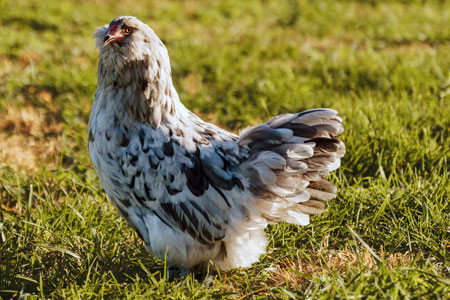
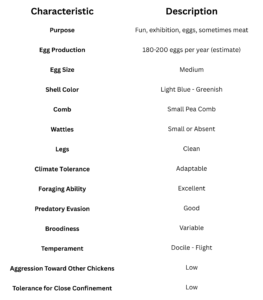
Ameraucana chickens derive from blue-egg laying Chilean Araucanas. Chicken keepers enjoy this breed for their unusual blue-shell eggs. Ameraucanas are also popular for exhibition. With their small pea comb, tiny wattles, and fluffy feathers, they are especially winter hardy, and the hens lay well even in winter.
What is an Ameraucana Chicken?

Where Did Ameraucanas Come From?
The history of the Ameraucana breed is complex and contentious. In 1925 the first Araucana chicken from Chile appeared in the United States. The Chilean breed lacked a tail, which interfered with fertility. And it had ear tufts, which are associated with lethal genes. Because of these breeding challenges, today the Araucana is quite rare.
However, early Araucana breeders occasionally raised blue-egg laying birds that had a tail and sported a beard and muffs. These chickens had better fertility and lacked the lethal tufted gene. They were first admitted to the American Standard of Perfection in 1984.
Why is This Chicken Called Ameraucana?
Originally this breed was called the American Araucana. Before admission to the Standard the name was shortened to Ameraucana.
What Color is an Ameraucana Chicken?
The American Standard of Perfection recognizes 10 varieties in both large fowl and bantam categories. They are Black, Blue, Blue Wheaten, Brown Red, Buff, Self Blue, Silver, Splash, Wheaten. Other color varieties have not yet been standardized.
Ameraucana Chickens Offered by Cackle Hatchery®
Jeff Smith of Cackle Hatchery claims to offer the most color varieties of any other single hatchery or breeder in the United States. Varieties offered by Cackle Hatchery are:
Are Ameraucanas Easy to Raise?
Yes, they are as easy to raise as any other chicken breed. Plus, when they free range, they will forage for most of the day and therefore won’t eat much by way of purchased rations.
However, like any other breed, they are not without a few challenges. For instance, depending on the type of waterer used, a chicken of any bearded breed may wet its beard while drinking. During cold winter months, a wet beard and muffs can lead to frostbite. And, like other chickens with extra facial feathers, muffs occasionally may need to be trimmed to improve vision.
Also they are slow to mature — the hens don’t start laying until they are at least 5 months of age and often even older. That can feel like a long time to wait for eggs. But then they may continue laying when other breeds take a break.
If you hatch your own eggs, be aware that in any breed that lays blue egg, the occasional chick will have crossed beak, requiring extra maintenance to ensure the bird gets enough to eat and drink. And, any lavender (self-blue) chicken may carry the shredder gene.
What is Another Name for an Ameraucana Chicken?
An Ameraucana chicken by any other name is not a true Ameraucana. Chickens called Americana or Americauna may have Ameraucana blood, but lack the breed’s uniform conformation and won’t necessarily lay eggs with blue shells.
Such chickens may also be called Easter Eggers, Easter Egg Chickens, Rainbow Layers, or Rainbow Eggers. Depending on the source, they may or may not be hybrids, with varying conformation and plumage colors. And they may lay eggs with a variety of different shell colors.
FAQs
Are Ameraucanas healthy?
Yes, in general they are quite healthy.
Are Ameraucanas rare?
They were once pretty rare, but because of their increasing popularity they are becoming more common.
What color eggs do Ameraucanas lay?
The hens lay eggs with light blue shells, although the occasional hen will lay eggs with shells on the greenish side.
Are Ameraucana chickens good layers?
The hens produce between 180 and 200 eggs per year, and often lay during winter months.
Why aren’t blue eggs sold in stores?
Blue-egg layers are not as productive as hens that lay eggs with white or brown shells, so they are less economical for producers. Plus many consumers are not accustomed to seeing eggs with blue shells.
Are blue eggs safe to eat?
Yes, eggs with blue shells are just as safe to eat as white or brown eggs.
Is the Ameraucana dual-purpose?
Ameraucanas are a medium size chicken, with roosters maturing to about 6.5 pounds and hens to about 4.5 pounds. Although they don’t produce as much meat as other breeds, surplus roosters are just as tasty.
Are Ameraucana hens broody?
Hens may or may not brood, but the occasional hen that does brood makes a good and protective mother.
Are Ameraucana roosters aggressive?
Although these chickens can range in temperament from docility to flightiness, the roosters are not typically aggressive.
Do Ameraucanas get along well with other breeds?
Yes, they are typically non-aggressive, but any bigger or more aggressive chickens in the flock may bully them.
Are Easter Eggers and Ameraucanas the same?
No. Ameraucana is an established breed. An Easter Egger is not.
Is an Olive Egger an Ameraucana?
No. The Olive Egger is a hybrid resulting from an Ameraucana hen crossed with a rooster from a brown-egg laying breed.
Helpful Links
And that’s today’s news from the Cackle Coop.
Gail Damerow has raised chickens and various other poultry for more than 5 decades and has written numerous books about them, many available from the Cackle Bookstore.