Description
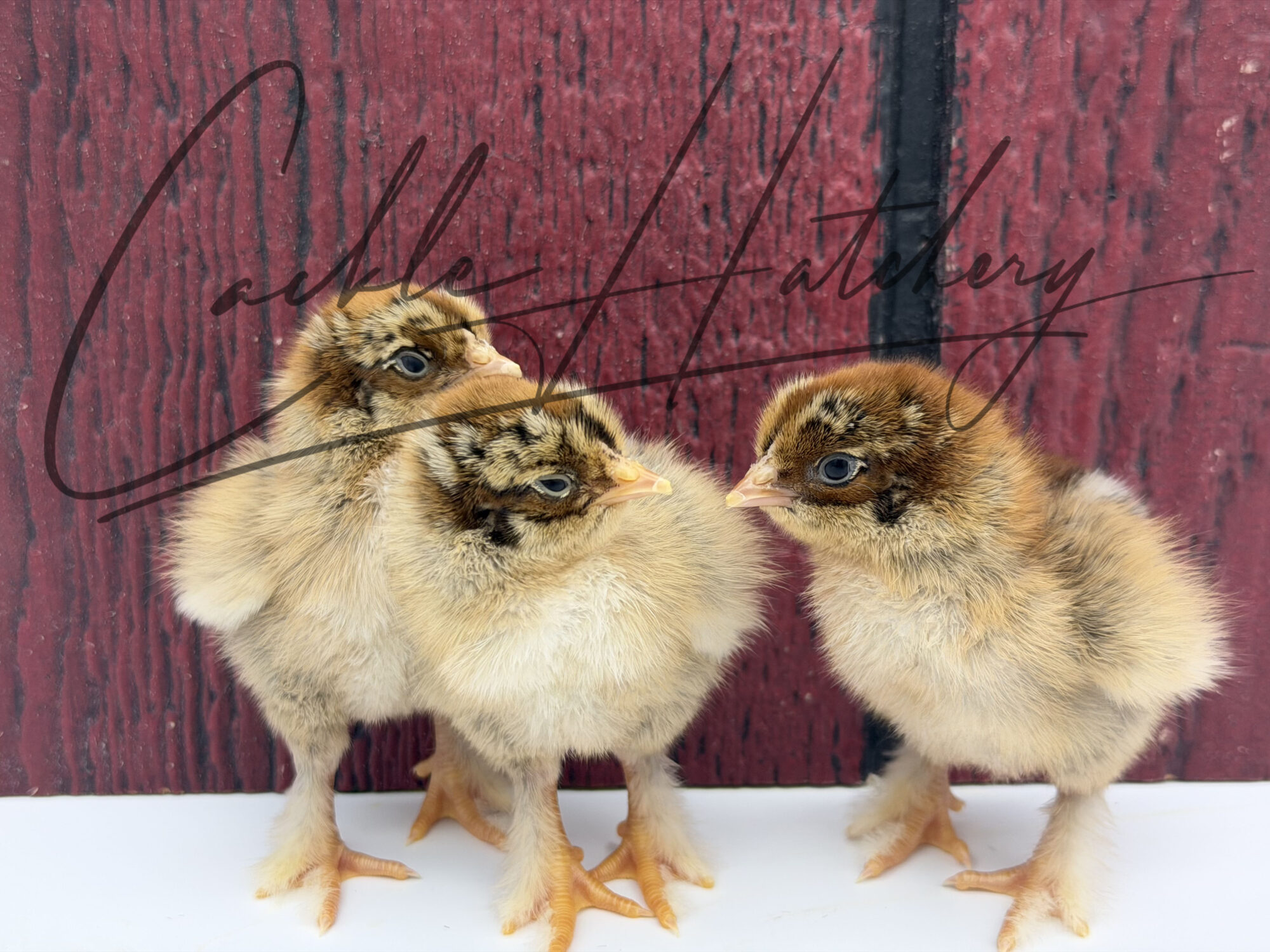
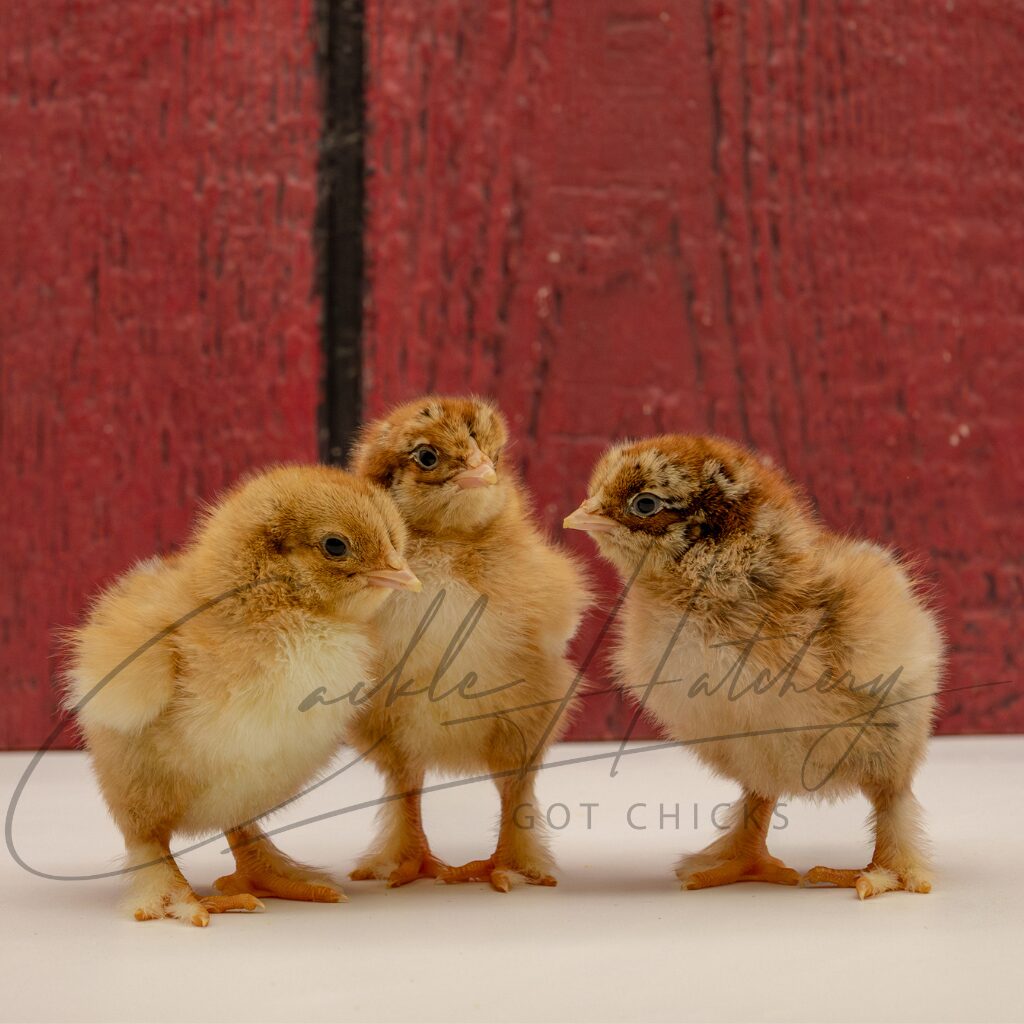
Partridge Brahma Chicken
Breed Overview and Origin
The Partridge Brahma Chicken is a large, stately, feather-legged chicken known for rich partridge plumage, brown eggs, winter hardiness, calm temperament, strong foraging ability, and impressive backyard presence. If you want a big, gentle chicken with beautiful natural coloring and dual-purpose value, the Partridge Brahma is a wonderful choice.
Brahmas are one of the largest chicken breeds and have a long history as dual-purpose birds for eggs and meat. Large feather-legged chickens were imported from Asia into the United States in the mid-1800s, and Brahmas later became one of the leading meat breeds in America until about 1930. The Livestock Conservancy notes that Brahmas developed from large feather-legged birds imported through trade with China in the 1840s, and it describes the breed’s key traits as feathered shanks and toes, pea comb, broad head, and “beetle brow.”
Brahmas first appeared in the American Poultry Association Standard of Perfection in 1874. However, the Partridge Brahma color variety has not yet been accepted as a standardized APA variety. Cackle Hatchery® offers Partridge Brahma chicks seasonally and lists them in its Brahma, brown egg layer, cold weather chicken, and rare breed categories.
Appearance and Characteristics
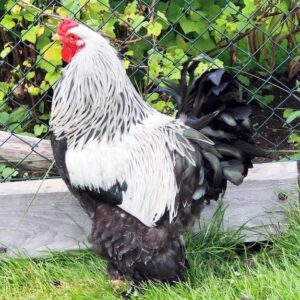
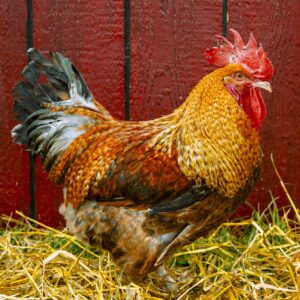
Partridge Brahmas have the same large body, feathered legs, pea comb, broad head, short beak, and beetle brow that make Brahmas so recognizable. Their partridge coloring gives them a rich, natural, old-fashioned look that stands out in a flock.
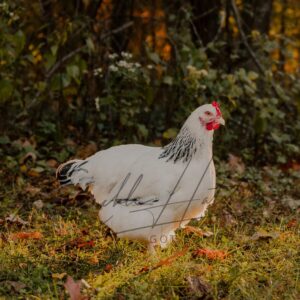
The roosters have deep red plumage with satiny black accents on the breast and tail. The hens are a deep reddish bay color with black penciling, creating a beautiful patterned appearance.
Expected traits include:
- Rich partridge plumage
- Large body size
- Feathered legs and feet
- Small pea comb
- Broad head and short beak
- Beetle brow expression
- Brown eggs
- Winter hardiness
- Gentle, easygoing temperament
- Slow growth and dual-purpose value
- Broody-hen potential
- Good foraging ability
Cackle’s Brahma category describes Brahmas as quiet, gentle, easy to handle, feather-legged, good brown egg layers, excellent brood mothers, and very child friendly.
Egg Production and Winter Laying
Partridge Brahma hens are good brown egg layers, especially during the winter months. They typically start laying at about 6 to 7 months of age and produce medium to large eggs with brown shells.
Brahmas are not fast-maturing production layers. Instead, they are slow-growing dual-purpose birds that combine eggs, meat value, cold hardiness, temperament, broodiness, and ornamental appeal.
Customers who want maximum egg output may prefer a production layer. However, customers who want brown eggs from a large, gentle, cold-hardy bird will appreciate Partridge Brahmas.
Meat Quality and Dual-Purpose Value
Partridge Brahmas are dual-purpose chickens, meaning they offer value for both eggs and meat. Brahmas are large, meaty, slow-growing birds that were historically important as table poultry.
The breed’s size and calm nature make it useful for homesteads and backyard flocks where customers want a bird that is both beautiful and practical. Because Brahmas mature slowly, they require patience compared with faster-growing meat breeds. However, that slower growth is part of their traditional heritage-breed character.
Broodiness and Mothering Ability
Partridge Brahma hens can be exceptional at hatching eggs and raising chicks. When they go broody, they may sit faithfully and make attentive mothers.
However, because Brahmas are large and have feathered legs, they can sometimes be clumsy mothers. A roomy, protected nesting area can help reduce the chance of chicks being stepped on or crowded.
Broodiness can vary by individual hen, season, and setup. Still, Brahmas remain a good option for customers who appreciate natural mothering instincts in a calm, large breed.
Temperament and Family-Friendly Traits
Despite their size, Brahmas are gentle, easygoing, and not aggressive. Partridge Brahmas generally get along well with other breeds and can make impressive backyard pets.
This variety can work well for:
- Family backyard flocks
- First-time chicken keepers
- Young poultry keepers
- Gentle mixed flocks
- Brown egg flocks
- Cold-weather flocks
- Homesteads wanting dual-purpose birds
- Customers who want large, picturesque chickens
- Keepers who enjoy rare feather colors
Because Brahmas are large and calm, they do best with enough coop space, wide roosts, roomy nest boxes, and flockmates that will not bully them.
Winter Hardiness and Warm Weather Care
Partridge Brahmas are especially suited to cold weather. Their small pea comb, large size, and heavy feathering help them handle winter conditions better than many large single-comb breeds. Cackle Hatchery® also notes that Brahmas are very cold tolerant and can do well in summer when provided with shade and water.
Their feathered legs and feet need extra attention. In rainy or snowy conditions, leg feathers can collect mud, ice, or snow. Check their feet regularly and clean them when needed.
For winter, provide dry bedding, good ventilation, draft protection, and unfrozen water. For summer, provide shade, airflow, and cool water. Because Brahmas are large and heavily feathered, summer heat management is still important.
Foraging and Predator Awareness
Partridge Brahmas are good foragers and enjoy outdoor space. Their partridge plumage can help them blend into natural surroundings better than some lighter-colored varieties, which may provide a small advantage in open areas.
Their large size also makes them less attractive to many flying predators than smaller chickens. However, no breed is predator-proof. Secure fencing, covered runs when needed, and safe nighttime housing are still essential.
Partridge Brahma Recognition and Show Notes
Brahmas were included in the first American Poultry Association Standard of Perfection in 1874, but Partridge is not currently a standardized APA Brahma variety.
That means Partridge Brahmas are best chosen for backyard beauty, gentle temperament, brown eggs, winter hardiness, and rare color rather than official APA variety status. Customers interested in exhibition should review current show rules before entering Partridge Brahmas.
The Poultry Club of Great Britain notes that Brahmas were created in America from large feather-legged birds imported from China in the 1840s, with Malay-type Grey Chittagong influence contributing the pea comb and beetle brow.
Partridge Brahma vs Light Brahma
Partridge Brahmas and Light Brahmas share the same large size, feathered legs, pea comb, gentle temperament, brown eggs, and cold hardiness. The main difference is color and recognition.
A Partridge Brahma has rich red, black, and penciled partridge plumage and is not yet an APA-recognized Brahma variety.
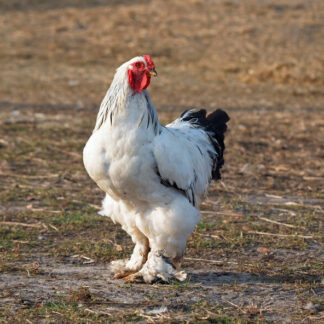
A Light Brahma chicken has the classic white body with black neck, tail, and wing markings. Light Brahmas are one of the traditional Brahma varieties.
Choose Partridge Brahmas if you want a rare, natural-looking patterned Brahma.
Choose Light Brahmas if you want the classic, recognized Brahma look.
Partridge Brahma vs Dark Brahma
A Partridge Brahma has deep red and black rooster plumage and reddish-bay hens with black penciling.
A Dark Brahma chicken has a more traditional dark penciled Brahma pattern and is one of the recognized Brahma varieties.
Choose Partridge Brahmas if you want warm red tones and rare partridge coloring.
Choose Dark Brahmas if you want the historic dark-patterned Brahma appearance.
Partridge Brahma vs Lavender Brahma
Partridge and Lavender Brahmas are both large, gentle, feather-legged chickens with strong backyard appeal.
A Partridge Brahma has rich patterned plumage with red, black, and penciled coloring.
A Lavender Brahma chicken has even light slate-blue self-blue plumage.
Choose Partridge Brahmas if you want a warm, camouflaged, natural-looking pattern.
Choose Lavender Brahmas if you want a rare soft blue-toned bird.
Is the Partridge Brahma Chicken Right for Your Flock?
Choose Partridge Brahma chickens if you want:
- A rare Brahma color variety
- Rich partridge plumage
- A large, gentle chicken
- Feathered legs and feet
- A small pea comb
- Strong winter hardiness
- Medium to large brown eggs
- Winter laying ability
- Broody-hen potential
- A good forager
- A calm bird for backyard flocks
- A dual-purpose chicken for eggs and meat
However, consider another breed if you need fast maturity, maximum egg production, APA-recognized Partridge Brahma status, or a small chicken for limited spaces. In short, Partridge Brahmas are best for customers who want rare color, calm temperament, cold hardiness, brown eggs, and the impressive size of a Brahma.
Care and Housing Tips
Partridge Brahmas need dependable care and enough room for their large bodies and feathered legs. They do best with clean housing, secure fencing, balanced feed, fresh water, and predator protection.
For best results, provide:
- A dry, well-ventilated coop
- Predator-resistant fencing
- Clean bedding
- Fresh water at all times
- Balanced chick starter and age-appropriate feed
- Wide roosts for large birds
- Low or moderate roost height to protect heavy bodies
- Roomy nest boxes for large hens
- Shade and airflow during hot weather
- Protection from drafts and damp bedding in cold weather
- Dry ground or covered runs to protect feathered feet
- Regular checks for mud, snow, or debris in leg feathers
Because Brahmas have feathered legs and feet, wet or muddy conditions can be harder on them. Clean, dry bedding and well-drained runs help protect feather quality and foot health.
Availability and Ordering Notes
Cackle Hatchery® lists Partridge Brahmas as sold as baby chicks only, with seasonal shipping from early February through mid-August. The current listing includes minimums of 3 not-sexed, 3 female, or 1 male, with limits of 5 females and males and 10 straight run.
Availability can change during the hatching season, so customers should check Cackle Hatchery’s Chicken Availability Chart before ordering.
Cackle offers several Brahma varieties in both large fowl and bantam options, giving customers multiple choices if they love the Brahma temperament and feather-legged look.
Related Breeds and Helpful Cackle Hatchery® Resources
Customers who like Partridge Brahmas may also enjoy other Brahma varieties, brown egg layers, cold-weather breeds, feather-legged breeds, and gentle family chickens.
Helpful Cackle Hatchery® links for this product page include:
FAQ: Partridge Brahma Chicken
What is a Partridge Brahma Chicken?
A Partridge Brahma Chicken is a large, gentle, feather-legged Brahma variety with rich red, black, and penciled partridge plumage, brown eggs, winter hardiness, and dual-purpose value.
What do Partridge Brahma roosters look like?
Partridge Brahma roosters have rich red plumage with satiny black accents on the breast and tail.
What do Partridge Brahma hens look like?
Partridge Brahma hens are deep reddish bay with black penciling.
Are Partridge Brahmas APA recognized?
No. Brahmas appeared in the first APA Standard in 1874, but the Partridge Brahma color variety has not yet been accepted as a standardized APA variety.
Where did Brahma chickens originate?
Brahmas developed in the United States from large feather-legged birds imported from Asia in the 1840s. Breed-history sources describe the foundation stock as large feather-legged birds imported through China, with additional influence that helped establish the pea comb and beetle brow.
Were Brahmas used as meat chickens?
Yes. Brahmas were large, slow-growing meat birds and were one of the leading meat breeds in the United States until about 1930.
Are Partridge Brahmas large chickens?
Yes. Brahmas are among the largest chicken breeds.
Are Partridge Brahmas friendly?
Yes. Partridge Brahmas are gentle, easygoing, and not aggressive, making them a good choice for families and backyard flocks.
Are Partridge Brahmas good with children?
Yes. Their calm temperament makes them a good option for young poultry keepers when children handle birds respectfully.
What color eggs do Partridge Brahmas lay?
Partridge Brahma hens lay brown eggs.
What size eggs do Partridge Brahmas lay?
They lay medium to large eggs.
When do Partridge Brahmas start laying?
Partridge Brahma hens usually start laying at about 6 to 7 months of age.
Are Partridge Brahmas good winter layers?
Yes. Brahma hens are good winter layers compared with many breeds.
Are Partridge Brahmas broody?
Yes. Partridge Brahma hens can be excellent broodies and mothers, although their large size can make them somewhat clumsy around chicks.
Are Partridge Brahmas cold hardy?
Yes. Their small pea comb, large body, and heavy feathering make them especially suited to cold weather.
Do Partridge Brahmas tolerate warm weather?
Yes. They can tolerate warm weather when provided with shade, water, and airflow.
Do Partridge Brahmas have feathered legs?
Yes. Brahmas have feathered legs and feet.
Do feathered Brahma feet need special care?
Yes. Feathered legs and feet should be checked for mud, snow, ice, or debris, especially during wet or winter weather.
Are Partridge Brahmas good for free range?
Yes. They are good foragers and enjoy outdoor space, though they still need predator protection and secure nighttime housing.
What is the difference between Partridge Brahma and Light Brahma?
Partridge Brahmas have red, black, and penciled partridge coloring and are not currently APA recognized. Light Brahmas have the classic white-and-black Brahma pattern and are a traditional Brahma variety.
Are Partridge Brahmas good for beginners?
Yes. Partridge Brahmas can be a good choice for beginners who have enough space for large birds and understand that Brahmas grow slowly.
Where can I check Partridge Brahma availability?
Customers can check Cackle Hatchery’s Chicken Availability Chart for current hatch and shipping timing. Availability can change during the season.




Reviews
There are no reviews yet