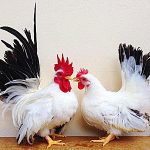
Japanese bantams bred for exhibition must have short legs, according to the Standard of Perfection. Unfortunately this trait comes with a dominant lethal gene called creeper (Cp). The creeper gene causes embryos to die during incubation, resulting in a reduced hatch rate for Japanese bantam eggs. Here’s how the lethal creeper gene works: Creeper Genetics […]
Continue Reading
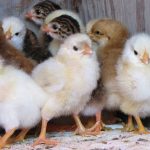
Coccidiosis is the most common disease of brooded poultry. It affects primarily chicks and poults (baby turkeys). But it may also (though rarely) affect keets (baby guinea fowl), ducklings, and goslings. It is the most common cause of death in young poultry. What Is Coccidiosis? Coccidiosis is an intestinal disease caused by protozoa. It most […]
Continue Reading
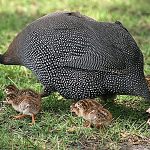
Guinea fowl are fiercely protective parents. Unfortunately they don’t seem to grasp the concept that their little ones can’t move as fast as the big guys. As a result, the keets easily get lost. Further, during their first two weeks of life baby guineas, or keets, chill easily. Trapsing through dew-wet grass while trying to […]
Continue Reading
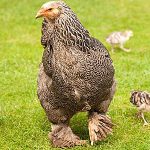
A setting hen doesn’t know (or doesn’t care) whether or not the eggs she hatches are her own. Under natural conditions her nest may consist of a collection of eggs from various hens in the flock. So, you might deliberately use your broody chicken hens as foster moms to hatch eggs laid by other hens, […]
Continue Reading
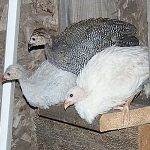
If you raise guinea fowl that you plan to free range, start with keets rather than full-grown birds. Keets become acquainted with their home ground as they broaden their foraging range. Adult guineas, on the other hand, are notorious for flying the coop the first chance they get. By raising guinea fowl from keets you […]
Continue Reading
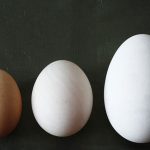
Precisely how long an egg takes to hatch depends on a lot of factors including species, breed, strain, conditions under which the egg was stored prior to incubation, and conditions during incubation. But whether you plan to hatch eggs in an incubator or under a hen you need a more definitive answer the question: How […]
Continue Reading
FREE SHIPPING on all supply order totals exceeding $25.00.
Item #BE03
Continue Reading
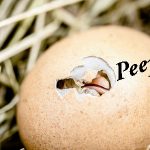
Chicks, ducklings, and babies of other barnyard birds are precocial, meaning they are able to feed themselves almost from the moment of hatch. Precociality is the reason why chicks peep before hatching. The word precocial comes from the Latin word praecox, meaning early to mature. A fancier word for precocial is nidifugous — from the […]
Continue Reading
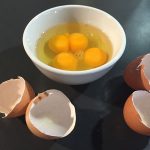
In the normal course of events, two yolks appear in approximately 0.1% of eggs laid, or about one in every 1,000. So why are we lately hearing so much about those rare double yolk eggs? And what causes double yolk eggs in the first place? Causes of Double Yolkers A double yolk egg occurs while […]
Continue Reading

An egg’s internal qualities cannot be determined by looking at the outside of the egg. Detecting such things as blood spots, double yolks, hairline cracks, and thin shells requires candling the eggs. Candling means examining the contents of an egg by placing it against a bright light. It’s called candling because the bright light was […]
Continue Reading