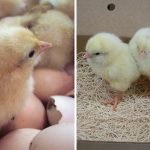
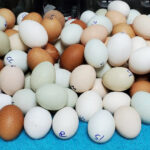
When you are ready to raise a batch of baby chicks, should you buy chicks or hatching eggs? Each option has advantages and disadvantages. So how different is it when you start with eggs versus chicks? Starting with Eggs When you start with eggs that you plan to hatch, the first thing you need is […]
Turkeys are much bigger than chickens and therefore would seem to be unlikely as companion animals. Nonetheless, they are becoming ever more popular as outdoor pets. Here are some reasons why turkeys make good pets: Why Turkeys Make Good Pets A turkey makes a good pet for many of the same reasons a cat or […]
No trip through Missouri would be complete without a visit to Cackle Hatchery®. The facility is not merely a mail-order poultry hatchery. It also operates a year-around poultry-only products store and museum, and sponsors a popular annual chicken festival. The best time of year for you to visit depends on your purpose and on the […]
Baby chick ship dates and Cackle Hatchery® store pickup dates change with each calendar year. For this year’s ship dates, consult our Chick Season® calendar. Chick Ship Dates We hatch and ship baby chicks from February through September. To avoid weekend layovers at the post office, we ship on Mondays and Wednesdays. We make exceptions […]
Eggs need to be placed on a separate order and not with other birds. The egg orders are manually scheduled and you will receive your notice of your ship date within 24 to 48 hours.
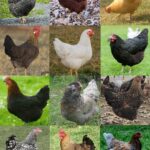
Defining the differences between a purebred and a hybrid chicken can be complicated. Some breeds are not purebred. But even a pure breed may have started out as a hybrid. What is a purebred chicken? Purebreds, also called straightbreds, will breed true. That means all the breeder roosters and hens have uniform bloodlines, and their […]