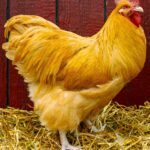
- Buff Orpington Exhibition Type – Sold as Baby Chicks Only
Seasonal/Shipped Feb thru September
Continue Reading
Seasonal/Shipped Feb thru September
Continue Reading
Defining the differences between a purebred and a hybrid chicken can be complicated. Some breeds are not purebred. But even a pure breed may have started out as a hybrid. What is a purebred chicken? Purebreds, also called straightbreds, will breed true. That means all the breeder roosters and hens have uniform bloodlines, and their […]
Continue Reading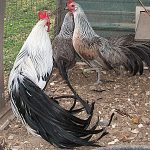
A chicken’s gender may be determined by a number of different methods. Which method works best depends on the bird’s age, breed and variety, and skill of the observer. Here are the four common ways to sex a chicken. Vent Sexing Vent sexing can be done soon after a chick hatches. Also called cloacal sexing, […]
Continue Reading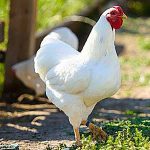
To some chicken keepers, a dual purpose breed is one that’s suitable for both meat and eggs. To other chicken keepers, dual purpose refers to a breed that’s suitable for neither meat nor eggs. So exactly what is a dual purpose chicken? Meat or Eggs Before the poultry industry developed into the behemoth it is […]
Continue Reading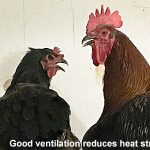
Good ventilation in a chicken coop brings in fresh air without causing drafty conditions. Ventilation is important for many reasons. So, too, is avoiding drafts. Today we’ll explore the importance of coop ventilation, as well as how to determine whether your coop is too drafty or well ventilated. Reasons for Good Ventilation A chicken coop […]
Continue Reading
Blindness is not a common condition among chickens. But when it does occur, it can be disconcerting for both the chicken and the human handler. Aside from injury resulting from a poke in the eye, here are three main reasons why a chicken goes blind. Marek’s Disease Marek’s disease is a cancer in chickens caused […]
Continue Reading
All chickens have spur buds. Roosters are well known for their spur buds developing into full-blown spurs. But hen’s can grow spurs, too. While some roosters — notably certain strains of Cubalaya — maintain only rudimentary spurs, some hens develop long rooster-like spurs. As with roosters, the longer the spur, the older the hen. Which […]
Continue Reading
To store fresh eggs for the long term without refrigeration, an alternative to the traditional method of submerging them in water glass (sodium silicate) is to use lime water (calcium hydroxide). Both are highly alkaline saturated solutions, with a pH of about 12.4. Both seal eggshell pores to prevent evaporation from within the egg, as […]
Continue Reading
Before refrigeration became commonplace, submerging eggs in water glass was the preferred method of storage. Water glass, also known as sodium silicate, is a glassy solid (silicon dioxide) that dissolves in water. It has numerous industrial uses, including as a food preservative and a desiccant (silica gel pack) to protect delicate items from absorbing moisture. […]
Continue Reading
As a chicken keeper, you may sometimes have more eggs than you can use, while at other times you have too few. Logically you’d want to preserve surplus eggs in times of plenty to use in times of need. By far the safest way to store eggs long-term is in a refrigerator. Save only eggs […]
Continue Reading


