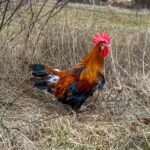
- Red Dorking Chicken – Sold as Baby Chicks Only
Minimums – Not Sexed = 3
Female= 3
Male=1
Total of 3 birds to ship
Seasonal/Shipped Early Feb thru Mid August.
Limit of 10 Females and Males.
Limit of 20 Straight Run.

Minimums – Not Sexed = 3
Female= 3
Male=1
Total of 3 birds to ship
Seasonal/Shipped Early Feb thru Mid August.
Limit of 10 Females and Males.
Limit of 20 Straight Run.
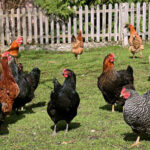
For exhibition purposes, large chicken breeds recognized by the American Poultry Association (APA) are organized into six classes. Most of the classes represent the geographic region where the breeds originated or were developed. Knowing a chicken’s APA class lets you infer a number of things about the breed, including temperament, laying ability, climate tolerance, and […]
Continue Reading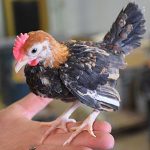
First, let’s establish that “bantam” is not a specific chicken breed. Rather, the word refers to a collection of breeds that are smaller than the usual egg-and-meat chicken breeds. A typical bantam weighs no more than two pounds, leading practical chicken keepers to wonder, “What’s the point?” Bantams don’t lay exceptionally well, and the eggs […]
Continue Reading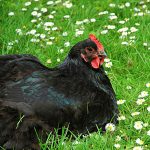
The definition of black chicken breeds depends on who’s talking. The term might refer to a breed that’s truly all black — feathers, comb and wattles, beak, shanks and feet, skin, and even bones. But some chicken breeds with black skin and other body parts have varieties with alternative plumage colors besides black. Many chickens […]
Continue Reading
Chicken keepers often use abbreviations and assume their listeners know what they mean. Here are some of the more common chicken breed abbreviations, along with abbreviations for variety features and those used for show that may be puzzling when you see them in poultry publications, forums, and websites. Note that abbreviations may be combined to […]
Continue Reading
The average well-cared-for chicken may live 8 to 10 years. Some chickens survive 15 years or more. Many factors contribute to a chicken’s longevity. Some of these factors relate to genetics. Other factors have to do with good management. Guinness Records The first chicken recognized by Guinness World Records as the World’s Oldest Living Chicken […]
Continue Reading
Who says chickens can’t fly? Some chickens fly really well. Others not so well, or not at all. So rather than ask “Why can’t chickens fly?” we should be asking “Why don’t chickens fly?” Wing Power The short answer is that chickens have small wings relative to their heavy bodies. Why that matters relates to […]
Continue Reading
Everyone uses the word “flock” when referring to chickens. But what is a flock? And how many chickens make a flock? Definition of Flock According to Merriam-Webster, a flock is a group of animals (such as birds or sheep) assembled or herded together. The dictionary that came on my computer further refines the definition as […]
Continue Reading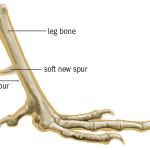
All chickens have spur buds. Roosters are well known for their spur buds developing into full-blown spurs. But hen’s can grow spurs, too. While some roosters — notably certain strains of Cubalaya — maintain only rudimentary spurs, some hens develop long rooster-like spurs. As with roosters, the longer the spur, the older the hen. Which […]
Continue Reading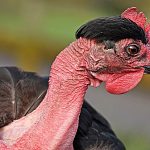
Chickens have no sweat glands, so chicken breeds that originated in hot climates have developed other features to help them stay cool. One is to grow a large comb and wattles, through which blood circulation increases in hot weather to help dissipate body heat. Another warm-climate adaptation is to avoid trapped heat by developing sparse […]
Continue Reading


