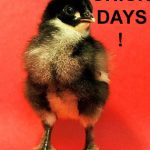
Chick Days occur during a brief period in spring when local feed, farm and home stores offer baby chicks — and sometimes ducklings, turkey poults and guinea keets — for sale. Nearly all stores have chicks around Easter time. With the ever-increasing popularity of chicken keeping, some stores start Chick Days in early February and […]
Continue Reading

How do you spell the chicken breed that lays eggs with blue shells: Ameraucana or Americana? If you said Ameraucana, you are correct. So how did this breed get such an oddly spelled name? To answer that question requires reviewing the breed’s origin. Araucana In 1925 a breed of chicken discovered in Chile was […]
Continue Reading
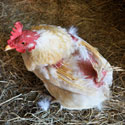
Chickens lose feathers for any number of reasons, some of which are seasonal, while others can occur at any time of year. Here are the most common reasons chickens and other poultry lose feathers and what you can do to help your feathered friends remain feathered. Feather Picking Feather picking is most likely to […]
Continue Reading
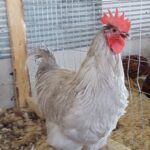
- Lavender Orpington Chicken – Sold as Baby Chicks Only
Minimums –
Not Sexed = 3
Female = 3
Male = 1
Total of 3 birds to ship
Seasonal/Shipped Feb thru Mid August
Limit of 24 Not Sexed.
Limit of 15 Females and Males.
Continue Reading
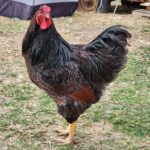
- Blue Laced Red Wyandottes – Sold as Baby Chicks Only
Minimums –
Not Sexed = 3
Female = 3
Male = 1
Total of 3 birds to ship
Seasonal/Shipped Feb thru October
LIMIT OF 24
Continue Reading
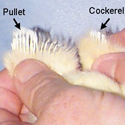
Feather sexing is the ability to determine the gender of a newly hatched chick based on the rate of growth of its wing feathers. The trait is sex linked and works only if the chick’s father is of a breed that grows feathers rapidly and its mother is of a breed that grows feathers slowly. […]
Continue Reading
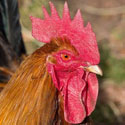
One of the most outstanding features of a rooster is his comb — that fleshy crownlike protrusion on top of a chicken’s head. So why do roosters have such ornate combs? At about 3 to 8 weeks of age, depending on the breed, baby chicks start developing reddened combs. A cockerel’s comb will gradually become […]
Continue Reading
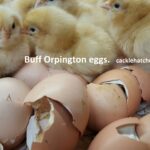
Buff Orpington Hatching Eggs – 12 for $84.00 or 24 for $120.00 FREE SHIPPING
Seasonal/Shipped Mid February through June 5th.
Continue Reading
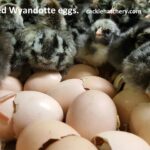
Black Laced Silver Wyandottes Hatching Eggs – 12 for $84.00 or 24 for $120.00 FREE SHIPPING
Seasonal/Shipped Mid February through June 5th.
Continue Reading
Rhode Island Red (Production Type) Hatching Eggs –12 for $84.00 or 24 for $120.00 FREE SHIPPING
Seasonal/Shipped Mid February through June 5th.
Continue Reading