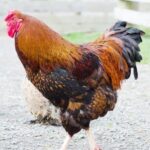
- Black Laced Golden Wyandotte – Sold as Baby Chicks Only
Minimums –
Not Sexed = 3
Female = 3
Male = 1
Total of 3 birds to ship
Seasonal/Shipped Feb thru October
Continue Reading
Not Sexed = 3
Female = 3
Male = 1
Total of 3 birds to ship
Seasonal/Shipped Feb thru October
Continue Reading
Not Sexed = 3
Female = 3
Male = 1
Total of 3 birds to ship
Seasonal/Shipped Feb thru October
Continue Reading
Lethal genes in poultry are mutations that can result in a reduced hatch rate. Developing embryos either die before hatching, or chicks die soon after hatching. Some lethal genes associate with characteristics that poultry breeders deem desirable. But if a mated pair both carry the lethal gene, 25% of their offspring will inherit two copies […]
Continue Reading
Frostbite occurs when the cells of a chicken’s comb, wattles, or feet freeze, depriving the tissues of oxygen. After a short period of freezing, the affected part may recover. But if the frozen tissue does not soon thaw, the cells may die and become infected. Further, a bloody comb or wattles resulting from frostbite may […]
Continue Reading
In cold weather chickens become vulnerable to frostbitten combs, wattles, feet, and toes. Frostbite is most likely to occur during the night, when the temperature drops fast. With the knowledge that frostbite happens when the temperature is low and coop humidity is high, you are better equipped to prevent frostbite in chickens. What is frostbite […]
Continue Reading
The Narragansett was one of the earliest domestic turkey varieties in the American colonies. Once commonly found foraging in colonial farmyards, Narragansett turkeys eventually lost favor to faster growing and therefore more cost-effective industrially developed broad-breasted turkeys. Today, however, these picture-perfect Pilgrim-era turkeys are making a comeback due to their exceptional hardiness, self-sufficiency, and superior […]
Continue Reading
Are Chickens with Beards Right for You? Beards on chickens are the result of a genetic mutation. Ancient chicken keepers liked the unique appearance of chickens with beards, so they continued to breed more of the same. Other than the cuteness factor, scientists have yet to find any significant advantage or disadvantage to a beard […]
Continue Reading
In the fall, mature drakes start looking more like hens. Don’t worry — it’s perfectly normal. Like other birds, ducks periodically replace their old worn-out feathers with a new set of plumage in a process called molting. Mature hens renew their feathers after the annual breeding season, too. But mature drakes go through two annual […]
Continue Reading
The more chickens you have, the more difficult it might be to come up with a name for each one. Some chicken names are simply traditional human names. Others are puns of various sorts. Most flock keepers prefer female names for hens and male names for roosters. Many, however, mix and match or choose gender-neutral […]
Continue Reading
People enjoy keeping chickens for many different reasons. Some chicken keepers simply have a passion for poultry. Others focus on the benefits chickens provide. In no particular order, here are 30 reasons to love chickens: Chicks grow fast. Chicks grow quickly from chickhood to maturity. In less than a year your new flock will settle […]
Continue Reading


