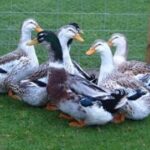
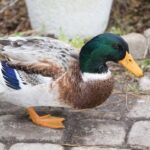
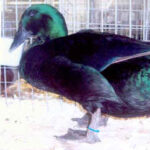
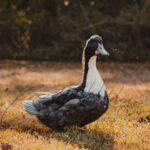
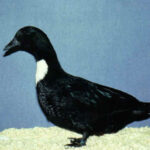
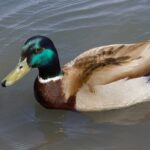
- Fall Black Swedish Duck – Sold as Baby Ducklings Only
These will ship on Monday, Tuesday or Wednesday but will be dated with a Monday ship date and you will receive tracking when they ship.
In addition to the miniature versions of large warm weather chicken breeds, five other bantam breeds also do well when the temperature rises. Of those described below, four of the five bantam breeds that tolerate warm weather are true bantams. Bantam Chickens The history of bantam chickens follows that of the Industrial Revolution. As families […]
Continue Reading
Chicks, ducklings, and babies of other barnyard birds are precocial, meaning they are able to feed themselves almost from the moment of hatch. Precociality is the reason why chicks peep before hatching. The word precocial comes from the Latin word praecox, meaning early to mature. A fancier word for precocial is nidifugous — from the […]
Continue Reading
Most chickens have four toes on each foot. Of the chicken breeds found in the United States, five breeds typically have five toes on each foot. The condition is technically known as polydactylism — from the Greek words poly meaning many, and daktylos meaning a finger or toe. The trait of having five toes represents […]
Continue Reading
Once you have weighed the pros and cons of keeping peafowl, and have decided the pros outweigh the cons, you are ready to embark on your peafowl-raising venture. To help you get started, here are six tips for raising peafowl. Brooding Peachicks House peachicks in a brooder until they grow enough to stay warm on […]
Continue Reading
Peafowl (Pavo cristatus) are large, attractive birds that originated in India and Sri-Lanka. They are about the same size as turkeys (Meleagridis gallopavo), to which they are closely related. The term peafowl denotes the species. The male is a peacock, the female is a peahen. The babies are peachicks. Like everything in life, raising peafowl […]
Continue Reading
A broody hen stops laying eggs when she starts setting. Therefore, throughout the ages poultry keepers who have raised chickens primarily for eggs have culled persistently broody hens. In other words, they selectively bred in favor of non-setters. As a result, the breeds best known for superior laying ability are less apt to brood than […]
Continue Reading
The earliest documented instance of a “rooster” laying an egg occurred in Basel, Switzerland, in 1474. The “rooster” was sentenced to death for the “unnatural crime of laying an egg.” A similar event took place, again in Switzerland, in 1730. In the United States, in 1922 a brown Leghorn “rooster” in Madison, Wisconsin, began laying […]
Continue Reading