
12 for $61.68 24 for $101.28 FREE SHIPPING
Seasonal/Shipped Mid February through June 5th.
Continue Reading
12 for $61.68 24 for $101.28 FREE SHIPPING
Seasonal/Shipped Mid February through June 5th.
Continue Reading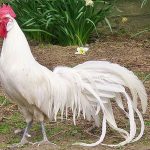
A longtail chicken is one of several breeds selectively bred for growing particularly long tail feathers. The roosters have two specialized genes that allow their tails to grow longer than those of other breeds. One is a nonmolting gene that causes some of their tail feathers to not molt. The other gene produces rapid tail-feather […]
Continue Reading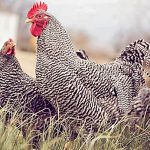
The pecking order governs the social organization of a flock of chickens, thereby reducing tension and stress in an established flock. Starting in the brooder, chicks spar almost from the day they hatch. By the time they are about six weeks old, each has established its place in the pecking order. In general, roosters are […]
Continue Reading
One of the great benefits of keeping chickens is that it gives you an opportunity to expand your vocabulary. The world of chicken keeping is full of odd or potentially confusing words and phrases, like those in this mini glossary of chicken terminology. Bloom: The moist, protective coating on a freshly laid egg that dries […]
Continue Reading
Not Sexed = 3
Female = 3
Male = 1
Total of 3 birds to ship
Seasonal/Shipped Feb thru mid August
Limit of 24.
Continue Reading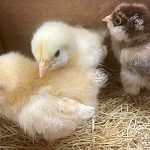
Four traditional methods are used to tell male and female chicks apart. Which method is most appropriate for any specific batch of chicks depends on their breed and variety, their age, and the skill of the observer. Vent Sexing Vent sexing, also called cloacal sexing, is a method of determining a hatchling’s gender by examining […]
Continue Reading
Raising chickens for meat involves first deciding which to choose: Cornish broilers or a heritage breed. The fundamental difference is the amount of time needed to grow them from hatch to harvest. The quicker they grow to the target weight of about six pounds, the cheaper they are to raise and the more tender the […]
Continue Reading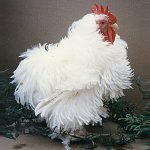
Frizzle chickens are fun and funny, but are they a breed? The answer is yes and no. In Australia, France, Germany, Ireland, Italy, and United Kingdom Frizzles are classified as a pure breed. In the United States they are considered to be a plumage variety in any breed. Frizzle Chickens Frizzling is a genetic condition […]
Continue Reading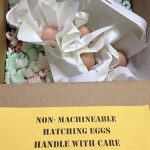
Eggs that are sold specifically for hatching are called, fittingly enough, hatching eggs. They cost more than eating eggs but come with no guarantee they will hatch. Too many variables are not under the seller’s control. Even eggs laid by your own hens, or otherwise sourced locally, are not guaranteed to hatch. But when hatching […]
Continue Reading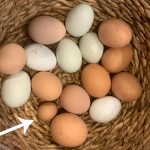
First time chicken keepers are often surprised when a hen lays a miniature egg. A mini egg typically does not contain a yolk, and therefore is sometimes called a yolkless egg or a no-yolker. It might also be called a cock egg, dwarf egg, fairy egg, fart egg, or wind egg. So why does a […]
Continue Reading


